
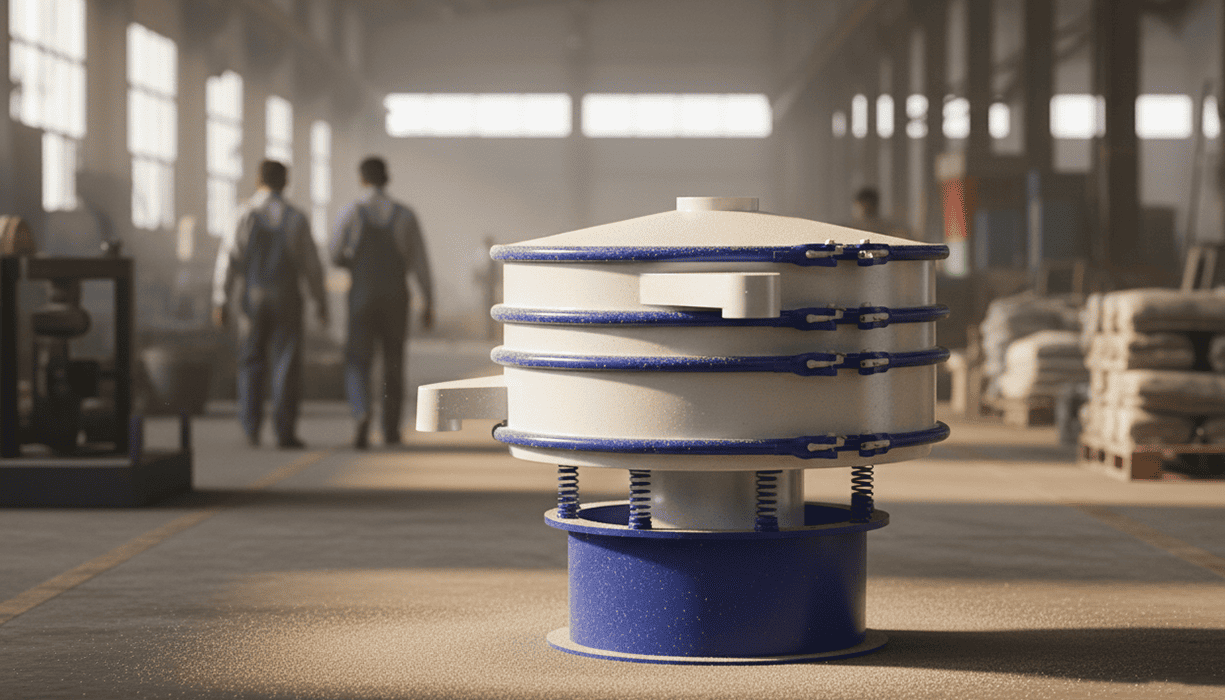
How to Select the Right Vibro Screen for Your Industry – Working Principle & Buyer's Guide
In today’s fast-paced industrial world, the need for precision screening and separation of materials is more crucial than ever. From plastics and pharmaceuticals to food processing and chemicals, efficient screening helps businesses maintain product quality, reduce waste, and optimize output. One of the most effective tools for this purpose is the Vibro Screen – a versatile, high-performance circular vibrating separator used across multiple industries.
However, selecting the right Vibro Screen for your unique requirements isn’t just about size or price. It involves understanding the machine’s working principle, features, technical configuration, and how well it matches your material and throughput demands. This blog will guide you through everything you need to know about choosing the perfect Vibro Screen for your industry.
What is a Vibro Screen?
A Vibro Screen, also known as a vibrating screen separator, is a circular gyratory screening machine that uses vibration to separate materials based on size or characteristics. It is widely used in industries like plastic recycling, chemical processing, food manufacturing, ceramic production, and minerals processing. Its ability to process dry or wet materials efficiently makes it an integral part of many production lines.
The Vibro Screen consists of a motor with unbalanced weights that generates vibrations. These vibrations are transmitted through the screen deck, causing the material to move and get separated by size as it travels across the surface.
Working Principle of a Vibro Screen
Understanding the working principle is vital when selecting a Vibro Screen.
The Vibro Screen operates on the principle of gyratory motion generated by a specially designed motor with eccentric weights mounted on both ends. When the motor rotates, it creates multi-plane vibration in the horizontal, vertical, and tangential directions. These vibrations cause the material to move in a spiral motion, resulting in efficient screening.
Material fed into the center of the screen travels outward in a circular path, passing through different mesh layers. Oversized material is discharged from the top outlet, while finer particles pass through the mesh and are collected from the bottom or side outlets.
This gentle yet highly effective screening action makes Vibro Screens ideal for separating fine particles, scalping oversize contaminants, and grading materials.
Applications of Vibro Screen Across Industries
The versatility of Vibro Screens makes them suitable for a wide range of applications:
- Plastic Industry: Used for screening and separating plastic granules, regrinds, and additives.
- Chemical Industry: Helps in separating powders and chemicals of different grades.
- Food Processing: Ensures safety by removing contaminants from food ingredients.
- Pharmaceuticals: Used in high-precision separation of pharmaceutical powders.
- Minerals & Metals: Separates fine ores, minerals, and metallic particles.
The ability to screen wet or dry materials and handle various capacities makes them adaptable to both small-scale and large industrial operations.
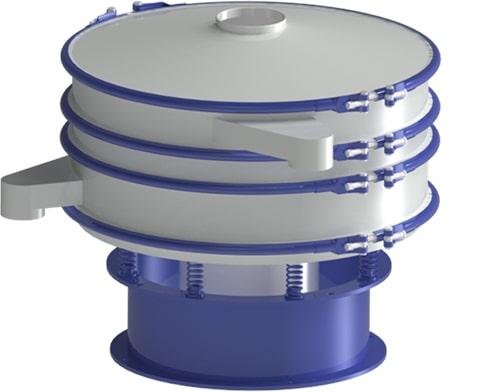
Key Factors to Consider While Selecting the Right Vibro Screen
Choosing the right Vibro Screen requires a combination of technical analysis and industry knowledge. Here are some essential parameters to evaluate:
Type and Nature of Material
Understand the physical and chemical properties of the material you want to screen—whether it’s sticky, abrasive, corrosive, wet, dry, or temperature-sensitive. For example, materials with high moisture content may require specific screen designs or coatings to prevent clogging.
Mesh Size and Number of Decks
Vibro Screens come with single or multiple decks, each fitted with wire mesh or perforated screens of varying sizes. Select mesh sizes based on your required separation accuracy. Multi-deck designs allow for simultaneous grading into multiple particle sizes.
Capacity and Throughput
Evaluate the required processing capacity in kg/hr or tons/hr. The screen diameter and vibration intensity play a crucial role in determining how much material can be processed efficiently.
Motor Type and Vibration Frequency
The motor power, RPM, and angle of vibration affect the screening output. For delicate materials, a lower RPM is ideal. For tougher, heavier materials, a higher vibration force might be necessary.
Material of Construction
Depending on the application, choose between Mild Steel, Stainless Steel 304/316, or Polished Pharma-Grade Stainless Steel. For industries such as food or pharma, stainless steel is recommended to ensure hygiene and corrosion resistance.
Discharge Arrangement and Dust Cover
You can opt for center or side discharge arrangements depending on plant layout. A dust cover or sealed design is essential for dusty materials or to meet hygiene standards in food or pharma industries.
Ease of Maintenance
A good Vibro Screen should offer quick dismantling, easy screen replacement, and minimal downtime. Look for machines that have tool-less screen change systems and easy access to internal components.
Benefits of Using a High-Quality Vibro Screen
A well-selected Vibro Screen delivers numerous operational advantages:
- Improved product quality through precise separation
- Increased production efficiency with continuous, automatic screening
- Reduced wastage and reprocessing of materials
- Lower operating costs with energy-efficient motors
- Compact design that fits easily into existing production lines
- Versatility to handle different materials and grades
Investing in a high-performance Vibro Screen helps industries streamline their quality control processes, optimize material handling, and ultimately boost profitability.
Why Choose Invoit Plast Machinery PVT Ltd for Vibro Screens?
When it comes to sourcing a reliable and efficient Vibro Screen, Invoit Plast Machinery PVT Ltd stands out as the best Vibro Screen manufacturer in India. With a strong reputation built on years of engineering excellence, Invoit Plast offers highly customized screening solutions that cater to the diverse needs of industries such as plastic processing, recycling, food, and chemicals.
Each Vibro Screen from Invoit Plast is engineered using high-grade materials and precision manufacturing techniques. Their machines are known for superior build quality, low maintenance requirements, and user-friendly operation.
From standard models to fully customized machines with multi-deck configurations, Invoit Plast ensures that every client gets the right solution for their exact needs. Their technical support, after-sales service, and quick delivery timelines make them a trusted partner for businesses across India and globally.
Buyer's Checklist Before Purchasing a Vibro Screen
Before finalizing your purchase, make sure you run through this quick checklist:
- Have you defined your screening goals (sieving, grading, de-dusting)?
- Do you know the size and type of materials to be processed?
- What is your hourly throughput requirement?
- Are you clear on the number of mesh decks needed?
- Do you require a dust-free or explosion-proof design?
- Have you selected the right material of construction for hygiene or corrosion resistance?
- Is the supplier providing installation and post-sales support?
Choosing a well-experienced Vibro Screen manufacturer in India like Invoit Plast will simplify the decision-making process, ensuring optimal machine performance and long-term ROI.
Final Thoughts
A Vibro Screen may appear like a simple machine, but its impact on production efficiency, product quality, and operational consistency is massive. Whether you’re in the plastics, food, or chemical industry, selecting the right Vibro Screen with the right specifications is a critical investment decision.
By understanding how these machines work and evaluating all essential parameters—material compatibility, mesh size, capacity, and manufacturer support—you can make an informed purchase that enhances your production process.
Invoit Plast Machinery PVT Ltd, a leading Vibro Screen manufacturer in India, offers customized, high-performance screening systems that meet the dynamic needs of modern industry. If you’re looking for reliability, innovation, and value-driven machinery, Invoit Plast should be your go-to manufacturer.
FAQs
A Vibro Screen is a circular vibratory separator used to separate materials based on particle size. It works using a motor with eccentric weights that generate vibrations, causing the material to move in a circular motion and pass through various mesh screens.
Vibro Screens are used in industries such as plastics, pharmaceuticals, food processing, chemicals, minerals, ceramics, and agriculture. Their versatility allows them to handle dry, wet, fine, and coarse materials.
To choose the right Vibro Screen, consider factors such as material type, capacity requirements, mesh size, number of decks, material of construction, and whether the screen needs to be dust-proof or food/pharma-grade.
A single-deck Vibro Screen has one screening layer and is used for simple separation tasks. Multi-deck Vibro Screens have two or more layers for grading materials into multiple sizes simultaneously, offering higher flexibility.
Yes, Vibro Screens can be customized with anti-blinding devices, screen cleaners, and special mesh types to efficiently process wet or sticky materials without clogging.
Yes, the powder is uniform and fine enough to be used directly in extrusion, molding, or compounding processes without compromising quality.
The price of a Vibro Screen in India typically ranges from ₹80,000 to ₹5,00,000 or more depending on the size, material, capacity, and level of customization.
Invoit Plast Machinery PVT Ltd is a trusted Vibro Screen manufacturer in India, known for precision engineering, customization, durability, and excellent after-sales support across India and overseas.
Yes, most Vibro Screens are designed for easy dismantling, quick mesh replacement, and minimal downtime, making them low-maintenance machines ideal for 24/7 industrial use.
Vibro Screens can be fitted with mesh sizes ranging from 10 microns to several millimeters, depending on the screening requirement and industry standard.