
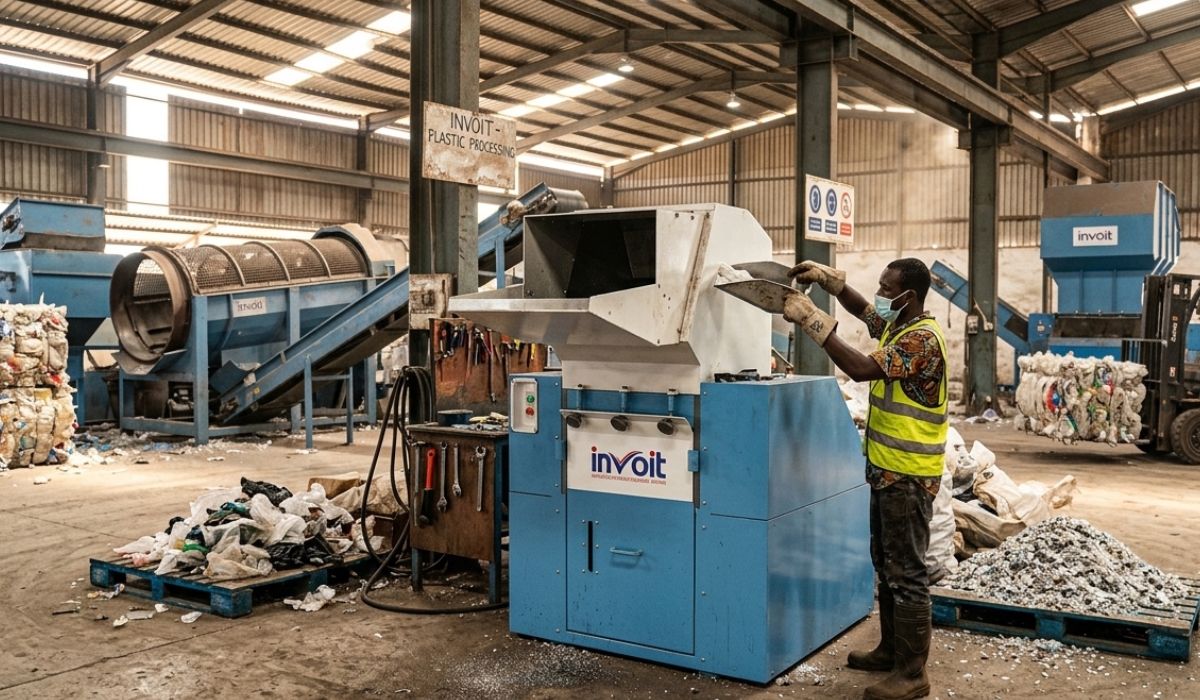
How Plastic Scrap Grinder Machines Reduce Plastic Waste in Ghana
Ghana’s plastic waste problem has reached a critical inflection point. With over one million metric tonnes of plastic waste generated annually, the country’s recycling infrastructure is under enormous pressure. For factory owners, plastic manufacturers, and recycling businesses across Accra, Kumasi, Tema, and Takoradi, the solution is no longer optional — it is operational.
The plastic scrap grinder machine in Ghana has emerged as the most impactful piece of equipment in the waste reduction value chain. It converts rejected plastic parts, film offcuts, PET bottles, HDPE containers, and post-industrial scrap into clean, uniform regrind — feedstock that can be reprocessed, sold, or fed back into the production line directly.
This guide is written for decision-makers: procurement managers, production heads, and recycling plant operators who need performance-driven answers — not marketing noise.
The Scale of Plastic Waste in Ghana: Why Industrial Action Is Urgent
Ghana has become one of West Africa’s most prominent processors of secondhand plastics. The result is an overwhelming volume of unprocessed plastic waste accumulating in landfills, water bodies, and informal dump sites across the country.
Key industrial realities driving demand for plastic recycling machines in Ghana:
- Rising raw material costs: Imported virgin resin prices continue to climb, making regrind an economically viable and cost-effective substitute for manufacturers.
- EPR compliance pressure: Ghana’s Extended Producer Responsibility regulations are pushing manufacturers toward verified, auditable recycling operations.
- Export market opportunities: Cleaned and granulated plastic scrap commands strong prices in both domestic and international commodity markets.
- Government recycling targets: National policy frameworks increasingly mandate plastic waste reduction at the industrial production level.
For any business involved in plastic waste recycling in Ghana, an industrial plastic grinder is no longer a support asset — it is a revenue-generating production machine.
What Does a Plastic Scrap Grinder Machine Actually Do?
A plastic scrap grinder machine — also referred to as a plastic shredder machine in Ghana or industrial plastic granulator — mechanically reduces large plastic scrap into small, consistent granules or regrind particles. The process is continuous, high-throughput, and engineered for sustained industrial use across multi-shift operations.
Materials Processed by Industrial Plastic Grinders
- HDPE and LDPE containers, drums, and crates
- PET bottles and stretch packaging film
- PP woven bags and injection moulded components
- PVC pipes, profiles, and window frame offcuts
- ABS and polystyrene post-industrial waste
- Nylon, acrylic, and engineering-grade plastics
- Mixed polymer blends from consumer collection streams
The output — clean, sized regrind — is fed directly into extruders, injection moulding machines, or blow moulding systems. This closes the loop on industrial plastic waste recycling in Ghana without the need for costly virgin resin input.
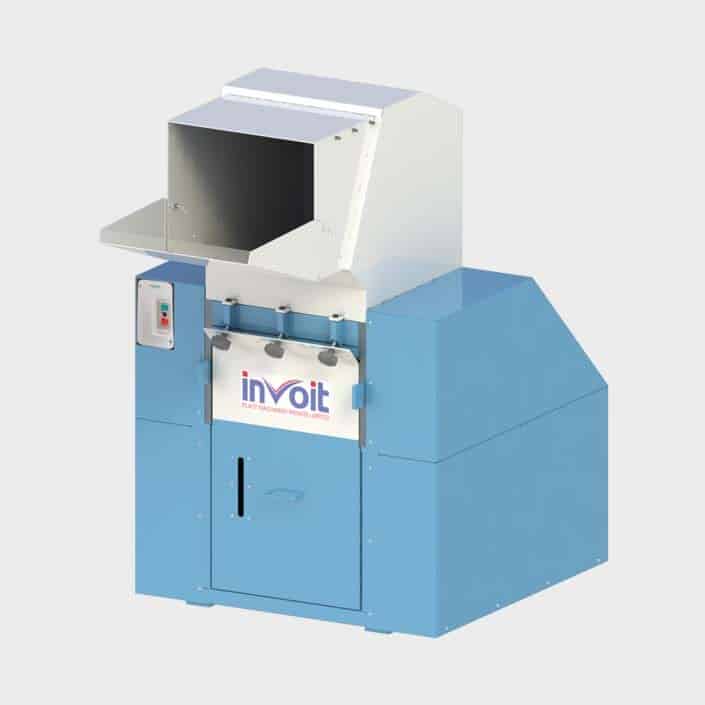
How Plastic Grinder Machines Directly Reduce Plastic Waste
The environmental and operational impact of deploying a plastic scrap grinder in a Ghanaian facility is measurable and immediate:
1. Elimination of Scrap Landfill Dependency
Without a grinder, rejected parts and production trims are typically bagged and discarded. With an industrial plastic grinder in Ghana, that same waste is converted into usable feedstock within hours — eliminating landfill contribution from the production floor entirely.
2. Continuous In-Line Regrind Recovery
Modern plastic scrap grinders can be integrated directly beneath injection moulding machines or inline with extrusion systems. Sprues, runners, and flash are automatically conveyed into the grinder and returned to the hopper — zero waste, zero production delay.
3. Reduced Carbon Footprint Per Tonne of Output
Reprocessing regrind consumes significantly less energy than manufacturing virgin pellets. For plastic recycling machine suppliers in Ghana and their clients, this is a quantifiable sustainability metric that satisfies ESG reporting requirements and international procurement audit standards.
4. Revenue from Waste Streams
Sorted and clean regrind — produced by a well-maintained plastic scrap grinder — sells at competitive prices in Ghana’s secondary raw material market. Recycling businesses are effectively monetising what was previously a disposal cost.
Choosing the Right Industrial Plastic Grinder for Your Ghana Operation
Not all grinders are engineered equal. Selecting the wrong machine results in downtime, uneven output, accelerated blade wear, and poor ROI. Here are the operational parameters that matter most in the Ghanaian industrial context:
- Blade metallurgy: High-chrome or D2 tool steel blades maintain cutting edge integrity across high-volume abrasive plastics like PVC and glass-filled nylon.
- Screen perforation size: Determines output particle consistency — critical for downstream extrusion or injection moulding quality.
- Motor power rating: Must align with material density and feed volume to prevent overloads and motor burnout in continuous-run operations.
- Noise and dust suppression: Factory floor compliance in Ghana increasingly requires enclosed rotor chambers with integrated dust collection systems.
- Ease of blade replacement: Quick-change blade systems significantly reduce maintenance downtime and total cost of ownership over the machine lifecycle.
- Material hopper configuration: Side-feed, central-feed, or conveyor-integrated hoppers serve different scrap geometries — rigid lumps, film, or profiles.
Buyers searching for a scrap grinder machine price in Ghana should evaluate total cost of ownership — not purchase price alone. A cheaper machine with poor blade life or an underpowered motor will cost significantly more within the first 18 months of continuous operation.
Why Ghanaian Buyers Choose Invoitplast Machinery Pvt Ltd
Trusted by recycling plants and plastic manufacturers across Africa, the Middle East, and South Asia — Invoitplast Machinery Pvt Ltd delivers industrial-grade performance backed by export-proven reliability.
Invoitplast Machinery Pvt Ltd is a specialist manufacturer of plastic processing equipment with a strong track record of supplying industrial plastic grinders, shredders, granulators, and auxiliary recycling machinery to international markets across multiple continents.
With deep expertise in export-grade plastic recycling machinery, Invoitplast supplies purpose-built plastic scrap grinder machines from India to Ghana — combining Indian manufacturing precision with international compliance standards, competitive pricing, and complete export documentation support. For Ghanaian businesses, this means access to premium industrial machinery without the complexities of dealing with unfamiliar international suppliers.
What Sets Invoitplast Apart
- Machines purpose-built for Ghana’s diverse plastic waste streams — including post-consumer PET, HDPE, and mixed polymer scrap
- All units undergo multi-stage quality control inspection before dispatch — including load testing, blade gap verification, and full motor performance checks
- Complete export documentation: CE-compliant design, packing lists, commercial invoices, and English-language technical manuals
- Aftersales support including remote diagnostics, spare blade supply, and operator training protocols
- Competitive FOB and CIF pricing for Ghana with flexible shipping arrangements through Tema Port
- Customisation available for feed size, motor specification, screen perforation, and hopper type to match your exact production requirement
When you buy a plastic grinder machine in Ghana through Invoitplast, you are not procuring a commodity — you are investing in a production asset backed by engineering accountability and genuine international export experience.
Industries in Ghana That Benefit Most from Plastic Scrap Grinders
The demand for industrial plastic grinders in Ghana spans multiple high-output sectors:
- Sachet water manufacturers: High-volume LDPE film waste from production lines requires continuous inline grinding and regrind recovery to remain cost-competitive.
- Packaging and injection moulding plants: Runner systems, sprues, and rejected components represent significant daily scrap volumes that are fully recoverable.
- PVC pipe and profile extruders: Off-spec lengths and edge trims are ground and reintroduced to the extrusion line without quality compromise.
- Post-consumer recycling depots: Aggregated plastic waste from collection drives is reduced for export or domestic granulation and pelletising.
- Agricultural equipment producers: Irrigation components and rejected housings generate recyclable engineering plastic offcuts daily.
- Construction material manufacturers: PVC and polyethylene waste from pipe fittings and cable conduits requires processing before secondary market sale.
Plastic Scrap Grinder Machine Price in Ghana: Understanding the Investment
Pricing for industrial plastic grinders in Ghana varies based on throughput capacity, blade configuration, motor power, and country of origin. For the Ghanaian market, buyers generally evaluate machines across three performance tiers:
- Entry-level (small-batch operations): Suitable for workshops, small recycling units, or auxiliary processing. Adequate for sub-200 kg/hr applications.
- Mid-range industrial (production-floor integration): The most common requirement for Ghanaian manufacturers. High-throughput, robust blade systems, engineered for 8–24 hour continuous operation.
- Heavy-duty (large-scale recycling plants): Multi-rotor configurations for processing lumps, bales, and mixed post-consumer materials at high daily tonnage.
Invoitplast Machinery Pvt Ltd offers transparent, export-inclusive pricing across all tiers. Contact the team directly for a customised scrap grinder machine quotation for Ghana — including freight estimation to Tema or Takoradi port.
Ready to Eliminate Plastic Waste from Your Production Floor?
The cost of inaction is rising. Plastic waste in Ghana is no longer just an environmental issue — it is a competitive and regulatory liability for every manufacturer and recycler operating in the country today.
A high-performance plastic scrap grinder machine in Ghana from Invoitplast Machinery Pvt Ltd is the most direct path from waste liability to recovered value. Whether you are setting up a new recycling line, upgrading legacy equipment, or evaluating your first industrial grinder, our engineering and export team is ready to support your procurement decision with technical precision and real export experience.
Email : info@invoitplast.com , service@invoitplast.com, sales@invoitplast.com
Phone Number : +91 63546 02502, +233 505256616
FAQs
The price of a plastic scrap grinder machine in Ghana depends on throughput capacity (kg/hr), motor power, and blade metallurgy. Industrial-grade machines generally fall into three tiers: entry-level for small batches, mid-range for continuous production floor integration, and heavy-duty for large-scale recycling plants. For accurate pricing including CIF charges to Tema or Takoradi port, it is recommended to request a customized quote from an export-specialist manufacturer like Invoitplast Machinery Pvt Ltd.
A plastic grinder reduces waste by mechanically converting production rejects, sprues, runners, and offcuts into uniform regrind or granules. This allows Ghanaian manufacturers to immediately reintroduce the material into the production line (closing the loop) or sell it as high-value feedstock, effectively eliminating dependency on landfills and reducing the need for expensive imported virgin resin.
Industrial plastic grinders are engineered to process a wide variety of polymers common in Ghana’s industrial sector, including:
- PET: Water and beverage bottles.
- HDPE/LDPE: Sachet water film, drums, crates, and containers.
- PP: Woven bags and injection-molded parts.
- PVC: Construction pipes, profiles, and window frames.
- Engineering Plastics: Nylon, ABS, Acrylic, and Polystyrene.
Most rotomoulding waste grinder machines produce plastic flakes between 8 mm and 12 mm in size. This uniform flake size ensures efficient downstream processing such as pulverizing into fine powder or reprocessing in plastic recycling systems.
Buying an industrial plastic grinder from India, specifically from manufacturers like Invoitplast Machinery Pvt Ltd, offers a balance of precision engineering and cost-effectiveness. These machines are purpose-built for diverse waste streams (like PET and HDPE), come with complete export documentation (CE-compliant), and offer competitive shipping rates to Tema Port, making them a reliable alternative to local or high-cost European equipment.
To ensure a high ROI and minimal downtime in the Ghanaian industrial context, prioritize these specifications:
- Blade Metallurgy: High-chrome or D2 tool steel for longevity.
- Motor Rating: Must match your material density to prevent burnout.
- Screen Size: Determines the consistency of the output granules.
- Maintenance: Look for quick-change blade systems to reduce downtime.
- Safety: Enclosed rotor chambers for noise and dust suppression.
Yes. Sachet water manufacturers generate significant LDPE film waste. An inline plastic grinder allows these businesses to recover film offcuts instantly, turning a waste disposal cost into a reusable raw material, which is critical for maintaining cost-competitiveness in the Ghanaian market.
Using a plastic grinder to produce regrind significantly reduces the carbon footprint per tonne of output compared to using virgin pellets. This provides quantifiable sustainability metrics that help Ghanaian businesses satisfy Extended Producer Responsibility (EPR) regulations and meet international ESG (Environmental, Social, and Governance) audit standards.