
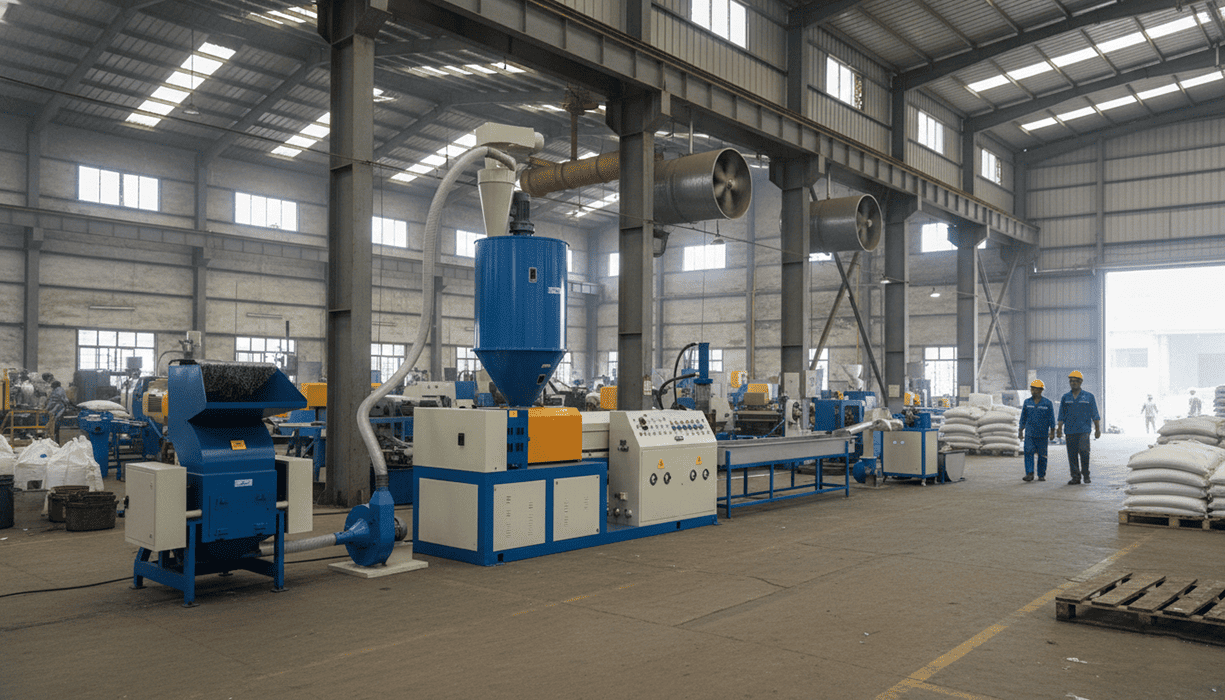
How to Select an Extruder Machine for Your Application – A Buyer’s Checklist
In the fast-evolving plastics manufacturing industry, selecting the right extruder machine is a critical decision that directly impacts your production efficiency, product quality, and return on investment. Whether you’re producing plastic pipes, profiles, films, or rotational molding parts, the extruder forms the backbone of your processing line. Understanding your application requirements, machine specifications, and long-term production goals will help you make an informed choice.
This guide offers a detailed buyer’s checklist, providing insights into the essential factors you must consider before investing in an extruder machine tailored to your application.
Understanding the Basics of an Extruder Machine
An extruder machine is designed to melt and shape plastic materials into continuous profiles or specific forms through a die. Depending on the plastic type and application, the machine can be configured for single-screw, twin-screw, or multi-layer extrusion.
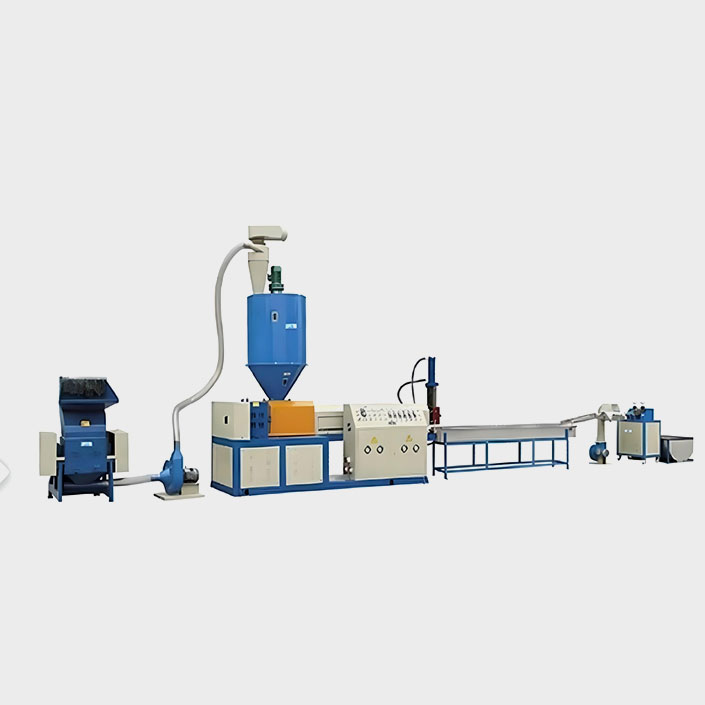
Each component of an extruder—from the feed hopper and barrel to the screw and die—plays a pivotal role in the efficiency of the overall process. The plastic is melted, mixed, and pushed through the die, forming the desired shape, which is then cooled and cut or rolled depending on the product type.
Assess Your Product Application First
The first and most important step in selecting an extruder machine is to define your application. Are you manufacturing pipes, films, sheets, profiles, or containers? Do you require multi-layer extrusion or foam extrusion?
For instance, if you’re working with Rotational molding machines, you may need an extruder that can handle high-temperature resins and ensure consistent melt flow. Similarly, for precision profile extrusion, dimensional stability is crucial. Once your application is clear, choosing machine specifications becomes more focused and relevant.
Choose the Right Screw Design and Size
The screw is the heart of the extruder. Its design determines how efficiently the plastic is melted and homogenized. Screw size (typically measured in diameter) and the L/D ratio (length to diameter) must be optimized based on the type of polymer you’re processing.
For general-purpose applications, a standard screw may suffice. However, for high-performance resins or recycled materials, specialized screw geometries are required to ensure proper mixing and plasticizing. Twin-screw extruders are ideal for compounding and mixing applications, offering higher output and better material homogeneity.
Check for Temperature and Pressure Controls
Plastic extrusion is a temperature-sensitive process. Accurate temperature control zones along the barrel ensure consistent material melting without degradation. Check if the extruder has digital PID temperature controllers, efficient heaters, and cooling systems.
Pressure monitoring is equally important. High-pressure fluctuations can indicate improper screw design or material issues, affecting final product quality. Reliable machines should have inbuilt sensors and alarms to alert operators when parameters are out of range.
Consider Output Capacity and Energy Efficiency
Every buyer should determine the expected output rate (kg/hr or tons/day) and match it with the machine’s extrusion capacity. Don’t just rely on maximum rated outputs—consider the material type, product size, and line speed.
Energy efficiency is another critical aspect. Look for extruders equipped with energy-saving motors, variable frequency drives (VFDs), and efficient heaters. These features reduce operational costs and support sustainable manufacturing goals.
Focus on Build Quality and Durability
Extruder machines are a long-term investment. The machine frame, barrel, gearbox, and die head should be constructed using high-grade materials like nitrided or bimetallic steel to withstand wear and corrosion. Precision machining ensures tight tolerances, reducing maintenance needs and breakdowns.
A sturdy base, proper insulation, and advanced surface treatments for screws and barrels also contribute to longevity and reliable performance. Choose machines from manufacturers who offer detailed specs on materials used in construction.
Evaluate the Control System and Automation Level
Modern extrusion lines rely heavily on automation and PLC-based control systems. Touchscreen HMIs, recipe storage, and real-time process feedback enhance ease of operation and reduce human error.
If you’re planning to scale up or need consistent repeatability, opt for a machine with SCADA integration or IoT-based monitoring. This allows remote diagnostics, predictive maintenance, and integration with factory ERP systems.
Compatibility with Downstream Equipment
An extruder doesn’t work in isolation. It must be compatible with your downstream equipment such as dies, cooling tanks, haul-offs, cutters, or winders. Ensure that the line speed, synchronization, and control interfaces match.
For example, if you’re producing products using a rotational molding machine, the extruder should deliver uniform granules or pellets suitable for rotational applications. This coordination between extruder and subsequent machines minimizes downtime and waste.
Material Flexibility and Recycling Capabilities
If your business works with a variety of plastic materials like HDPE, LDPE, PVC, ABS, or recycled blends, choose an extruder that offers material flexibility. Some advanced extruder machines come with interchangeable screw barrels or modular designs to switch between materials with minimal downtime.
Also, consider machines with inbuilt recycling capabilities or compatibility with plastic waste processing units. It boosts material reuse and aligns with sustainability trends in plastic manufacturing.
After-Sales Support and Spare Availability
A well-made machine is only as good as the support behind it. Before purchasing, check if the manufacturer provides installation assistance, operator training, and technical support. Quick response to service requests and easy availability of spare parts ensure smooth operations over the long term.
Invoit Plast Machinery PVT Ltd stands out in this area. With years of expertise and a vast network, they are known for reliable after-sales service and prompt support across India.
Why Choose Invoit Plast Machinery PVT Ltd?
When you’re searching for the best extruder machine for your application, Invoit Plast Machinery PVT Ltd is a name you can trust. Renowned as the Best Extruder Machine Manufacturer in India, Invoit Plast offers a complete range of high-performance extruder machines suitable for diverse applications including rotational molding, profile extrusion, sheet production, and recycling.
Their machines are known for:
- Precision engineering and robust design
- High energy efficiency and throughput
- Customization based on your application
- Seamless integration with downstream equipment
- Excellent customer support and service
Whether you’re expanding your plant or setting up a new line, Invoit Plast delivers the innovation and dependability you need to stay competitive.
Final Thoughts
Choosing the right extruder machine involves a careful balance of technical, operational, and economic factors. From screw design and temperature control to output needs and automation, every detail matters in ensuring you get the best value for your investment.
By following this buyer’s checklist and aligning your selection with your specific application—whether it’s film, sheet, profile, or rotational molding—you’ll ensure a successful and future-ready production line. And when you’re ready to make that investment, trust a proven partner like Invoit Plast Machinery PVT Ltd, where quality meets performance in every machine.
FAQs
Single-screw extruders are ideal for simple, continuous extrusion with consistent materials. Twin-screw extruders offer better mixing and are used for compounding or processing multiple materials.
Yes, but only if the extruder is designed for material flexibility. Machines with interchangeable screws or adjustable temperature zones are ideal for multi-material processing.
Regular cleaning of the screw and barrel, checking for wear and tear, lubrication of the gearbox, and monitoring of sensors are key maintenance tasks for extruders.
Extruders can produce granules or powder feedstock required by rotational molding machines. Uniform particle size and thermal stability are crucial for compatibility.