
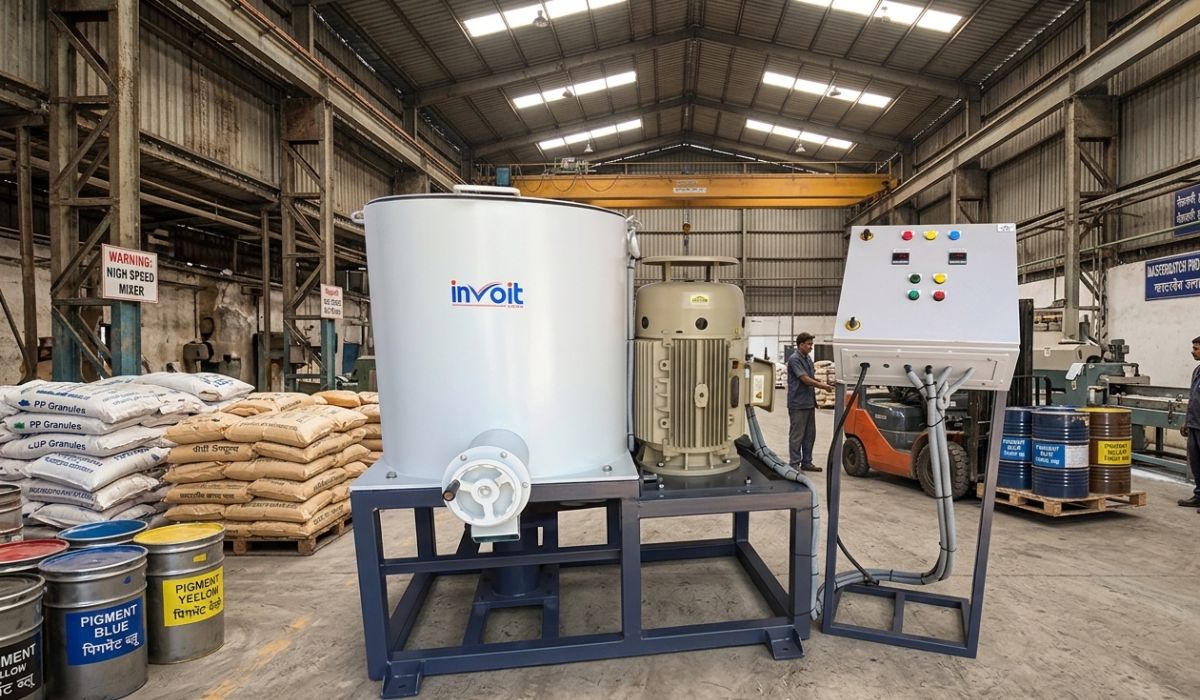
5 Key Points to Keep Your Color Masterbatch High Speed Mixing Process Correct
In the plastic industry, consistency is everything. Whether you are producing high-quality masterbatches for films, pipes, or rotomoulding products, your final color quality depends on one critical machine: the Masterbatch High Speed Mixer Machine.
If your mixing is wrong, your color will be patchy. If your mixing is right, your production flows smoothly, and your customers remain happy.
As a leading High Speed Mixer Machine Manufacturer in India, Invoit Plast has seen how small mistakes in the mixing stage can lead to big losses in the extrusion or injection moulding phase. In this guide, we will look at five essential points to ensure your high-speed mixing process is perfect every time.
Why Proper Masterbatch Mixing Matters
Before we jump into the key points, let’s understand the importance of correct mixing.
Color masterbatch is a concentrated mixture of pigments and additives. When blended properly with raw polymer, it ensures:
- Uniform color distribution
- Consistent product appearance
- Reduced rejection rates
- Better brand value in the market
But if the mixing process is not controlled, you may face:
- Color streaks or patches
- Overheating of material
- Wastage of expensive pigments
- Production downtime
This is where a Masterbatch High Speed Mixer Machine becomes essential—but only when used correctly
Certain powders and additives tend to form lumps, which reduces mixing efficiency.
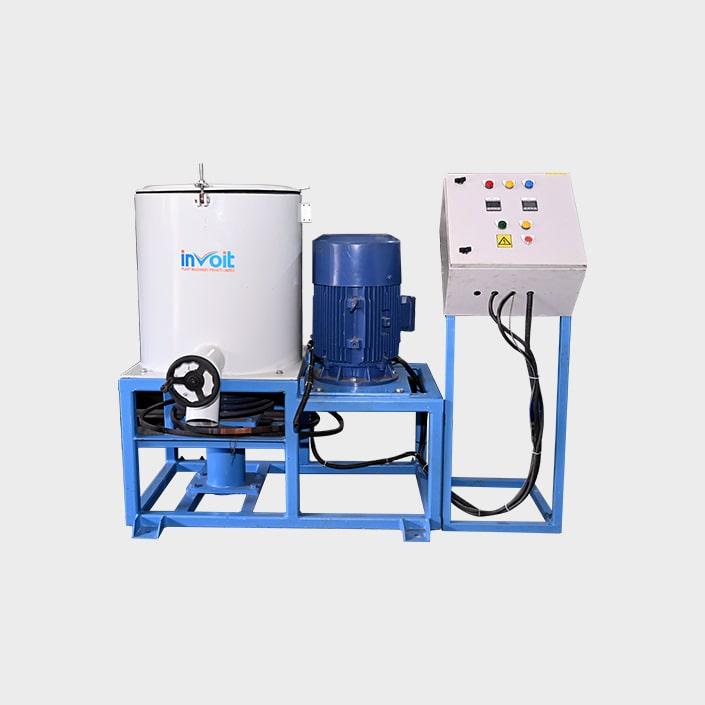
1. Get the Loading Sequence Right
Many operators make the mistake of dumping all materials—polymers, pigments, and additives—into the Plastic Mixer Machine at the same time. This is a recipe for poor dispersion.
In a professional masterbatch setup, the sequence matters. Generally, you should start with the base resin (polymer granules or powder). Once the polymer starts to heat up due to friction and the blades are spinning at the correct RPM, you should add your pigments and fillers.
Industrial Insight: Adding pigments too early can cause them to stick to the walls of the mixer before they have a chance to coat the resin. By following a strict loading order, you ensure that every granule of plastic is evenly coated with color
As production scales and quality expectations rise, these limitations become more visible—and costly.
2. Monitor Temperature and Friction Heat
A High Speed Mixer Machine does not just move material; it generates heat through high-velocity friction. This heat is what allows the additives to bond with the polymer surface.
However, “too much of a good thing” is dangerous. If the temperature rises too high:
- The polymer might start to melt or “clump” inside the mixer.
- Organic pigments may lose their color strength (thermal degradation).
- The material could stick to the discharge valve, causing a blockage.
Use a Masterbatch Mixer Machine equipped with accurate temperature sensors. Always set a “Set Point” that is safely below the softening point of your carrier resin. For example, if you are working with PE-based masterbatches, keep a close eye on the thermometer to prevent pre-mature melting.
3. Blade Maintenance and Tip Speed
The heart of any Masterbatch High Speed Mixer Machine is the blade (or impeller) system. Over time, the abrasive nature of pigments and fillers (like Calcium Carbonate or Titanium Dioxide) will wear down the edges of the blades.
When blades become dull:
- The “Tip Speed” decreases, meaning the material isn’t being hit with enough force.
- The “Vortex” (the whirlpool effect) becomes weak.
- Mixing time increases, which wastes electricity and reduces your daily output.
As a trusted High Speed Mixer Machine Manufacturer, we recommend checking your blades every month. If the edges feel rounded or the gap between the blade and the vessel wall has increased significantly, it is time for a replacement or hard-facing
4. Control the Batch Size
It is tempting to fill your Plastic Mixer Machine to the very top to “save time.” However, overfilling actually slows you down and ruins the quality.
A high-speed mixer needs space for the material to fly and tumble. If the vessel is too full, the material cannot form a proper vortex. This leads to “dead zones” where the pigment stays at the bottom and never mixes with the top layer.
The Golden Rule: Ideally, your batch should occupy about 60% to 70% of the total vessel volume. This “headspace” allows the air and material to circulate freely, ensuring a 100% uniform color distribution in just a few minutes.
5. Efficient Cooling and Discharge
Mixing is only half the battle; the “cooling” stage is just as important. Once the high-speed cycle is done, the material is hot and “active.” If you leave it in a heap or in a hot bin, the granules might stick together (agglomeration).
High-quality setups often use a “Cooling Mixer” alongside the High Speed Mixer Machine. Transferring the hot masterbatch mix into a horizontal cooling mixer allows the temperature to drop rapidly while keeping the material in motion.
This ensures that when the material reaches your extruder, it is free-flowing and ready for high-quality pelletizing.
Additional Factors That Improve Mixing Efficiency
While the above five points are critical, a few additional practices can further improve your process:
Operator Training
Even the best Masterbatch High Speed Mixer Machine Manufacturer cannot ensure results if operators are not trained properly.
Material Quality
Low-quality masterbatch or inconsistent raw material affects final output, no matter how advanced your Plastic Mixer Machine is.
Process Standardization
Document your mixing process and follow it consistently across shifts.
Why Choose Invoit Plast?
Choosing the right High Speed Mixer Machine Manufacturer is a long-term business decision. At Invoit Plast, we don’t just sell machines; we provide mixing solutions.
Our machines are designed with the ruggedness required for the Indian and African industrial environments. We understand the challenges of fluctuating power, varying raw material quality, and the need for easy-to-maintain equipment.
The Invoit Plast Advantage:
- Precision Engineered Blades: Designed for maximum vortex creation and minimum wear.
- High-Durability Liners: To withstand abrasive fillers.
- User-Friendly Interface: So your operators can achieve perfect results with minimal training.
Turning Consistency into Profit
High-speed mixing is the foundation of the masterbatch industry. When you keep your charging order correct, manage your temperatures, maintain your blades, respect batch sizes, and prioritize cleanliness, you create a product that your customers can trust.
A high-quality Plastic Mixer Machine is an investment that pays for itself through reduced waste and higher customer satisfaction. If your color is consistent, your brand is strong.
Take the Next Step
Are you looking to upgrade your production line or set up a new masterbatch facility? Whether you are based in India or looking for reliable exports to Africa and the Middle East, Invoit Plast is here to support you.
Contact Invoit Plast today to discuss your specific mixing requirements. Let’s build a colorful and efficient future for your plastic business together.
📩 Request Your Quotation Now
+91 63546 02502 , info@invoitplast.com
FAQs
A Masterbatch High Speed Mixer Machine is an industrial machine used to mix plastic resins, pigments, and additives at high speed using friction heat. It ensures uniform color distribution and consistent quality in plastic products like pipes, films, and molded items.
Proper mixing ensures even dispersion of pigments in the polymer, which results in consistent color, better product appearance, reduced rejection rates, and improved production efficiency.
If mixing is not done properly, it can lead to color streaks, uneven shade, overheating of material, higher raw material wastage, and production downtime.
The correct loading sequence is to first add the base polymer, allow it to heat up slightly through friction, and then gradually add pigments and additives. This ensures better coating and dispersion.
Temperature plays a critical role. Controlled heat helps pigments bond with the polymer, but excessive temperature can cause material melting, pigment degradation, and equipment blockage.
The ideal batch size is around 60% to 70% of the total mixer capacity. This allows proper material movement and vortex formation for uniform mixing.
Worn or dull blades reduce tip speed and mixing efficiency, leading to poor dispersion, longer mixing time, increased power consumption, and inconsistent color output.
Cooling prevents agglomeration (sticking of particles). A cooling mixer reduces material temperature quickly, ensuring free-flowing material for further processing like extrusion or pelletizing.
Well-trained operators understand the correct loading sequence, temperature control, and machine settings. This minimizes errors, improves consistency, and increases overall production efficiency.
Choose a manufacturer that offers durable machines, precision-engineered blades, temperature control systems, easy maintenance, and strong after-sales support—like Invoit Plast, known for reliable plastic mixing solutions.