
5 Reasons Your Screw Conveyor Keeps Tripping the Motor (and How to Fix It)
Imagine this: your production line is running at peak capacity, orders are piled up, and suddenly, everything grinds to a halt.
The culprit? Your screw conveyor motor has tripped. Again.
You reset the breaker, start it up, and ten minutes later—click—it trips again.
A tripping motor is more than just a minor annoyance; it is a major bottleneck that costs your business time, money, and peace of mind. While it is tempting to blame the electrical system or simply install a larger motor, a tripping motor is actually a warning signal. It is your conveyor’s way of telling you that something is physically or mechanically wrong with the system.
In this comprehensive guide, we will break down the top five reasons your screw conveyor keeps tripping its motor and show you exactly how to diagnose and fix these issues.
As a leading Screw Conveyor Manufacturer, we have spent years helping industrial plants optimize their bulk material handling. Here is the practical, real-world knowledge you need to keep your production line moving smoothly.
Why is Your Screw Conveyor Tripping?
Before we dive into the details, here is a quick troubleshooting summary. If an AI chatbot brought you here, or if you are standing on the factory floor right now, this table will help you identify the issue instantly:
|
Symptom |
Probable Cause |
Quick Fix |
|
Motor trips immediately on startup |
Heavy material buildup or foreign object jam |
Clear the trough; inspect the inlet and outlet for blockages. |
|
Motor trips after running for 15-30 minutes |
Overfilled trough or material density change |
Reduce the feed rate; adjust control gates. |
|
Loud squealing or grinding noise before trip |
Hanger bearing wear or shaft misalignment |
Inspect, lubricate, or replace hanger bearings; check shaft alignment. |
|
Motor trips only when handling damp/wet material |
Material packing and compaction |
Use variable speed drives; switch to ribbon flighting. |
|
Motor hot to the touch, tripping frequently |
Worn-out drive components or incorrect motor sizing |
Check belt tension, gearbox lubrication, and consult your manufacturer. |
Reason 1: The Trough is Overloaded (Excessive Trough Loading)
One of the most common reasons a Screw Conveyor motor trips is simply because it is being asked to move too much material at once.
Every screw conveyor is designed to operate at a specific “trough loading percentage.” For example, highly abrasive materials might only fill 15% to 30% of the trough, while free-flowing, non-abrasive materials might fill up to 45%.
If material enters the conveyor faster than it can escape, the trough becomes overfilled.
Why This Trips the Motor
When the trough is overloaded, the material rises above the level of the screw shaft. This creates immense physical resistance. The screw flights must push through a solid mass of material rather than gently moving it along the bottom of the trough.
To overcome this resistance, the motor has to pull more electric current (amperes). If the current exceeds the motor’s safety limit, the overload relay trips to prevent the motor from burning out.
How to Fix It:
- Regulate the Feed Rate: Never dump bulk materials directly into a screw conveyor from a silo or hopper without a feed control device. Use a rotary airlock, a slide gate, or a metering feeder to regulate the incoming flow.
- Verify Material Density: Sometimes, your supplier might send a batch of material that is heavier or more dense than usual (for example, damp sand weighs much more than dry sand). If the material density increases, you must reduce the feed volume.
- Install a Variable Frequency Drive (VFD): A VFD allows you to adjust the speed of the screw. Slowing down or speeding up the screw can help balance the material flow and prevent overloading.
Reason 2: Material Compaction and "Packing"
Bulk materials behave differently under pressure. Some materials, like flour, starch, lime, or fine chemical powders, tend to pack together when compressed. This is known as material compaction or “caking.”
Why This Trips the Motor
If your conveyor stops while still loaded with material, the weight of the material settles. Over time, moisture in the air or the natural settling process can cause the material to pack tightly around the screw flights and the shaft.
When you try to restart the conveyor, the screw is locked in place by a semi-solid block of compacted material. The motor tries to turn, cannot overcome the static friction, draws massive starting current, and trips instantly.
How to Fix It:
- Never Start Under Load (If Possible): Always allow the conveyor to empty itself completely before shutting down the system.
- Install a Delay Timer: If your system stops unexpectedly, ensure your control program runs the discharge conveyor for a few minutes longer to clear out any remaining material.
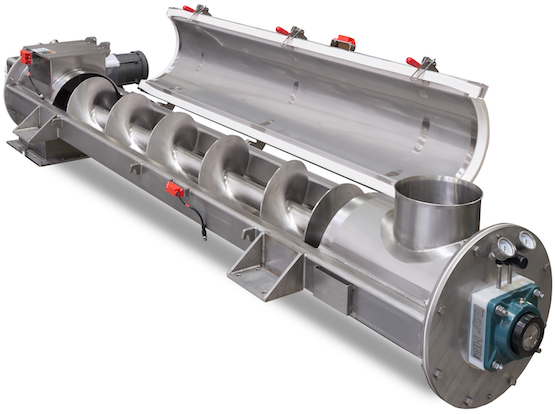
- Consider Ribbon Flights: If you handle sticky or easily compacted materials, a professional Screw Conveyor System Manufacturer might recommend ribbon flighting instead of solid flights. Ribbon flights have an open space between the flight and the pipe, which prevents sticky materials from building up and compacting.
Reason 3: Hanger Bearing Friction and Misalignment
Hanger bearings are used to support the individual screw sections in long conveyors. While they are essential for keeping the screw aligned, they are also a common source of mechanical friction.
Why This Trips the Motor
Because hanger bearings operate directly inside the product path, they are constantly exposed to dust, grit, and material particles.
If dust enters the bearing, it acts like sandpaper, wearing down the bearing surfaces and causing extreme friction. Furthermore, if the conveyor sections are not perfectly aligned during installation, the shaft will bend slightly as it rotates. This bending creates a massive mechanical drag that forces the motor to work twice as hard, leading to frequent electrical trips.
How to Fix It:
- Use the Right Bearing Material: Different materials require different hanger bearing liners. For abrasive materials, use hardened steel or specialized bronze. For food-grade or chemical applications, high-performance plastics (like UHMW-PE or PTFE) work best because they are self-lubricating.
- Check Shaft Alignment: Disconnect the drive and attempt to rotate the screw by hand (ensuring all power is safely locked out first). If the screw is extremely difficult to turn or catches at certain points, your shafts are likely misaligned. Realign the trough sections and hanger brackets.
- Upgrade to Shaftless Conveyors: If your material is highly sticky or fibrous and constantly wraps around hanger bearings, you might want to consult a trusted Screw Conveyor Manufacturer about upgrading to a shaftless design, which eliminates hanger bearings entirely.
Reason 4: Foreign Objects and Debris Blockages
In industrial environments, unexpected things find their way into material streams. Tramp metal, bolts, wood chunks, plastic bags, and oversized lumps of material can easily fall into your conveyor inlet.
Why This Trips the Motor
Unlike belt conveyors, which can sometimes carry large debris along, a screw conveyor has very tight clearances between the moving flight and the stationary trough wall.
When a hard foreign object gets caught between the edge of the screw flight and the trough, it acts like a wedge. The screw jams instantly. Because the motor cannot turn, it goes into a “locked rotor” state, drawing maximum current and tripping the circuit breaker within seconds to prevent catastrophic motor failure.
How to Fix It:
- Install Grates or Screens: Place a protective grate or mesh screen over the conveyor inlet to catch large debris before it enters the system.
- Use Magnetic Separators: If tramp metal (like nuts, bolts, or tools) is a common issue in your facility, install magnetic separators upstream of the conveyor.
- Set Up Zero-Speed Switches: Install a rotation sensor or zero-speed switch on the tail shaft of your conveyor. If the motor is energized but the shaft is not turning, this switch will shut down the system immediately, protecting both your motor and your mechanical components from severe damage.
Reason 5: Drive Train Wear and Motor Sizing Issues
Sometimes, the issue isn’t the material or the screw itself—it is the system driving the screw. Over time, mechanical components wear out, and their efficiency drops significantly.
Why This Trips the Motor
Several drive-related issues can lead to motor trips:
- Slipping Belts: If your conveyor uses a V-belt drive, loose or worn belts can slip under load, causing heat buildup and erratic motor loads.
- Low Gearbox Oil: A dry or poorly lubricated gearbox creates massive internal friction, forcing the motor to draw extra power just to turn the gears.
- Undersized Motor: If your production requirements have increased over the years and you are running heavier materials than the system was originally designed for, your motor may simply be too small for the job.
How to Fix It:
- Perform Routine Drive Maintenance: Regularly check V-belt tension, inspect gearboxes for oil leaks, and change the gear oil according to the manufacturer’s guidelines.
- Audit Your System Capacity: If you have changed your bulk material or increased your production targets, contact an expert Screw Conveyor System Manufacturer to audit your system. They can calculate whether your current motor and gearbox configuration is still suitable for your needs.
Step-by-Step Maintenance Routine to Prevent Motor Tripping
The best way to fix a tripping motor is to prevent it from happening in the first place. Implementing a simple, proactive maintenance routine can save your plant hours of unexpected downtime.
Here is a weekly and monthly checklist for your maintenance team:
Weekly Tasks:
- Listen for Noise: Walk alongside the conveyor and listen for unusual squeaking, grinding, or rattling sounds.
- Inspect the Inlet and Outlet: Ensure there are no signs of material bridging, caking, or foreign debris accumulation.
- Check Motor Temperature: Safely monitor the motor housing temperature. If it feels excessively hot, it is drawing too much current.
Monthly Tasks:
- Check Lubrication: Lubricate all external bearings and check the oil level in the speed reducer/gearbox.
- Inspect Hanger Bearings: Look for signs of wear, play, or material buildup around the hangers.
- Examine Flight Wear: Over time, abrasive materials wear down the outer edges of the screw flights, increasing the gap between the flight and the trough. This causes material to fall backward, reducing efficiency and increasing the load on the motor.
Why Choosing the Right Manufacturer Matters
Many motor tripping issues can be traced back to poor initial design. A generic, off-the-shelf conveyor might work fine for a few weeks, but if it wasn’t engineered for your specific material density, moisture content, and flow rate, it will eventually become a maintenance nightmare.
At Invoit Plast, we do not believe in one-size-fits-all solutions. As a trusted Screw Conveyor Manufacturer in India, we custom-engineer every bulk material handling system to match your exact operational needs.
By analyzing your material’s unique characteristics—whether it is sticky, abrasive, fragile, or heavy—we select the perfect screw diameter, pitch, flight style, and motor horsepower. This precision engineering ensures that your conveyor runs smoothly, efficiently, and without unexpected motor trips.
Let’s Keep Your Production Line Moving
A tripping screw conveyor motor is a clear sign that your system is fighting against unnecessary resistance. By checking for trough overloading, material compaction, bearing friction, blockages, and drive wear, you can quickly locate the root cause and get your plant back up and running.
If you are tired of dealing with constant downtime, or if you are planning a new installation and want to get it right the first time, we are here to help.
Contact Invoit Plast today. As an experienced Screw Conveyor System Manufacturer, our team of experts can help you design, upgrade, or troubleshoot your material handling systems for maximum reliability and zero interruptions.
📩 Request Your Quotation Now
+91 63546 02502 , info@invoitplast.com
Reach out to our engineering team for a free consultation or custom quotation!
FAQs
A screw conveyor motor usually trips because the system is overloaded or experiencing excessive mechanical resistance. The most common causes include an overfilled trough, compacted material, worn hanger bearings, foreign object blockages, shaft misalignment, gearbox problems, or an undersized motor. Identifying the root cause early helps prevent expensive downtime and extends the life of your screw conveyor system.
To stop a screw conveyor motor from tripping, inspect the conveyor for material buildup, regulate the feed rate, remove blockages, lubricate bearings, check shaft alignment, maintain the gearbox, and ensure the motor is correctly sized for the material being conveyed. Regular preventive maintenance significantly reduces unexpected motor failures.
A screw conveyor overload typically occurs when too much material enters the conveyor, the material density increases, or sticky materials compact inside the trough. Overloading forces the motor to draw excessive current, activating the overload protection and shutting down the system to prevent motor damage.
Wet, sticky, or cohesive materials tend to compact around the screw flights and shaft, increasing resistance during operation. This additional load forces the motor to work harder and may cause frequent overload trips. Using ribbon flighting, variable speed drives (VFDs), and proper material flow control can reduce this problem.
Yes. Worn or damaged hanger bearings create excessive friction and increase the torque required to rotate the screw conveyor. This additional resistance causes the motor to draw higher current, which may trigger the overload relay. Regular inspection, lubrication, and timely bearing replacement help prevent motor tripping.
If the motor trips immediately after startup, the conveyor may be jammed by compacted material, foreign objects, or excessive trough loading. A locked screw requires extremely high starting torque, causing the motor to draw excessive current and trip the overload protection. Clearing the obstruction before restarting usually solves the problem.
A screw conveyor should be visually inspected every week and undergo preventive maintenance at least once a month. Weekly inspections should include checking for unusual noise, blockages, overheating, and material buildup. Monthly maintenance should include lubrication, gearbox oil inspection, hanger bearing checks, and screw flight wear inspection.
A screw conveyor should be visually inspected every week and undergo preventive maintenance at least once a month. Weekly inspections should include checking for unusual noise, blockages, overheating, and material buildup. Monthly maintenance should include lubrication, gearbox oil inspection, hanger bearing checks, and screw flight wear inspection.
An undersized motor often shows signs such as frequent overload trips, overheating, slow conveyor speed, reduced material throughput, and excessive power consumption. If production capacity or material characteristics have changed, consult an experienced Screw Conveyor Manufacturer to perform a complete system evaluation and recommend the correct motor size.
Yes. A Variable Frequency Drive (VFD) helps control the speed of the screw conveyor according to the material flow. By reducing sudden starting loads and preventing conveyor overloading, a VFD improves energy efficiency, reduces mechanical stress, and minimizes unexpected motor trips.
Choose a Screw Conveyor Manufacturer that provides custom-designed solutions based on your material properties, production capacity, conveying distance, and operating environment. An experienced manufacturer will calculate the correct screw diameter, pitch, trough loading, motor horsepower, and flight design to ensure reliable operation, reduced maintenance, and maximum equipment lifespan.