
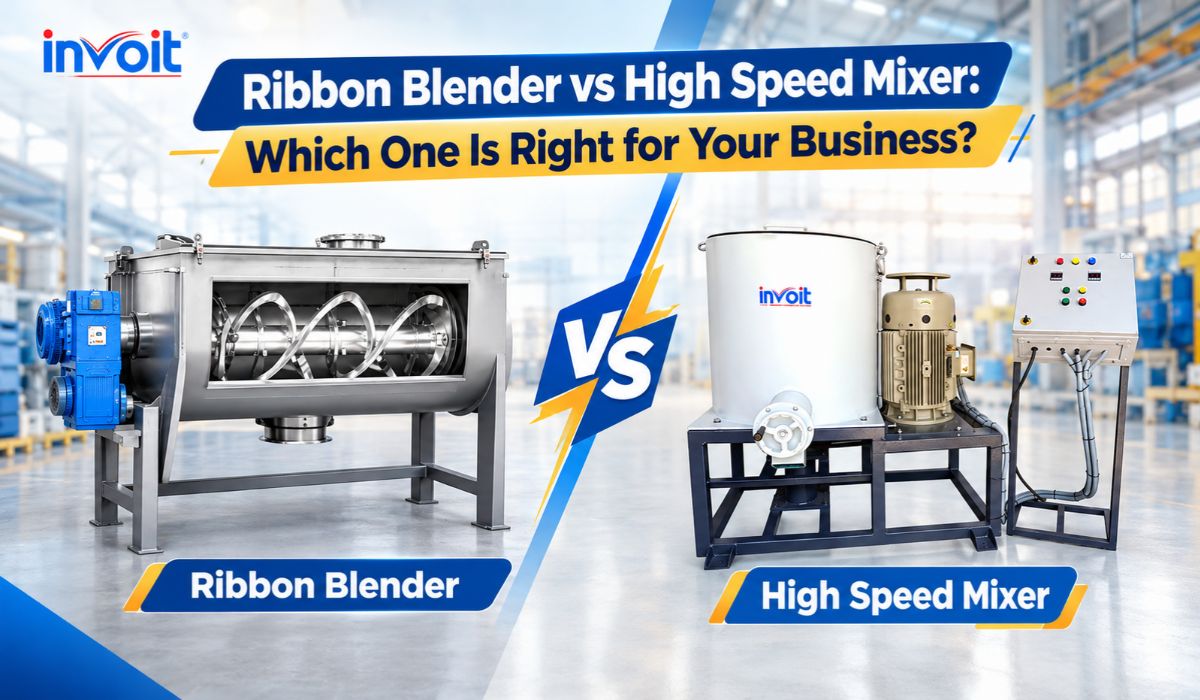
Ribbon Blender vs High Speed Mixer: Which One Is Right for Your Business?
In industrial manufacturing, mixing is rarely just a simple preparation step. It is the core process that determines the physical quality, consistency, and structural integrity of your finished product. Whether you are compounding PVC resins, preparing dry powder foods, formulating agricultural fertilizers, or processing specialized chemical additives, your choice of mixing equipment directly dictates batch uniformities, cycle times, energy usage, and overall plant efficiency.
Two of the most widely deployed mixing systems in modern processing facilities are the Ribbon Blender and the High Speed Mixer Machine. While both systems are engineered to transform separate raw components into a homogeneous mixture, they operate on completely different physical principles and fulfill distinct production demands.
Choosing between these two technologies requires a clear understanding of material dynamics, shear requirements, thermal behavior, and throughput expectations. Selecting the wrong equipment can lead to unmixed lumps, degraded particle structures, prolonged batch times, high energy waste, or premature equipment wear.
This comprehensive guide delivers an in-depth breakdown of how Ribbon Blenders and High Speed Mixers work, compares their performance across essential operational metrics, evaluates alternative mixing machinery choices, and provides a clear decision framework to help you select the ideal solution for your manufacturing operations.
Understanding the Fundamentals: How Each Machine Works
To make a well-informed capital investment, plant managers and technical directors must first understand the fundamental operating philosophy behind each machine.
What Is a Ribbon Blender?
A Ribbon Blender is a low-speed, horizontal tumbling machine engineered primarily for bulk powder blending and low-shear applications.
The machine consists of a horizontal U-shaped container housing a central shaft mounted with inner and outer helical ribbon agitators. As the shaft rotates at moderate speeds, the outer ribbons pull material from the edges toward the center, while the inner ribbons push material from the center toward the outer walls. This dual action creates a continuous counter-current movement that gently tumbles the ingredients together without forcing them against rigid walls under heavy pressure.
Core Operational Characteristics of a Ribbon Blender:
- Gentle Tumbling Motion: Protects delicate, fragile, or friable materials from breaking down during the mixing cycle.
- Low Shear Environment: Prevents excessive mechanical friction and preserves original particle shapes and sizes.
- Large Volumetric Capacity: Designed to handle substantial bulk volumes of dry powders or granular solids in a single continuous batch.
What Is a High Speed Mixer Machine?
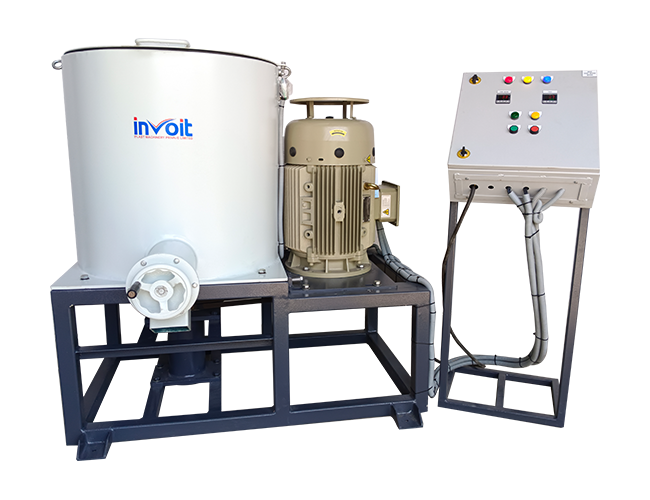
A High Speed Mixer Machine is an intensive, high-energy processing unit engineered for fast dispersion, de-agglomeration, and thermal conditioning of materials.
Unlike horizontal tumbling blenders, a high speed unit features a vertical mixing vessel equipped with high-velocity impellers or specially shaped blades at the bottom or sides of the chamber. When these blades rotate, they generate a high-speed centrifugal vortex that pulls raw ingredients downward into the high-shear zone and forces them outward against the vessel walls.
This intense motion creates high mechanical friction between individual particles. This friction converts mechanical kinetic energy into thermal energy inside the chamber, rapidly raising the temperature of the batch. This natural heating effect is essential for processes like polymer resin conditioning, liquid plasticizer absorption, and wax coating.
Core Operational Characteristics of a High Speed Mixer Machine:
- Ultra-Fast Processing Cycles: Completes thorough mixing in minutes rather than long operational cycles.
- High Shear Force: Easily breaks down stubborn agglomerates, unmixed clumps, and micro-powder clusters.
- Friction-Based Thermal Pre-Conditioning: Generates internal heat to melt additives, dry surface moisture, or assist resin absorption without requiring slow external heat transfer.
- Homogeneous Micro-Dispersion: Ensures tiny concentrations of micro-ingredients, stabilizers, pigments, or liquid additives are distributed uniformly throughout the mass.
Direct Operational Comparison: Ribbon Blender vs High Speed Mixer
When comparing these two processing technologies, the goal is not to determine which machine is universally superior. Instead, the focus should be on matching the physical capabilities of the equipment with the specific demands of your formulation.
1. Processing Speed and Cycle Duration
Production throughput is one of the most critical factors in plant profitability.
- Ribbon Blender: Operates on a slower, steady mixing cycle. Depending on material density, powder flowability, and batch volume, a typical ribbon blender cycle takes anywhere from 15 to 45 minutes per batch.
- High Speed Mixer Machine: Designed for extreme speed and high output. Thanks to high-velocity impellers and rapid vortex action, a high speed unit can complete a thorough dispersion and thermal conditioning cycle in as little as 3 to 10 minutes.
If your plant production line experiences bottlenecks due to slow raw material preparation, or if your recipe demands rapid batch turnover, a high speed unit provides a clear speed advantage.
2. Shear Force and Ingredient Dispersion
Shear force refers to the mechanical energy applied to shear, break apart, or distribute sticky or fine ingredients evenly across a batch.
- Ribbon Blender: Delivers low shear force. It performs exceptionally well when combining free-flowing powders of similar particle sizes. However, if your recipe requires dispersing liquid additives, oily binders, sticky resins, or heavy color pigments, a ribbon blender may leave unmixed pockets or liquid droplets.
- High Speed Mixer Machine: Delivers high shear force. The intense impact of high-speed blades instantly breaks up lumps and forces liquid additives to coat individual powder granules evenly.
3. Temperature Control and Thermal Friction
Temperature plays a crucial role in chemical bonding, polymer absorption, and moisture removal.
- Ribbon Blender: Generates minimal friction heat during operation. The batch remains close to ambient room temperature unless external heating jackets are built into the trough. Even with heating jackets, thermal transfer through bulk static powder is relatively slow.
- High Speed Mixer Machine: Generates substantial internal heat naturally through particle friction. As particles collide at high velocities, the batch temperature rises rapidly and predictably. This makes the system ideal for polymer blending, where plasticizers must penetrate deep into resin pores at elevated temperatures.
4. Particle Sensitivity and Material Structure
Not all ingredients can withstand aggressive mechanical impact.
- Ribbon Blender: Preserves fragile materials such as delicate food flakes, spray-dried powders, glass spheres, and engineered granules without crushing them.
- High Speed Mixer Machine: The high-impact environment can shatter fragile crystals, crush delicate granules, or break down soft fibers. It is designed specifically for materials that require intense dispersion rather than gentle handling.
Industry Applications: Where Each Technology Excels
Understanding how these machines function in real-world factory environments clarifies which equipment fits your industry.
Ideal Applications for Ribbon Blenders
Ribbon blenders are the industry standard for large-volume, low-shear dry blending where preserving particle structure is essential:
- Food Processing & Ingredients: Seasoning blends, spice mixes, bakery premixes, powdered milk, protein powders, and drink bases.
- Agriculture & Animal Care: Animal feed formulations, dry fertilizer blends, grain treatments, and pesticide powders.
- Construction & Building Materials: Dry tile adhesives, gypsum mixes, wall putties, and sand-cement blends.
- Basic Bulk Chemicals: Dry detergent powders, bulk mineral salts, and industrial sodium compounds.
Ideal Applications for High Speed Mixers
High speed units dominate industries requiring micro-dispersion, particle surface coating, or friction-assisted heat processing:
- Plastics & Polymer Compounding: Rigid and flexible PVC dry blending, masterbatch pigment preparation, filler dispersion (such as calcium carbonate or talc in resin), and polymer additive integration.
- Specialty Chemicals & Powders: Powder coatings, hot-melt adhesives, rubber compounding chemicals, and resin-bound compounds.
- Pharmaceuticals & Cosmetics: Fine face powders, uniform tablet granulations, cosmetic pigment dispersions, and active pharmaceutical ingredient distribution.
Broadening the Industry Context: Alternative Competing Equipment Choices
To make a completely reliable decision, it helps to understand how Ribbon Blenders and High Speed Mixers fit into the wider family of industrial mixing equipment. Plant managers often evaluate other competing machinery types during their feasibility studies:
1. Paddle Mixers
Paddle Mixers use flat, angled blades attached to a horizontal shaft instead of helical ribbons. They apply slightly higher shear than ribbon blenders and are effective for handling moist powders, sludges, or sticky masses that might cling to standard ribbon agitators. However, they lack the high-velocity friction heat and intense dispersion capabilities of a dedicated high speed unit.
2. Planetary Mixers
Planetary Mixers feature mixing blades that rotate on their own axes while simultaneously orbiting a central point inside a vertical bowl. They are designed for high-viscosity pastes, gels, and thick doughs rather than rapid dry powder dispersion or polymer dry blending.
3. Fluidized Bed Mixers
Fluidized Bed Mixers utilize dual counter-rotating shafts equipped with overlapping paddles that lift materials into a weightless zone. They offer extremely fast, gentle blending for fragile solids, but they require high capital investment and do not generate the friction heat required for resin conditioning.
By evaluating these alternatives, processing plants can confirm whether a Ribbon Blender or a High Speed Mixer remains the most practical, cost-effective choice for their specific formulation.
Practical Factors for Plant Operations & Cost Management
Beyond mixing mechanics, purchasing industrial machinery involves practical operational considerations that affect long-term plant efficiency and total cost of ownership.
Floor Space and Plant Layout
Ribbon blenders have a horizontal footprint, requiring significant floor length but moderate overhead clearance. Conversely, high speed units feature a vertical design, taking up less floor space but requiring adequate vertical clearance for lid opening, top charging, and material loading platforms.
Energy Efficiency and Power Usage
While high speed units use higher wattage motor drives to spin impellers rapidly, their processing cycles are significantly shorter. In many polymer and chemical processing plants, a 5-minute high speed cycle consumes comparable or even lower overall energy per batch than running a large horizontal blender for nearly an hour.
Cleaning, Maintenance, and Batch Changeovers
Facilities that handle multiple color grades or varying chemical formulations must evaluate how easy equipment is to clean between production runs:
- High Speed Units: Feature smooth vertical interiors and accessible lids, allowing quick wash-downs and fast blade inspection.
- Ribbon Blenders: Require thorough cleaning of multi-tiered ribbon surfaces and long horizontal troughs, which can extend changeover times during frequent product switches.
Decision Matrix: Key Questions Before Purchasing
Before finalizing your equipment selection, review these essential practical questions with your production and engineering teams:
- What is the shear sensitivity of your raw materials?
If your ingredients break easily and must maintain their original shape, choose a Ribbon Blender. If your formulation contains stubborn clumps or requires liquid additive dispersion, choose a High Speed Mixer.
- Does your process require friction heat or temperature elevation?
If your material must absorb additives at warm temperatures or release surface moisture during mixing, a High Speed Mixer naturally provides this heat through friction.
- What are your target batch cycle times and production volumes?
For large bulk volume dry blending over steady timeframes, a Ribbon Blender is efficient. For fast-paced, high-frequency batch turnover, a high speed unit excels.
- How frequently do you change formulations or colors?
If your plant runs multiple small batches with frequent cleaning cycles, evaluate the vertical vessel design of a high speed unit for faster changeover routines.
Partnering with an Experienced Equipment Manufacturer
Selecting between a ribbon blender and a high speed unit is only part of the equation. To ensure reliable performance, long service life, and consistent batch quality, working with a reputable High Speed Mixer Machine Manufacturer is essential.
An experienced machinery partner does not sell generic, off-the-shelf equipment. Instead, they analyze your material density, moisture content, temperature requirements, and line capacity to engineer a system tailored to your plant requirements.
Industry-focused manufacturers—such as Invoitplast—focus on practical engineering standards, durable wear-resistant contact surfaces, dynamic impeller balancing, and comprehensive operator safety features. Working with an established manufacturing partner provides crucial operational advantages:
- Tailored Vessel & Blade Geometry: Blades and vessels customized to optimize flow patterns based on whether you are processing light resins, heavy minerals, or sticky chemical additives.
- Durable Construction & Wear Protection: High-grade stainless steel fabrication, heavy-duty bearing housings, and robust mechanical seals designed for continuous industrial operation.
- Integrated Operator Safety: Safety interlocks, pneumatic lid opening systems, and emergency stops that keep factory personnel protected during charging and maintenance.
- Reliable After-Sales Support & Spare Parts: Access to technical assistance, replacement seals, and wear parts to minimize unplanned downtime.
By prioritizing build quality, practical testing, and proven engineering expertise, your plant secures a reliable processing solution that delivers consistent performance year after year.
Making the Final Equipment Choice
Selecting the right mixing machine comes down to aligning equipment capabilities with material requirements:
- Select a Ribbon Blender if: You are working with large volumes of dry, free-flowing, or fragile bulk powders that require gentle tumbling without shear, thermal friction, or liquid dispersion.
- Select a High Speed Mixer Machine if: You are compounding PVC resins, dispersing liquid additives into fine powders, de-agglomerating stubborn ingredients, or requiring rapid, friction-heated batch cycles.
By evaluating your material characteristics, operational goals, and equipment design features, you ensure high batch consistency, efficient energy usage, and continuous production performance for your facility.
FAQs
A Ribbon Blender is a low-speed, horizontal mixing machine designed mainly for gentle blending of bulk powders and granular materials. A High Speed Mixer Machine is a high-energy vertical mixer designed for rapid dispersion, de-agglomeration, additive integration, and friction-based thermal conditioning.
The right machine depends on the material and mixing requirement. A Ribbon Blender is suitable for large-volume, free-flowing powders that need gentle mixing, while a High Speed Mixer is better when high shear, rapid dispersion, liquid additive distribution, or friction-generated heat is required.
A Ribbon Blender is commonly used for large-volume, low-shear dry blending applications. Typical uses include food ingredients, animal feed, fertilizers, dry construction materials, detergents, mineral salts, and other bulk powders.
A High Speed Mixer Machine is used for intensive mixing, fast dispersion, de-agglomeration, and thermal conditioning. It is particularly useful in PVC and polymer compounding, masterbatch preparation, filler dispersion, additive integration, powder coatings, and specialty chemical processing.
A High Speed Mixer Machine is suitable for PVC dry blending because it provides high shear, rapid dispersion, and friction-generated heat. These characteristics help with polymer resin conditioning and the integration of plasticizers and other additives.
Yes. A High Speed Mixer generates internal heat through friction between particles moving at high velocity. This friction-based heating can support processes such as polymer conditioning, plasticizer absorption, and moisture removal.
Choose a Ribbon Blender when the material is fragile or free-flowing and requires gentle, low-shear blending. It is particularly suitable when maintaining the original particle shape and size is important and friction-generated heat is not required.
Choose a High Speed Mixer when your process requires high shear, fast batch cycles, de-agglomeration, liquid additive dispersion, micro-dispersion, or friction-based heating. It is especially relevant for plastics, polymers, chemicals, and formulations requiring intensive processing.
A High Speed Mixer generally provides faster batch processing. The provided comparison states that Ribbon Blender cycles may take around 15–45 minutes, while a High Speed Mixer can complete intensive mixing and conditioning in approximately 3–10 minutes, depending on the material and process.
A Ribbon Blender can handle some liquid addition applications, but its low-shear operation may result in unmixed pockets or liquid droplets when sticky, oily, or difficult-to-disperse additives are involved. A High Speed Mixer provides stronger shear and can distribute liquid additives more intensively across powder particles.
Important factors include material characteristics, shear sensitivity, particle size, moisture content, required temperature, additive type, batch volume, target cycle time, production capacity, available floor space, cleaning requirements, and frequency of formulation changes.
The selection should be based on your material density, moisture content, temperature requirements, formulation, batch capacity, and production needs. An experienced High Speed Mixer Machine Manufacturer can evaluate these factors and recommend suitable vessel and blade geometry, construction, safety features, and operating configuration.