
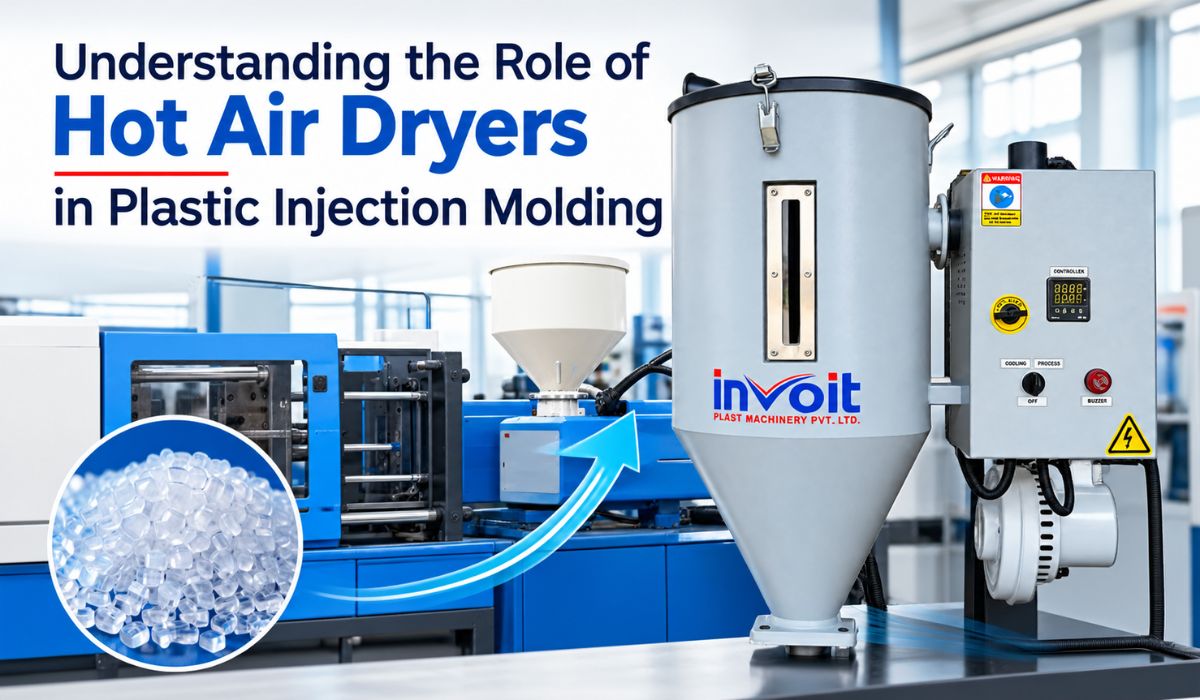
Understanding the Role of Hot Air Dryers in Plastic Injection Molding
In the fast-paced world of plastic manufacturing, achieving consistent product quality is the top priority for every plant manager, machine operator, and business owner. Whether you are producing intricate automotive components, household goods, medical packaging, or industrial fittings, the final finish and strength of your molded parts depend heavily on what happens before the raw material even enters the injection molding barrel.
One of the most frequent challenges in plastic processing is moisture. Even tiny amounts of surface humidity trapped in raw raw materials can cause severe quality defects, leading to customer rejections, wasted raw materials, and unexpected machine downtime.
This is where a reliable Hot Air Dryer for Plastic Injection Molding becomes an essential component of your production line.
In this guide, we will explore why moisture control is vital, how hot air drying technology works in plain and simple terms, where it delivers the highest return on investment, and how choosing modern, high-quality material processing equipment can transform your factory operations.
The Hidden Challenge in Plastic Injection Molding: Raw Material Moisture
Plastic raw materials arrive at your manufacturing facility in the form of small granules or pellets. While these pellets may look completely dry to the naked eye, they frequently carry moisture on their surface. This moisture can come from several everyday sources:
- Environmental Humidity: Fluctuations in atmospheric humidity during storage or transport.
- Temperature Drops: Condensation forming on granules when moved from a cold warehouse into a warm production hall.
- Storage Packaging: Packaging materials that absorb ambient air during extended storage periods.
When moist plastic granules are fed directly into a hot injection molding barrel, the trapped water instantly turns into steam. This sudden flash of steam creates air bubbles, voids, and streaks within the molten plastic mass.
When this happens, the physical appearance and structural integrity of the final product are compromised. Understanding this problem is the first step toward building a cleaner, more reliable, and more profitable production line.
What Happens When You Mold Wet Plastic Granules?
Ignoring moisture in raw materials leads to several immediate and costly consequences on the factory floor. Here are the most common quality issues caused by un-dried or improperly dried plastic granules:
1. Visual Defect: Silver Streaks and Splay Marks
Splay marks—often called silver streaks—are fan-like lines that appear across the surface of molded products. They occur when moisture turns into steam gas bubbles that are dragged along the surface of the mold core during injection. These marks ruin the aesthetic appeal of parts, especially those requiring high clarity or a flawless glossy finish.
2. Structural Weakness and Voids
Internal voids, bubbles, and micro-cracks occur when steam gets trapped inside thick-walled parts. Even if the outside of the part looks acceptable, its load-bearing strength and impact resistance are severely reduced.
3. Surface Blisters and Burn Marks
Moisture pockets can disrupt the smooth flow of plastic inside the mold cavity. This causes localized heat traps, leading to surface blistering, burn marks, or uneven color distribution across the finished component.
4. Poor Dimensional Accuracy
Excessive moisture alters the melt viscosity of the polymer. When the flow behavior changes unpredictably from shot to shot, parts warp, shrink unevenly, or fail to meet tight tolerance requirements.
5. Increased Scrap Rates and Material Waste
Every defective component translates directly into wasted energy, lost machine cycles, and financial losses. Consistently re-grinding spoiled parts increases labor costs and degrades material quality over time.
Investing in a proper Plastic Granule Dryer prevents these issues at the source, ensuring every pellet entering the molding machine is uniformly prepared.
How a Plastic Hot Air Dryer Machine Works (In Simple Terms)
You do not need an advanced engineering degree to understand how a Plastic Hot Air Dryer Machine operates. The core concept is straightforward, practical, and highly effective.
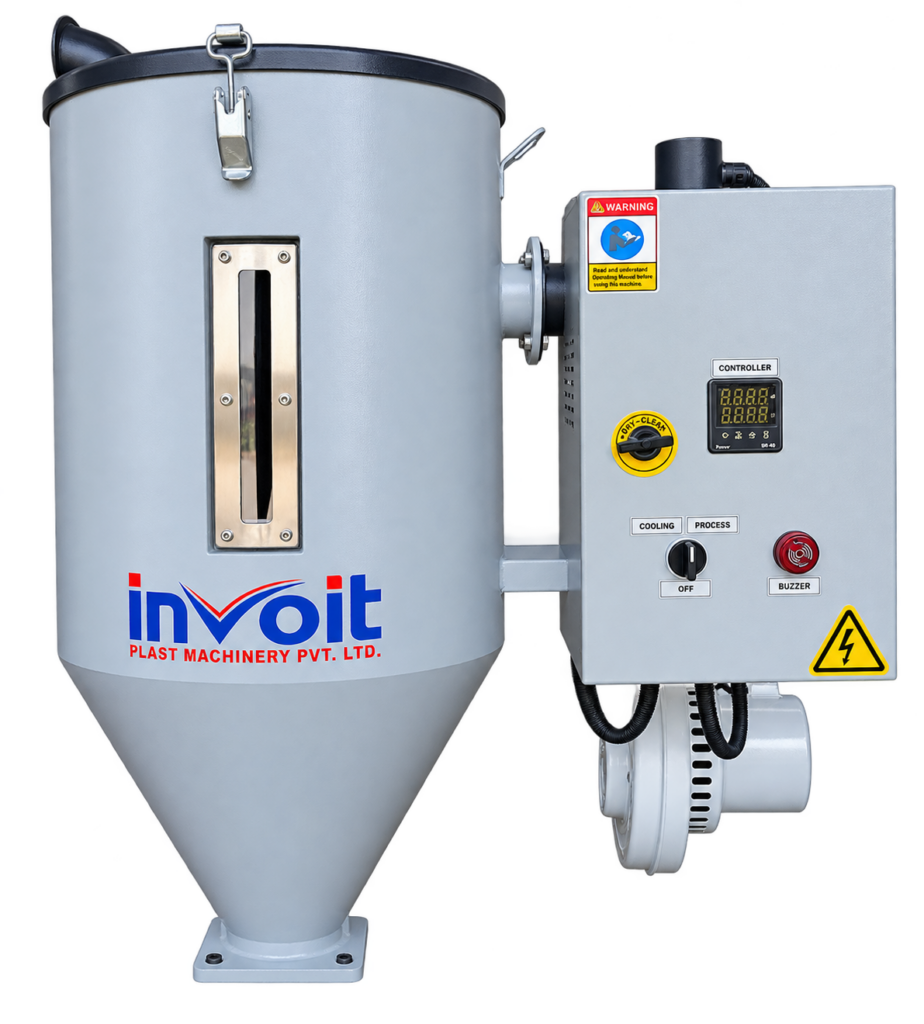
A standard Industrial Hot Air Dryer consists of three primary components working together in a continuous loop:
- The Blower Fan: Draws ambient air from the surrounding factory environment and forces it through the system.
- The Heating Element: Rapidly heats the incoming air to a stable, pre-set temperature ideal for your specific resin.
- The Drying Hopper: A specialized insulated container that holds the raw plastic granules as heated air flows upward through them.
Step-by-Step Drying Process
- Step 1: Air Intake and Heating
The blower fan pulls in surrounding air and pushes it across heating coils. The air temperature is elevated to the precise thermal level needed to evaporate surface moisture without melting or softening the plastic pellets.
- Step 2: Bottom-Up Hot Air Distribution
The hot, dry air is directed into the bottom of the drying hopper. It moves upward through the bed of plastic granules, surrounding every single pellet evenly.
- Step 3: Moisture Absorption and Evaporation
As the hot air travels upward, it absorbs the surface moisture attached to the plastic pellets. The heat turns the moisture into vapor, which is carried along with the moving airflow.
- Step 4: Continuous Air Exhaust
The warm, moisture-laden air exits through the top exhaust outlet of the hopper, removing humidity completely from the raw material bed.
- Step 5: Direct Feeding
Once dried, the plastic pellets flow smoothly from the bottom of the hopper directly into the injection molding machine throat or automatic loader, maintaining thermal consistency.
This simple, continuous mechanism makes the Hot Air Dryer Machine one of the most practical and efficient tools in modern plastics manufacturing.
Which Plastic Materials Are Best Suited for Hot Air Drying?
Not all plastic resins behave the same way when exposed to moisture. In industrial plastics processing, polymers are generally divided into two main categories:
1. Non-Hygroscopic Plastics
Non-hygroscopic plastics do not absorb moisture deep inside their internal molecular structure. Instead, moisture sits only on the outer surface of the pellets.
Examples include:
- Polypropylene (PP)
- Polyethylene (PE / HDPE / LDPE)
- Polystyrene (PS)
For these surface-moisture polymers, a Hot Air Dryer for Plastic Injection Molding is the ideal, most energy-efficient, and economical solution. The heated air removes surface moisture quickly and completely, preparing the resin for immediate processing.
2. Hygroscopic Plastics
Hygroscopic materials actually pull water molecules deep into their internal chemical structure (e.g., Nylon/PA, PET, Polycarbonate, ABS). While these materials usually require specialized desiccant or dehumidifying systems for deep internal moisture removal, a hot air dryer is still frequently used to pre-heat the material. Pre-heating reduces cycle time, improves thermal stability in the barrel, and removes surface condensation before processing.
Real-World Benefits of Using an Injection Molding Dryer
Integrating high-performance Plastic Material Drying Equipment into your factory floor brings immediate operational improvements:
Outstanding Surface Finish
By removing surface moisture prior to melting, you eliminate splay, silver streaks, and surface cloudiness. Your molded products emerge from the cavity with crisp details, uniform color, and bright, flawless surfaces.
Reduced Rejection and Scrap Rates
A clean, properly dried material bed results in consistent mold filling. Scrap rates drop significantly, allowing your production line to run smoothly without frequent manual interventions or quality pauses.
Consistent Cycle Times and Higher Yield
When material enters the barrel at a warm, uniform temperature, the barrel heaters do not have to work as hard to melt the pellets. This leads to faster plasticizing times, stable injection pressures, and shorter total cycle times.
Protection for Your Molding Machines
Moisture inside the barrel can combine with certain additives to form acidic byproducts, causing premature wear on screws, check rings, and barrel linings. Keeping materials dry protects your valuable injection molding machinery from internal corrosion and wear.
What Sets Premium Drying Equipment Apart from Standard Market Options?
When searching for a Plastic Drying Machine, plant operators often discover a wide range of options on the market. However, not all machines perform equally over years of continuous factory use.
To build an efficient, long-lasting factory, it is crucial to understand what distinguishes standard, poorly designed equipment from high-quality, professional solutions designed by trusted industry brands like Invoitplast.
1. Thermal Insulation and Safety
Generic, low-cost drying hoppers often lack adequate thermal insulation. Uninsulated hoppers radiate vast amounts of heat into your plant, forcing your shop-floor air conditioning to work harder and wasting energy.
High-grade hot air dryers feature double-walled, fully insulated hopper structures. This keeps the heat trapped inside where it belongs—drying your plastic granules faster while keeping the outer shell safe to touch for machine operators.
2. Uniform Heat Distribution
In poorly engineered dryers, hot air creates “hot spots” or “channeling” pathways, heating only a fraction of the raw material while leaving surrounding granules damp.
Superior Industrial Hot Air Dryer units utilize carefully calibrated air diffusers at the base of the hopper. This ensures that heated air spreads evenly across 100% of the material bed, guaranteeing that every single granule receives equal heat exposure.
3. Precise Temperature Regulation
Inaccurate temperature controllers can overheat sensitive resins, causing pellet clumping or color discoloration. High-quality machinery utilizes precise, digital temperature control modules that maintain stable target temperatures without sudden spikes or drops.
4. Construction Quality and Stainless Steel Linings
Low-grade equipment built with low-quality sheet metal is prone to internal flaking, rust, and material contamination over time.
Responsible manufacturers like Invoitplast build material contact surfaces out of polished stainless steel. This prevents corrosion, eliminates batch-to-batch cross-contamination, and makes hopper cleaning fast and easy during material color changes.
Practical Checklist for Selecting the Right Dryer
When evaluating a new Plastic Hot Air Dryer Machine for your plant, keep this quick checklist in mind to ensure you choose equipment built for reliable performance:
- [ ] Hopper Capacity: Is the hopper sized correctly to hold 2 to 3 hours worth of continuous material consumption?
- [ ] Material Contact: Are internal contact parts made of smooth, corrosion-resistant stainless steel?
- [ ] Heat Distribution: Does the design feature an effective bottom diffuser for uniform airflow?
- [ ] Energy Efficiency: Is the hopper body properly insulated to minimize ambient heat loss?
- [ ] Ease of Maintenance: Can the hopper be opened and cleaned easily during resin or color switches?
- [ ] Safety Features: Does the electrical cabinet include over-temperature protection and reliable safety cut-offs?
Maintenance Tips to Maximize Dryer Performance and Lifespan
Even the best Plastic Material Drying Equipment requires basic routine care to perform at its peak. Here are simple, real-world maintenance practices recommended for your shop floor:
Clean the Air Filter Regularly
The air intake filter prevents shop-floor dust and airborne debris from entering the drying hopper and contaminating your plastic resin. Clean or blow out the air filter weekly using compressed air to maintain strong, unobstructed airflow.
Inspect Heating Elements and Connections
Periodically inspect electrical wiring terminals and heating elements for signs of wear, dust buildup, or loose connections. Clean heating coils heat up faster and consume less electricity.
Perform Complete Clean-outs During Color Changes
When switching from one resin color to another, thoroughly clean the lower cone and material outlet of the hopper. Stainless steel hoppers make sweeping away residual dust effortless, preventing color streaks in your next production run.
Check Door Seals and Latches
Ensure seals around inspection doors and hopper lids remain intact. Tight seals prevent heat leakage and keep ambient factory humidity from creeping back into dried material.
Building Industry Trust through Quality Equipment
In today’s competitive manufacturing environment, profitability depends on reliability, consistency, and smart equipment choices. Relying on makeshift drying methods or sub-standard machines might seem tempting, but the costs of high scrap rates, customer rejections, and frequent machine downtime far outweigh short-term savings.
Partnering with established auxiliary equipment suppliers like Invoitplast ensures your production line is supported by durable engineering, high safety standards, and practical industrial expertise.
When your raw materials are consistently dry, your injection molding machines operate smoother, your team spends less time troubleshooting surface defects, and your finished products meet strict quality benchmarks every time.
Elevate Your Molding Efficiency Today
A Hot Air Dryer for Plastic Injection Molding is far more than just a heating bucket—it is an indispensable quality assurance tool for modern plastics processing. By effectively eliminating surface moisture from raw granules, it secures superior surface finish, protects mechanical part strength, saves raw materials, and maximizes machine uptime.
Whether you are looking to upgrade an existing production line or setting up a new injection molding shop, investing in high-quality drying technology is one of the smartest operational steps you can take.
Ready to enhance your product quality and streamline your drying process?
Reach out to the technical team at Invoitplast today to explore durable, efficient, and custom-tailored material drying solutions built for your factory’s success.
📞 Start Your Project with the Right Pulverizer Solution : +91 63546 02502 , info@invoitplast.com
FAQs
A Hot Air Dryer for Plastic Injection Molding is used to remove surface moisture from plastic granules before they enter the injection molding machine. It uses heated air to prepare the material for consistent processing and help reduce moisture-related defects.
A hot air dryer is used to reduce surface moisture present on plastic pellets or granules before molding. Moisture can turn into steam inside the injection molding barrel and may cause defects such as splay marks, silver streaks, bubbles, voids, and uneven surfaces.
A Plastic Hot Air Dryer Machine draws ambient air through a blower, heats the air using a heating element, and sends the hot air upward through the plastic granules inside the drying hopper. The heated airflow removes surface moisture, while moisture-laden air exits through the hopper exhaust.
Hot air dryers are particularly suitable for materials where moisture is mainly present on the pellet surface. Common examples mentioned in the article include PP, PE, HDPE, LDPE, and PS. Hygroscopic materials such as Nylon, PET, Polycarbonate, and ABS may require specialized drying systems for deep moisture removal.
A Hot Air Dryer can remove surface moisture and can also be used for pre-heating hygroscopic materials. However, materials such as Nylon, PET, Polycarbonate, and ABS can absorb moisture into their internal structure and generally require specialized desiccant or dehumidifying systems for deep moisture removal.
Wet plastic granules can cause several molding problems, including silver streaks or splay marks, bubbles, internal voids, surface blisters, burn marks, uneven coloration, dimensional variation, and increased scrap. Moisture can also affect the processing behavior of the polymer.
An Injection Molding Dryer can help improve surface finish, reduce moisture-related defects, support more consistent processing, and reduce material waste. Properly dried material can also help maintain more stable molding conditions.
When selecting a Plastic Drying Machine, consider the required hopper capacity, material-contact construction, airflow distribution, insulation, temperature control, maintenance access, and safety features. The dryer should also be suitable for the plastic material and production requirements of your plant.
Routine maintenance includes cleaning the air filter, inspecting heating elements and electrical connections, cleaning the hopper during material or color changes, and checking door seals and latches. Regular cleaning and inspection help maintain airflow and drying performance.
A Hot Air Dryer helps prepare plastic granules by removing surface moisture before processing. Better moisture control can help reduce defects such as splay marks, silver streaks, surface cloudiness, and inconsistent appearance, supporting more consistent molded-part quality.