
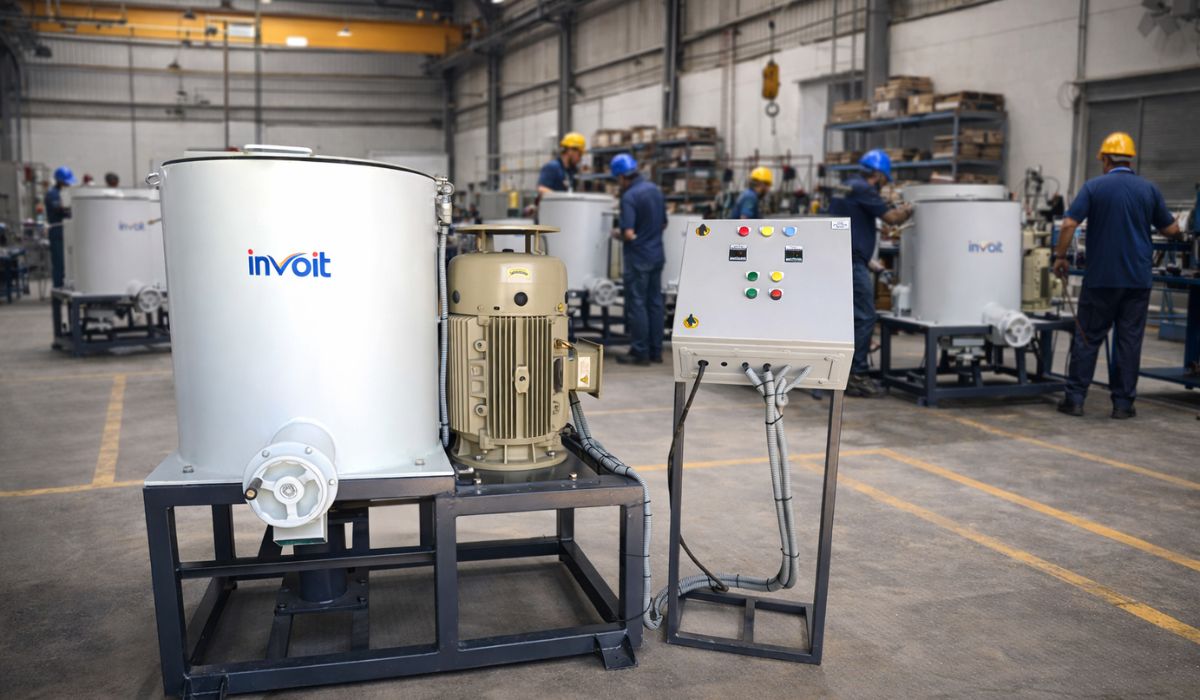
How to Fix Inconsistent Blending in Your High-Speed Mixer Machine
Your production line is running at full capacity. You are processing a critical batch of PVC compound or color masterbatch. But when the material reaches the extrusion or molding stage, you notice uneven coloring, structural weak spots, or un-melted additive clumps.
The culprit? Inconsistent blending in your high-speed mixer.
Inconsistent blending is one of the most frustrating challenges in modern plastic and polymer processing. It leads to rejected batches, wasted raw materials, lost production hours, and unhappy customers. If you are experiencing this issue, you do not always need to invest in a brand-new system right away. Often, the solution lies in identifying small, overlooked issues in your daily operation and maintenance routines.
In this comprehensive guide, we will break down why inconsistent mixing happens, how to troubleshoot it step-by-step, and how partnering with the right High Speed Mixer Machine Manufacturer can transform your production efficiency.
The Hidden Cost of Inconsistent Blending
In any industrial manufacturing setup, consistency is the key to profitability. When your industrial mixing equipment fails to deliver a uniform blend, it creates a chain reaction of production issues:
- Material Waste: Off-spec batches often cannot be recycled or reused, leading straight to the scrap pile.
- Downstream Damage: Unmixed additives or hard clumps can clog extruder screens, damage screw flights, and cause unexpected downtime on your downstream machinery.
- Poor Product Quality: For plastic processors, bad mixing shows up as cosmetic defects like color streaks, or worse, mechanical failures in the final product.
- Wasted Energy: Running a high-power industrial motor longer than necessary to “force” a good mix dramatically inflates your utility bills.
Understanding how to keep your mix perfectly uniform is not just about keeping the machine running—it is about protecting your bottom line.
5 Common Causes of Inconsistent Blending (And How to Fix Them)
When a high-speed mixer starts producing uneven batches, operators often blame the raw materials first. While material variation is a factor, the root cause is usually a mechanical or operational misalignment inside the mixing vessel itself.
Let’s look at the five most common reasons for inconsistent blending and the practical steps you can take to resolve them.
1. Worn-Out or Damaged Mixing Blades (Impellers)
The mixing blade is the heart of your industrial blending system. In a high-speed setup, the blades do not just stir the material; they create a powerful, three-dimensional vortex. This vortex forces the material to travel upward along the vessel walls and cascade down through the center.
Over time, abrasive raw materials—such as calcium carbonate, titanium dioxide, or glass fibers—will wear down the edges of these blades.
- The Problem: As the blade edges round off or lose their original profile, the high-velocity vortex collapses. Instead of fluidizing and circulating, the material simply swirls slowly at the bottom of the vessel. This results in “dead zones” where additives remain completely unmixed.
- The Fix: Inspect your mixing blades weekly. Check the clearances between the blade tip and the inner wall of the mixing vessel. If the gap has exceeded the manufacturer’s recommended threshold, or if you notice visible pitting and rounding of the blade profiles, it is time for a replacement. Utilizing high-quality, wear-resistant blades from an experienced High Speed Mixer Machine Manufacturer ensures your vortex remains strong and consistent.
2. Incorrect Material Loading Sequence
It is incredibly tempting to dump all raw materials into the mixer bowl at once to save time. However, the order in which you introduce ingredients drastically affects how they disperse.
- The Problem: If you put light, fine additives (like pigments or stabilizers) at the very bottom of the mixer before the heavy base polymers, they can get trapped under the blades or stuck in the discharge valve pocket. They will not join the main vortex flow, leading to streaks and poor dispersion.
- The Fix: Establish a strict, standardized feeding sequence for your operators. As a general rule of thumb for plastic processing:
- Load your primary polymer resins first.
- Start the mixer on low speed to begin heating and expanding the pores of the polymer.
- Introduce liquid additives (like plasticizers) gradually so they absorb evenly.
- Add fine powders, stabilizers, and pigments once the main batch has reached its optimal absorption temperature.
- Add lubricants last to prevent them from coating the pigments too early and blocking their dispersion.
3. Temperature Sensor Lag and Calibration Errors
In high-speed mixing, temperature is just as important as mechanical agitation. The friction generated by the high-speed blade heats the polymer, opening its molecular structure so it can absorb liquid additives, stabilizers, and waxes.
- The Problem: A thermocouple (temperature sensor) covered with burnt polymer deposits or operating without proper calibration can provide inaccurate temperature readings. For instance, the sensor may indicate a batch temperature of 110°C, while the actual material temperature is only 95°C. In such cases, the mixer may discharge the batch prematurely, before the additives have completely fused and dispersed into the polymer. This can lead to poor material homogenization, inconsistent product quality, and a dry, improperly blended mixture.
- The Fix: Clean the temperature probe tip after every shift. A buildup of material acts as an insulator, slowing down the sensor’s reaction time. Calibrate your thermocouples monthly using an external reference thermometer to guarantee that when the PLC controller reads a specific temperature, the material inside is actually at that temperature.
4. Overfilling or Underfilling the Mixing Vessel
Every High Speed Mixer Machine is engineered to operate within a specific volume range. There is a common misconception that filling a mixer to the absolute brim increases daily output. In reality, it does the exact opposite.
- The Problem: If the vessel is overfilled (above 70-75% of its total volume), there is no space for the material to expand and form a proper vortex. The material gets compacted, and the top layers never circulate down to the high-shear zone near the blades. Conversely, underfilling the mixer (below 40% capacity) means the blades cannot catch enough material to build up the friction and velocity required for a uniform blend.
- The Fix: Keep your batch sizes within the “sweet spot”—typically between 55% and 65% of the total vessel volume. Consult your operating manual or speak with your equipment provider to determine the precise optimal batch weight for your specific material density.
5. Inconsistent Motor Speeds and VFD Calibration
Modern mixing systems rely on Variable Frequency Drives (VFDs) to control the rotational speed (RPM) of the mixing shaft. Different stages of the mixing cycle require different speeds to optimize shear without degrading the material.
- The Problem: If the VFD parameters are incorrectly programmed, or if there is electrical noise causing speed fluctuations under load, the blade velocity will drop mid-cycle. Even a minor drop in RPM can cause the mixing vortex to collapse, leading to uneven heat distribution and incomplete blending.
- The Fix: Regularly monitor the motor current (Amperage) and shaft RPM during a live mixing cycle. If you notice sudden RPM drops when the material thickens, your VFD may need retuning to handle the load torque, or your drive belts might be slipping. Ensure your belts are properly tensioned and that your control panel is free from dust and overheating.
The Role of Static Electricity in Plastic Mixer Machines
If you are operating a Plastic Mixer Machine to handle materials like PVC dry blends, polystyrene, or polyethylene powders, you have likely encountered the invisible enemy: static electricity.
High-speed friction naturally generates high static charges, especially in dry, climate-controlled factory environments.
When static builds up inside the mixer:
- Fine pigments and additives stick to the polished stainless-steel walls of the vessel instead of blending with the resin.
- These clung materials eventually fall off in large, unmixed clumps right at the end of the cycle, contaminating the batch during discharge.
- The material exhibits poor flowability, making downstream processing difficult.
How to combat static-induced inconsistency:
- Proper Grounding: Ensure that your entire mixing machine, including the vessel lid, frame, and discharge chute, is securely grounded to a dedicated earth ground.
- Relative Humidity Control: Keep your raw material storage and mixing areas at a moderate humidity level (around 45% to 50%) to help naturally dissipate static charges.
- Anti-Static Additives: Work with your chemical supplier to safely introduce trace amounts of food-grade anti-static agents if your specific polymer formulation allows it.
Actionable Preventive Maintenance Checklist for Plant Managers
To keep your mixing plant running smoothly without unexpected quality drops, implement this simple preventative maintenance checklist. Consistent, small checks save days of troubleshooting later.
|
Frequency |
Component to Check |
What to Look For |
Why It Matters |
|
Every Shift |
Discharge Valve |
Ensure the plug seals flush with the inner vessel wall. |
Prevents unmixed pockets of material from lodging in the discharge neck. |
|
Daily |
Lid Gaskets & Seals |
Check for wear, tears, or powder leakage. |
Air leaks disrupt the internal pressure and allow fine additives to escape. |
|
Weekly |
Blade Wear & Clearance |
Measure the distance between the blade tip and the vessel wall. |
Ensures the vortex remains strong and material doesn’t collect on the walls. |
|
Monthly |
Temperature Probes |
Clean the probe tip and verify calibration against a master sensor. |
Guarantees accurate material temperature readings for precise cycle timing. |
|
Quarterly |
Drive Belts & VFD |
Check belt tension for slippage; inspect electrical cabinets for dust buildup. |
Prevents speed drops and torque loss during heavy mixing phases. |
How Choosing the Right Manufacturer Eliminates Blending Issues
While operator training and regular maintenance can solve many blending inconsistencies, some issues stem from poor machine design. A mixer with incorrect vessel geometry, mismatched motor power, or low-grade blade metallurgy will struggle to produce a consistent mix, no matter how much you calibrate it.
This is why partnering with an experienced, quality-focused High Speed Mixer Machine Manufacturer is critical for long-term manufacturing success.
At Invoit Plast, we approach industrial mixing not just as equipment sales, but as a precise engineering science. Based in India, we design and manufacture high-speed mixing systems specifically tailored to handle the challenging dynamics of plastic, polymer, and chemical processing.
Why Invoit Plast High-Speed Mixers Deliver Unmatched Consistency:
- Aerodynamic Blade Geometries: Our mixing blades are designed using fluid dynamics principles to maintain a perfect, unbroken vortex across varying material densities. This eliminates “dead zones” entirely.
- Advanced Thermal Tracking: We integrate highly responsive, wear-resistant thermal sensors positioned precisely where the material flow is most active, ensuring real-time, accurate temperature feedback.
- Heavy-Duty Vessel Construction: Our mixing vessels feature mirror-polished, high-grade stainless steel interiors. This smooth finish prevents material adhesion, minimizes static build-up, and makes color changeovers fast and easy.
- Customized Engineering: We do not believe in “one-size-fits-all” machinery. We evaluate your specific raw materials, bulk densities, and production environments to configure a mixer that perfectly matches your process requirements.
A Systematic Approach to Perfect Blending
Fixing inconsistent blending in your High Speed Mixer Machine doesn’t require guesswork. By systematically checking your blade wear, optimizing your raw material feeding sequence, verifying your temperature sensors, and managing your batch sizes, you can resolve the vast majority of mixing issues right on your shop floor.
When your equipment is designed with precision and maintained with care, your production quality rises, your scrap rates plummet, and your operations run seamlessly.
Need Help Optimizing Your Mixing Process?
If you are struggling with persistent blending issues, color streaks, or premature wear in your current setup, our engineering team is here to help.
Contact the Technical Experts at Invoit Plast today for a comprehensive process consultation. Let’s work together to optimize your mixing cycles, improve your blend consistency, and elevate your production quality to international standards.
📩 Request Your Quotation Now
+91 63546 02502 , info@invoitplast.com
FAQs
Inconsistent blending in a high-speed mixer machine is commonly caused by worn mixing blades, improper material loading sequences, inaccurate temperature readings, incorrect batch sizes, and fluctuating motor speeds. These issues prevent materials from circulating properly, resulting in uneven mixing, color streaks, additive clumps, and poor product quality.
Worn or damaged mixing blades reduce the vortex effect inside the mixing vessel. When blade edges become rounded due to abrasion, materials fail to circulate efficiently, creating dead zones where additives remain unmixed. Regular blade inspection and timely replacement help maintain consistent blending performance.
The loading sequence directly impacts additive dispersion. Adding materials in the wrong order can cause pigments, stabilizers, or powders to become trapped or unevenly distributed. Following a standardized feeding process ensures better absorption, uniform blending, and improved final product quality.
Temperature plays a critical role in polymer processing. If the material is discharged before reaching the correct temperature, additives may not fully fuse with the resin. Accurate temperature monitoring ensures proper homogenization, better additive distribution, and consistent batch quality.
Overfilling restricts material movement and prevents the formation of an effective mixing vortex, while under filling reduces friction and shear generation. Both conditions lead to poor blending efficiency. Most high-speed mixers perform best when filled between 55% and 65% of their total vessel capacity.
Variable Frequency Drives (VFDs) control the rotational speed of the mixing blades. Incorrect VFD programming or speed fluctuations can reduce blade velocity and collapse the mixing vortex. Proper VFD calibration ensures stable RPM, uniform heat generation, and consistent blending results.
Yes. Static electricity can cause fine powders, pigments, and additives to stick to vessel walls instead of blending with the resin. These materials may later fall into the batch as unmixed clumps. Proper grounding, humidity control, and anti-static solutions help minimize this issue.
Basic inspections should be performed daily, while blade wear, temperature sensors, and drive components should be checked weekly or monthly. A preventive maintenance schedule helps reduce downtime, improve blending consistency, and extend equipment life.
You can improve blend consistency by inspecting blade wear, maintaining accurate temperature sensors, optimizing batch sizes, following the correct feeding sequence, and ensuring proper VFD calibration. Many blending issues can be resolved through operational improvements rather than equipment replacement.
A reliable high-speed mixer machine manufacturer provides properly engineered equipment with optimized blade geometry, accurate temperature control, durable construction, and customized solutions for specific materials. High-quality machine design significantly improves blending consistency, production efficiency, and product quality.