
How to Size a High-Speed Mixer for Your Daily Extrusion or Moulding Output
In plastic manufacturing, selecting a high-speed mixer is not simply about choosing a machine with a larger mixing capacity. The mixer must be capable of preparing the required quantity of material within the available production time while maintaining consistent mixing quality.
For extrusion and moulding manufacturers, an incorrectly sized mixer can create difficulties throughout the production process. An undersized machine may struggle to supply material according to the production schedule, while an oversized mixer may increase equipment costs and remain underutilised during regular operation.
This is why understanding the relationship between daily production output, batch capacity, mixing cycle time and material requirements is important before purchasing a high-speed mixer machine.
A plastic processing plant manufacturing PVC pipes, profiles, sheets, injection-moulded components or other plastic products may have different mixing requirements depending on its formulation and production process.
In this guide, Invoit Plast Machinery Pvt. Ltd. explains how manufacturers can evaluate high-speed mixer capacity based on their daily extrusion or moulding output. The objective is to help production managers, plant engineers and machinery buyers make an informed equipment selection.
Start with Your Actual Daily Production Requirement
The first step in selecting the right high-speed mixer is understanding how much material your production line consumes during normal working hours.
Many buyers consider the maximum output mentioned on an extrusion or moulding machine. However, the installed production capacity and actual daily production are not always the same.
For example, an extrusion line may have a rated production capacity that is higher than its regular operating output because of product changes, maintenance, material preparation or production interruptions.
Therefore, use realistic production figures rather than relying entirely on the maximum rated capacity.
Before selecting a high-speed mixer for plastic processing, identify:
- Actual daily production in kilograms.
- Number of operating hours per shift.
- Number of production shifts.
- Number of extrusion or moulding machines.
- Material consumption per hour.
- Expected production expansion.
- Time required for material preparation and replenishment.
Example:
Consider a plastic pipe manufacturer producing approximately 3,000 kg of material during a 10-hour production shift.
The average material requirement is:
3,000 kg ÷ 10 hours = 300 kg per hour.
This means the mixing arrangement must support an average material supply of approximately 300 kg per hour.
This figure becomes the starting point for calculating the required mixer capacity.
Understand the Difference Between Batch Capacity and Hourly Output
One of the common mistakes when purchasing an industrial high-speed mixer is confusing batch capacity with hourly production capacity.
These two measurements describe different things.
Batch capacity refers to the quantity of material processed during one mixing cycle.
Hourly output refers to the total quantity of material that the mixing system can prepare within one hour.
For example, a mixer designed for a particular batch weight does not automatically deliver that same quantity every hour. Its actual hourly output depends on how long it takes to complete each cycle.
A complete mixing cycle may include:
- Loading raw materials into the mixing vessel.
- Mixing the required ingredients.
- Heating or temperature-controlled processing, where applicable.
- Discharging the prepared material.
- Preparing the vessel for the next batch.
If the complete cycle takes longer than expected, hourly output will decrease even when the mixer has sufficient nominal batch capacity.
This is particularly important for PVC dry-blend preparation, where the mixing and cooling stages may both influence the production schedule.
Manufacturers should therefore ask machinery suppliers for the expected working batch weight and complete cycle time for their actual material formulation.
Calculate the Required Mixer Capacity from Hourly Consumption
Once daily production and operating hours are established, the next step is to estimate the quantity of material required in each batch.
For a batch-type high-speed mixer, a useful preliminary calculation is:
Required batch weight = Hourly material consumption × Complete mixing cycle time ÷ 60
The cycle time should be measured in minutes.
Consider a manufacturing unit with the following requirements:
- Daily material consumption: 3,000 kg.
- Working hours: 10 hours.
- Average hourly consumption: 300 kg.
- Complete mixing cycle: 15 minutes.
The calculation becomes:
300 × 15 ÷ 60 = 75 kg.
This indicates that approximately 75 kg of prepared material is required for each 15-minute production interval.
However, this is a preliminary production calculation, not a final machine specification. Actual mixer selection must also consider working fill capacity, material behaviour, loading and discharge arrangements, and whether the machine can consistently achieve the required cycle time.
If the selected mixer cannot complete the required batch within the assumed time, the plant may need a larger working batch, a different mixing arrangement or additional equipment.
The purpose of this calculation is to establish a realistic starting point before discussing machine models with a manufacturer.
Consider the Actual Working Capacity, Not Just the Vessel Volume
A high-speed mixer is generally described by its vessel volume in litres or its batch capacity in kilograms. However, these measurements should not be treated as interchangeable.
The weight of material that can be processed depends on its bulk density and the recommended working fill level of the mixing vessel.
For example, PVC resin powder, plastic granules, masterbatch and regrind can have different bulk densities. Even materials with similar weights may behave differently during mixing because of their particle size, flow characteristics and formulation.
This means that a mixer with a particular vessel volume may handle different batch weights depending on the material being processed.
When evaluating a high-speed plastic mixer, buyers should confirm:
- Total vessel volume.
- Recommended working fill level.
- Material bulk density.
- Maximum and minimum practical batch weight.
- Mixing performance at the proposed batch size.
- Suitability for the intended formulation.
An oversized mixer is not automatically a better investment. If the normal batch quantity is too small for the vessel, the material may not circulate as intended.
Similarly, overfilling the vessel can affect material movement and mixing consistency.
The right high-speed mixer capacity is the one that matches the material and production requirement under actual operating conditions.
Match Mixer Capacity with Extrusion Line Requirements
Extrusion manufacturers require a consistent supply of correctly prepared raw material to maintain their production schedule.
Depending on the application, a high-speed mixer may be used to prepare PVC dry blends or to mix suitable plastic materials and additives before they enter the extrusion process.
Applications can include:
- PVC pipe manufacturing.
- PVC profile extrusion.
- Plastic sheet extrusion.
- Cable compound preparation.
- Plastic film production.
- Other compatible plastic compounding applications.
For PVC pipe and profile manufacturers, formulation consistency is particularly important because the prepared blend must meet the requirements of the downstream extrusion process.
When sizing a high-speed mixer for an extrusion plant, evaluate the combined consumption of all lines that will receive material from the mixing system.
For example, if two extrusion lines operate simultaneously, the mixer should be evaluated against their combined material requirement rather than the consumption of only one line.
Also consider the distance between the mixing area and extrusion machines, intermediate storage, material conveying arrangements and the time required to transfer prepared batches.
A suitable mixer should support the production schedule without creating unnecessary waiting periods between material preparation and extrusion.
Consider Injection Moulding Production Requirements
Injection moulding plants have different material preparation requirements depending on the type of components being manufactured.
Some manufacturers process virgin plastic granules with colour masterbatch, additives or suitable reprocessed material. Others use specialised formulations that require more controlled mixing conditions.
The required mixer capacity depends on the quantity of material consumed by the moulding machines and the frequency of material changes.
For example, a factory operating several injection moulding machines may use a common mixing arrangement to prepare material for multiple production lines.
In this situation, selecting the mixer according to the consumption of only one moulding machine can create a material supply shortage.
Before selecting a high-speed mixer for injection moulding applications, evaluate:
- Number of injection moulding machines.
- Material consumption of each machine.
- Type of polymer being processed.
- Masterbatch and additive proportions.
- Frequency of colour or formulation changes.
- Batch preparation and cleaning requirements.
- Material storage and feeding arrangements.
Another important consideration is whether the required operation actually calls for a high-speed mixer.
For certain pellet blending applications, a vertical granules mixer or another suitable mixing arrangement may be more appropriate. High-speed mixing is not automatically necessary for every plastic granule application.
Selecting the correct machine type is just as important as selecting the correct capacity.
Evaluate Material Type and Formulation Before Finalising the Machine
The same mixer capacity may not deliver the same practical performance with every plastic material.
Material characteristics influence how ingredients move inside the mixing vessel and how effectively the machine can perform the required operation.
For example, PVC powder formulations generally require different mixing considerations from free-flowing PP or HDPE granules.
The presence of fillers, pigments, stabilisers, lubricants, masterbatch and other additives can also influence the mixing process.
Before requesting a high-speed mixer quotation, provide the manufacturer with information about the actual material.
Important details include:
Material type: Identify whether the application involves PVC resin powder, plastic granules, masterbatch, regrind or a formulated compound.
Bulk density: This helps determine the relationship between vessel volume and batch weight.
Material condition: Explain whether the material is in powder, pellet or another physical form.
Formulation: Mention the ingredients that need to be blended and their approximate proportions.
Processing requirements: Explain whether the process requires mixing alone, frictional heating or a specific temperature-controlled operation.
Final application: Identify whether the prepared material will be supplied to a pipe extrusion line, profile line, injection moulding machine or another process.
Providing this information allows the machinery manufacturer to assess whether the proposed machine configuration is suitable for the application.
Check Whether Heating and Cooling Are Required
Not every high-speed mixing application requires the same temperature conditions.
In certain intensive mixing processes, mechanical energy generated during mixing increases the material temperature. This can be an important part of PVC dry-blend preparation and other formulation-specific operations.
For these applications, the mixer must be evaluated according to the required mixing temperature, material behaviour and process sequence.
Some production arrangements also require a separate cooling stage after hot mixing.
This is particularly relevant in PVC compounding, where the hot blend may need to be transferred to a cooling mixer before storage or downstream processing.
The Indian Vinyl Council’s technical material on PVC dry blending describes the use of intensive hot mixing followed by cooling as part of PVC compound preparation.
Therefore, buyers should not calculate the required capacity using the hot mixing vessel alone when the production process also depends on a separate cooling stage.
The cooling system, discharge arrangement and material transfer time must be considered when estimating the complete production cycle.
Evaluate Motor Power and Mixing Performance Together
Motor power is another important factor when selecting an industrial high-speed mixer.
However, choosing a machine only because it has a higher motor rating can lead to an unsuitable purchase decision.
Motor requirements depend on several factors, including:
- Mixer vessel design.
- Material characteristics.
- Batch weight.
- Mixing intensity.
- Required operating speed.
- Formulation requirements.
- Expected operating duration.
A mixer must have an appropriate combination of motor power, mixing elements and vessel design to handle the intended material.
For example, the requirements for mixing PVC resin powder with several additives may differ from those for blending plastic granules with colour masterbatch.
Buyers should request information about the proposed motor rating, operating speed, electrical requirements and performance with their actual material.
It is also useful to understand the available control arrangements, including batch timing, temperature monitoring and automatic cut-off where these functions are part of the selected configuration.
The objective is to select a machine that can perform the required mixing operation consistently, rather than simply purchasing the highest-power option.
Keep Future Production Expansion in Mind
A mixer selected only for today’s production requirement may become a limitation if the manufacturing unit plans to increase its output.
However, purchasing equipment with excessive capacity can also increase the initial investment without providing a practical production benefit.
The better approach is to consider realistic expansion plans.
For example, if a factory currently operates one extrusion line but plans to install another line, the machinery selection should account for the expected combined material consumption.
Similarly, a moulding manufacturer planning to increase the number of machines should evaluate how the additional material demand will affect the mixing schedule.
Consider the following questions:
- Will another extrusion or moulding line be installed?
- Will daily production increase?
- Will the plant introduce additional formulations?
- Will material consumption vary between shifts?
- Is additional storage or conveying equipment planned?
These details help determine whether a standard mixer capacity or a customised configuration is more suitable.
The decision should be based on a practical production plan rather than an assumed future requirement.
Common Mistakes to Avoid When Selecting a High-Speed Mixer
Even experienced manufacturers can overlook important details when comparing mixer specifications.
The following mistakes should be avoided:
Selecting capacity only by daily production: Daily consumption must be converted into hourly and batch requirements using realistic operating hours and cycle time.
Ignoring working fill capacity: Nominal vessel volume does not necessarily represent the usable material weight.
Using an assumed mixing cycle: The actual cycle should be evaluated using the intended material and formulation.
Ignoring material characteristics: Bulk density, particle size and flow behaviour can influence machine selection.
Overlooking cooling requirements: Some processes require a complete hot-and-cold mixing arrangement.
Ignoring multiple production lines: Shared mixing systems must be evaluated against combined material consumption.
Selecting a machine only by motor power: Motor rating should be considered together with vessel design and mixing performance.
Not planning material transfer: Discharge, storage and feeding arrangements can influence the overall production schedule.
Avoiding these mistakes helps buyers compare machinery based on practical production requirements instead of relying on individual specifications.
Why Discuss Your Production Requirement with Invoit Plast Machinery Pvt. Ltd.?
Selecting a high-speed mixer requires an understanding of the material, batch quantity and production process.
Invoit Plast Machinery Pvt. Ltd., based in Ahmedabad, Gujarat, India, manufactures plastic processing and material handling machinery, including high-speed mixing solutions.
The company offers mixing equipment for industrial plastic processing applications, with configurations and capacities that should be evaluated according to the customer’s actual requirements.
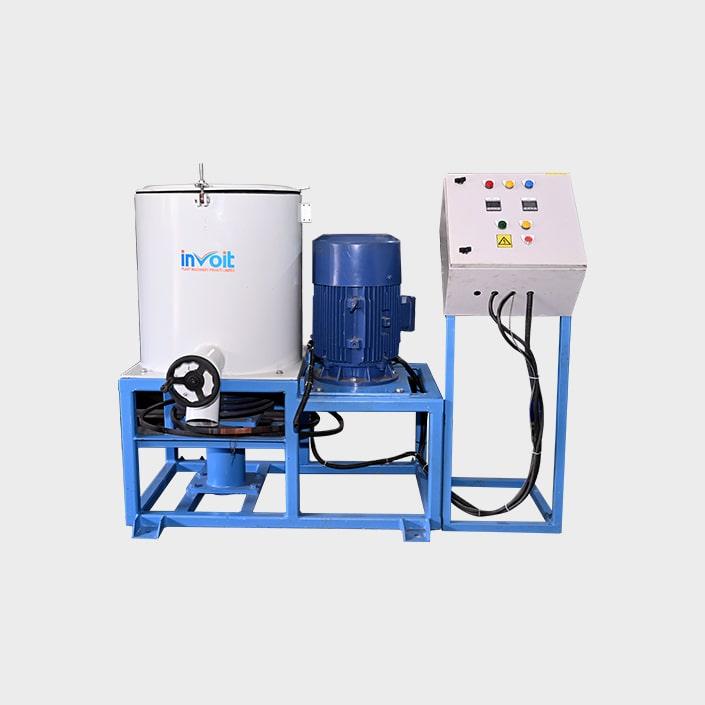
Its high-speed mixer range includes options with MS construction and stainless steel arrangements, along with features such as batch timing, temperature monitoring and automatic cut-off, depending on the selected model.
For manufacturers planning to purchase a high-speed mixer machine, the selection process should begin with the material and production details rather than a general capacity estimate.
Sharing your daily output, operating hours, material type, bulk density and required batch size helps establish a more practical basis for discussing the machine configuration.
Final Thoughts
The correct high-speed mixer capacity is determined by more than the daily production target. It depends on hourly material consumption, complete mixing cycle time, working batch capacity, bulk density, formulation requirements and the feeding needs of the extrusion or moulding line.
A properly evaluated mixer can help manufacturers organise material preparation around their production schedule and avoid unnecessary equipment investment.
If you are planning to install a new high-speed mixer or upgrade an existing mixing arrangement, contact Invoit Plast Machinery Pvt. Ltd. with your daily production requirement, material details and application. The team can review these details and discuss a suitable mixer configuration for your plastic processing operation.
Email : info@invoitplast.com , service@invoitplast.com, sales@invoitplast.com
Phone Number : +91 63546 02502, +91 63546 02503, +91 63546 02504
FAQs
To calculate the required high-speed mixer capacity, first determine your hourly material consumption and complete mixing cycle time. Multiply hourly consumption by the cycle time in minutes and divide by 60. Also consider working fill capacity, material bulk density and discharge time before finalising the machine.
Consider daily production output, hourly material consumption, batch weight, mixing cycle time, material type, bulk density, motor power, vessel volume and cooling requirements. The mixer should match the actual requirements of your extrusion or moulding operation.
Daily extrusion output determines how much prepared material the mixing system must supply. Manufacturers should calculate the combined hourly material consumption of all extrusion lines and select a mixer arrangement that can support the required production schedule.
Motor capacity depends on drum dimensions, wall thickness, material grade, rotor design and required output. For reference, the article's selection matrix indicates 50 HP to 125+ HP for 200-litre HDPE drums. The final motor selection should be confirmed through an application assessment.
Batch capacity refers to the amount of material processed in one mixing cycle, whereas hourly output refers to the total material prepared within an hour. Hourly output depends on batch weight and the complete mixing cycle, including loading, mixing and discharge.
Bulk density determines how much material weight occupies a particular vessel volume. PVC resin powder, plastic granules and reprocessed materials can have different bulk densities. Therefore, vessel volume alone cannot determine the actual working batch weight.
A suitable high-speed mixer can be used for preparing PVC dry blends for pipe and profile extrusion applications. Machine selection should consider the PVC formulation, required batch weight, mixing temperature, cycle time and whether a separate cooling mixer is needed.
The required capacity depends on the combined material consumption of the injection moulding machines, operating hours, polymer type and frequency of material changes. Buyers should calculate their hourly consumption before selecting a suitable batch capacity.
No. A larger mixer does not automatically provide better mixing or higher practical output. The working batch must match the vessel design and material characteristics. An oversized mixer operating with unsuitable small batches may not deliver the expected mixing performance.
Certain plastic mixing applications, particularly PVC dry-blend preparation, require controlled temperature management. A hot mixing stage may be followed by cooling before the material is stored or transferred to the next production process. Both stages should be considered when calculating the complete production cycle.
Provide your daily production target, hourly material consumption, material type, bulk density, formulation details, operating hours, required batch weight and application. Also mention whether the mixer will supply one or multiple extrusion or moulding lines.
Invoit Plast Machinery Pvt. Ltd., based in Ahmedabad, Gujarat, India, manufactures plastic processing machinery, including high-speed mixing solutions. Manufacturers can contact the company with their material details, production requirements and application to discuss a suitable mixer configuration.