
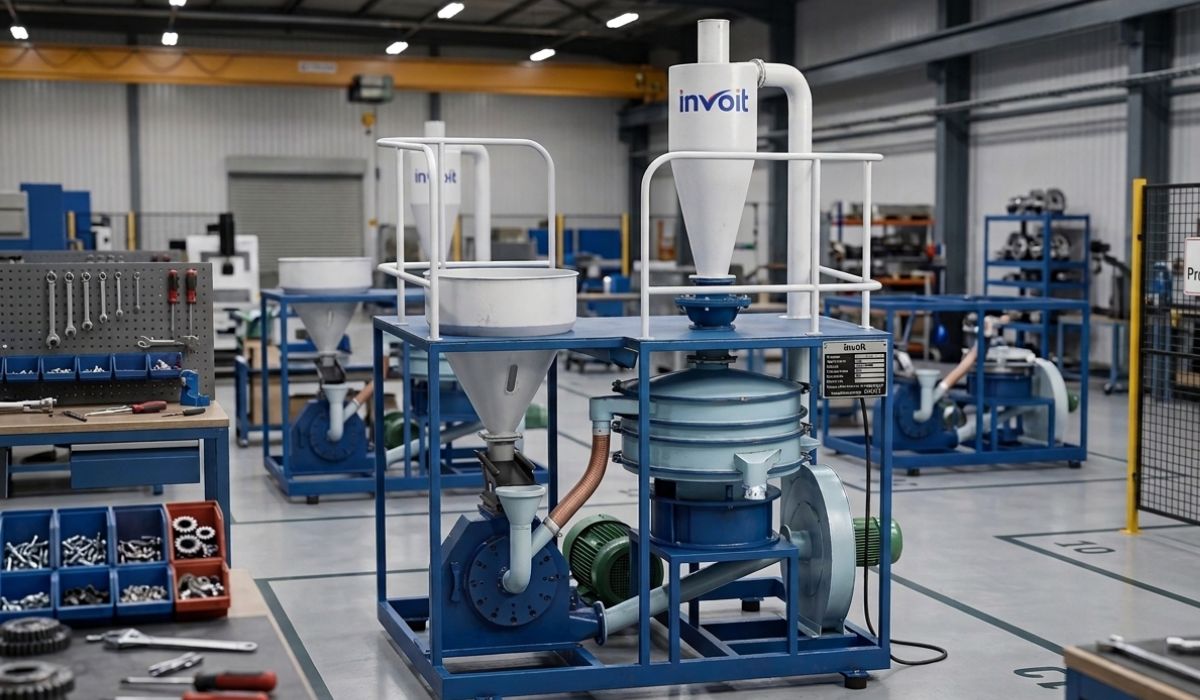
Choosing the Right Plastic Pulverizer: How to Solve Your Powder Processing Challenges
The global demand for high-quality plastic powders is growing at an incredible rate. Whether you are manufacturing rotational molding (rotomolding) tanks in Nairobi, compounding masterbatches in Ahmedabad, or recycling polymer waste in Lagos, one machine sits at the absolute heart of your production line: the Plastic Pulverizer Machine.
But if you run a plastic processing plant, you already know that pulverizing is not as simple as throwing plastic scraps into a grinder and getting perfect powder out of the other end.
Many factory managers face daily struggles with their pulverizing departments. You might be dealing with constant machine blockages, melted plastic inside the grinding chamber, high electricity bills, or powder that is too coarse for your downstream processes.
If these challenges sound familiar, you are not alone. Choosing the right equipment and working with a reliable Plastic Pulverizer Machine Manufacturer can make the difference between a highly profitable production line and a factory plagued by constant downtime.
In this comprehensive guide, we will break down the common challenges of polymer powder processing and show you exactly how to choose the right machine to keep your business running smoothly.
The Real-World Challenges of Plastic Powder Processing
To find the right solution, we must first understand the problems that occur on the factory floor. Plastic polymers behave very differently from materials like minerals, grain, or wood. They are highly sensitive to heat, friction, and pressure.
Here are the most common powder processing issues that manufacturers face today.
1. The “Meltdown” Nightmare (Thermal Degradation)
Plastics have a relatively low melting point. As the high-speed grinding discs of a pulverizer rub against the plastic pellets, they generate massive amounts of frictional heat.
If this heat is not managed properly, the plastic inside the chamber will soften, become sticky, and eventually melt. This creates a solid plastic mass that locks up the machine. Cleaning a choked grinding chamber can shut down your production line for hours, costing you time, labor, and money.
2. Inconsistent Particle Size (The “Mesh” Problem)
Whether you are making masterbatches or rotomolding powder, your downstream machinery requires a very specific particle size (often measured in microns or mesh size).
If your powder contains too many “oversized” particles, it will not melt evenly in your extruder or rotomolding mold, leading to weak spots, air bubbles, and defective final products. If the powder is too fine (like dust), it can blow away, cause feeding issues, or create a hazardous workspace.
3. Skyrocketing Energy Bills
Power consumption is one of the highest operational costs in India and African nations. Grinding tough plastics like LLDPE, HDPE, or rigid PVC requires significant mechanical force.
An inefficiently designed pulverizer will consume excessive electricity to produce a relatively small amount of powder. If your machine is constantly drawing high currents without delivering the expected output, it eats directly into your profit margins.
4. Rapid Wear and Tear of Grinding Discs
The grinding discs or blades are the most critical wear parts of any pulverizer. If you are processing abrasive materials—such as masterbatches filled with calcium carbonate, titanium dioxide, or glass fibers—standard metal discs will wear out incredibly fast. Constant blade sharpening and replacement not only cost money but also stop your production.
How to Choose the Right Plastic Pulverizer Machine: Key Solutions
To solve these everyday industrial challenges, you need a machine designed with the right engineering principles. When evaluating your options from a Plastic Pulverizer Machine Manufacturer, look closely at the following features.
1. Advanced Cooling Systems (The Key to Continuous Operation)
Since heat is the number one enemy of plastic pulverizing, a premium machine must have an exceptional cooling system.
- Dual Cooling (Water + Air): Look for machines that feature water-jacketing around both the grinding chamber and the bearing housing. This water circulation absorbs the heat generated during grinding.
- High-Volume Air Flow: A strong air blower system does two jobs. It continuously sucks the cool ambient air through the grinding chamber to keep temperatures low, and it instantly transports the finished powder out of the hot zone into the cyclone collector.
For highly heat-sensitive materials like masterbatches or recycled PVC, look for manufacturers who design specialized cooling layouts to ensure your machine can run 24/7 without melting the material.
2. Premium Grinding Disc Material and Design
Not all grinding discs are created equal. The design of the teeth and the metallurgy of the disc determine how long the machine will run before needing maintenance.
- High-Grade Alloy Steel: The discs should be made of high-wear-resistant, hardened alloy steel.
- Precision Tooth Geometry: The angle and shape of the teeth should match the specific polymer you are grinding. For example, softer plastics like LLDPE require a shearing action, while harder plastics like PVC require an impact/attrition action.
- Easy Gap Adjustment: As discs wear down over time, you must adjust the gap between them to maintain the correct powder size. A user-friendly, external adjustment system saves hours of maintenance time.
3. Smart Feeding Systems
Manual feeding of raw materials often leads to human error. If an operator feeds too much material too quickly, the motor overloads and trips. If they feed too slowly, production drops.
A high-performance Plastic Pulverizer Machine should feature an automatic, vibratory feeding system controlled by an intelligent control panel. If the main motor load increases, the feeder automatically slows down. Once the load drops, the feeder speeds up again. This keeps your machine running at peak efficiency without requiring constant human supervision.
4. Efficient Dust Collection and Vibrating Screens
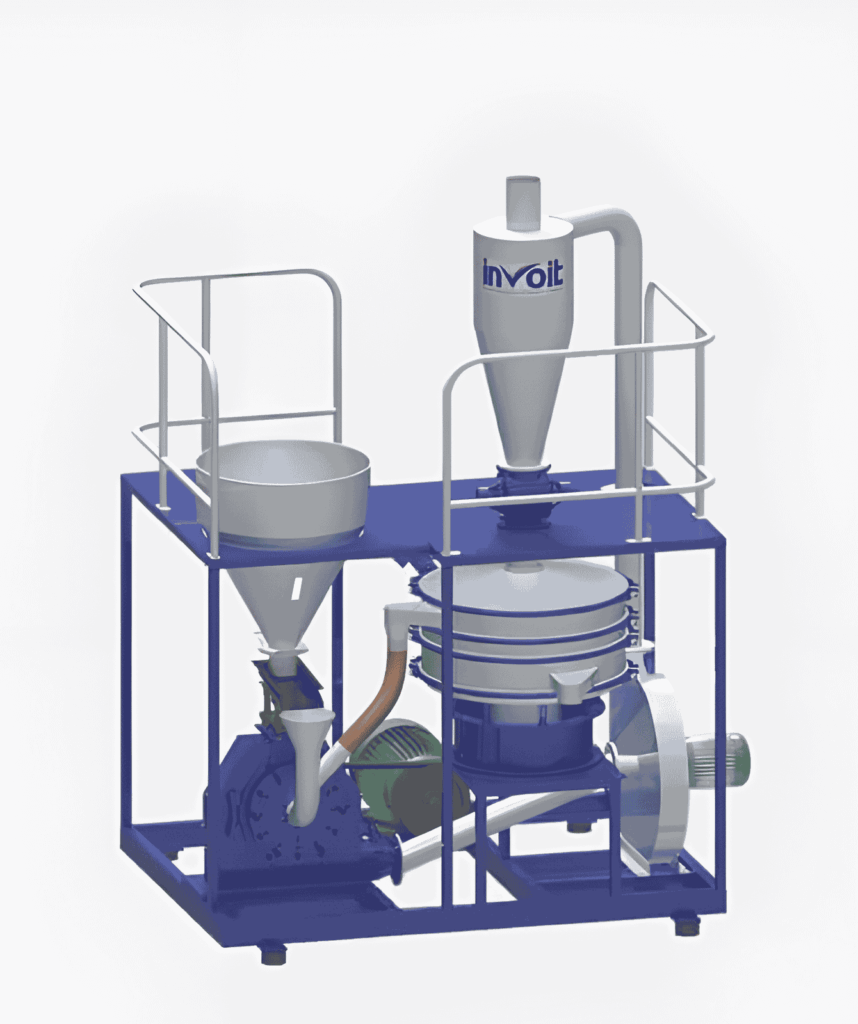
A clean factory is a safe and efficient factory. Your pulverizer should have a closed-loop system where the powder goes directly from the grinding chamber to a cyclone separator and then through a vibrating screen (rotary sifter).
The vibrating screen filters out any oversized particles and automatically routes them back into the grinding chamber for a second pass, while the perfect powder is collected at the bagging station. An integrated dust collector filter prevents fine plastic dust from escaping into your factory air.
Special Focus: The Masterbatch Pulverizing Challenge
If you are a masterbatch manufacturer, your pulverizing requirements are even more strict. Masterbatches are highly concentrated mixtures of pigments and additives dispersed in a carrier resin.
Because they contain high percentages of organic pigments, inorganic fillers, and waxes, they behave very differently from virgin plastic:
- Pigment Smearing: Under excessive heat, pigments can separate from the carrier resin, leading to color variation and smearing inside the chamber.
- Abrasive Additives: Additives like calcium carbonate act like sandpaper on your grinding discs, wearing them down rapidly.
- Strict Quality Control: Masterbatch powder must be incredibly uniform to ensure perfect dispersion when mixed with virgin resins during final product extrusion.
This is why masterbatch producers cannot use standard, run-of-the-mill pulverizers. You need a specialised Masterbatch Plastic Pulverizer Machine designed specifically to handle highly filled polymers, keep temperatures incredibly low, and withstand abrasive wear.
Why Partnering with an Indian Manufacturer is a Smart B2B Move
For businesses operating in India, East Africa, West Africa, and the Middle East, sourcing industrial machinery is a strategic decision.
While cheap, unbranded machinery might seem attractive at first glance, it often leads to high maintenance costs, lack of spare parts, and poor powder quality. On the other hand, importing European machinery can require a massive capital investment that is difficult to justify.
This is why many leading plastic processors are partnering with trusted Indian manufacturers like Invoit Plast.
The Indian Advantage: Quality Meets Value
India has established itself as a global hub for high-quality plastic machinery manufacturing. Here is why importing from India makes perfect business sense:
- Robust Engineering: Indian manufacturers design machines to operate in harsh tropical climates, meaning they are built to handle high ambient temperatures and fluctuating power grids.
- Cost-Effective Spare Parts: Because all components are engineered locally, you get quick access to affordable spare parts, minimizing your downtime.
- Global Export Expertise: Leading manufacturers have dedicated export divisions that understand the logistics, documentation, and shipping requirements for African and Middle Eastern ports (such as Mombasa, Dar es Salaam, Lagos, and Durban).
Meet Invoit Plast: Your Trusted Pulverizing Partner
At Invoit Plast, we don’t just sell machines; we deliver complete powder processing solutions.
As a leading Masterbatch Plastic Pulverizer Machine Manufacturer in India, we have spent years studying the science of polymer grinding. We understand that every material—whether it is LLDPE, HDPE, PVC, PP, or highly filled Masterbatch—requires a unique approach.
We build our machines with heavy-duty frames, precision-balanced rotors, advanced cooling jackets, and intelligent control systems. Our goal is to help you achieve the lowest energy cost per kilogram of high-quality powder produced.
Ready to Elevate Your Powder Production?
The right machinery partner can transform your production line from a source of daily headaches into a smooth, highly profitable, and automated operation.
If you are experiencing issues with your current pulverizing setup, or if you are planning to set up a new masterbatch or recycling facility, we would love to help.
At Invoit Plast, we offer custom-engineered solutions tailored to your specific material, capacity needs, and factory layout.
Get in Touch with our Technical Experts Today:
- Request a Custom Consultation: Tell us about your material, and we will advise you on the exact disc configuration and cooling setup you need.
- Material Testing Trials: Send us a sample of your polymer or masterbatch pellets, and we will run a test in our state-of-the-art facility to show you the exact throughput and particle size distribution we can achieve.
- Global Shipping & Support: Learn about our export packages, hassle-free shipping, and remote installation support for African and international markets.
Let’s solve your powder processing challenges together. Contact Invoit Plast today to take the first step toward hassle-free, high-efficiency pulverizing!
📞 Start Your Project with the Right Pulverizer Solution : +91 63546 02502 , info@invoitplast.com
FAQs
A Plastic Pulverizer Machine is used to convert plastic granules, scraps, or pellets into fine powder. This powder is widely used in rotomolding, masterbatch manufacturing, PVC processing, plastic recycling, and compounding industries.
Plastic melts inside the grinding chamber because of excessive frictional heat generated during high-speed pulverizing. Poor cooling systems, incorrect disc settings, or overfeeding materials can increase chamber temperature and cause blockages or machine choking.
To prevent overheating:
- Choose a machine with dual cooling systems (air + water cooling)
- Use automatic feeding systems
- Maintain proper airflow inside the grinding chamber
- Regularly inspect grinding discs and bearings
- Avoid overloading the machine continuously
A high-quality machine from an experienced Invoit Plast Machinery Pvt. Ltd. helps maintain stable temperatures during long production hours.
The ideal particle size depends on your application:
- Rotomolding powders generally require fine and uniform mesh sizes
- Masterbatch production needs highly consistent micron-level powder
- Recycling applications may require medium-sized powder
A precision pulverizer with adjustable disc gaps and vibrating screening systems helps achieve uniform powder quality.
Uneven powder sizes usually happen because of:
- Worn grinding discs
- Incorrect disc gap adjustment
- Poor feeding control
- Inadequate screening systems
- Low-quality machine design
Using a machine with precision-balanced discs and rotary vibrating screens improves powder consistency significantly.
Modern Plastic Pulverizer Machine models can process:
- LLDPE
- HDPE
- PVC
- PP
- EVA
- Masterbatch compounds
- Reprocessed plastic waste
- Rotomolding materials
Specialized machines may also handle highly filled and abrasive polymers.
A Masterbatch Plastic Pulverizer Machine is specially engineered for abrasive and heat-sensitive materials. It includes:
- Heavy-duty alloy steel discs
- Advanced cooling systems
- Stronger wear resistance
- Better particle size control
- Improved dust collection systems
These features help maintain color consistency and reduce pigment smearing during grinding.
To lower energy costs:
- Use energy-efficient motors
- Install intelligent feeding systems
- Maintain proper disc sharpness
- Avoid machine overloading
- Select the correct machine capacity for your production needs
Efficient machine design directly reduces power consumption per kilogram of powder produced.
The replacement frequency depends on:
- Material hardness
- Filler content
- Production hours
- Disc material quality
For abrasive masterbatch materials containing calcium carbonate or titanium dioxide, discs may require more frequent maintenance. High-grade alloy steel discs generally offer longer operational life.
Before purchasing, evaluate:
- Cooling system quality
- Grinding disc material
- Production capacity
- Power consumption
- Spare parts availability
- Dust collection system
- Automation features
- After-sales support
- Export and installation assistance
Working with an experienced Invoit Plast Machinery Pvt. Ltd. ensures better technical guidance and long-term machine reliability.