
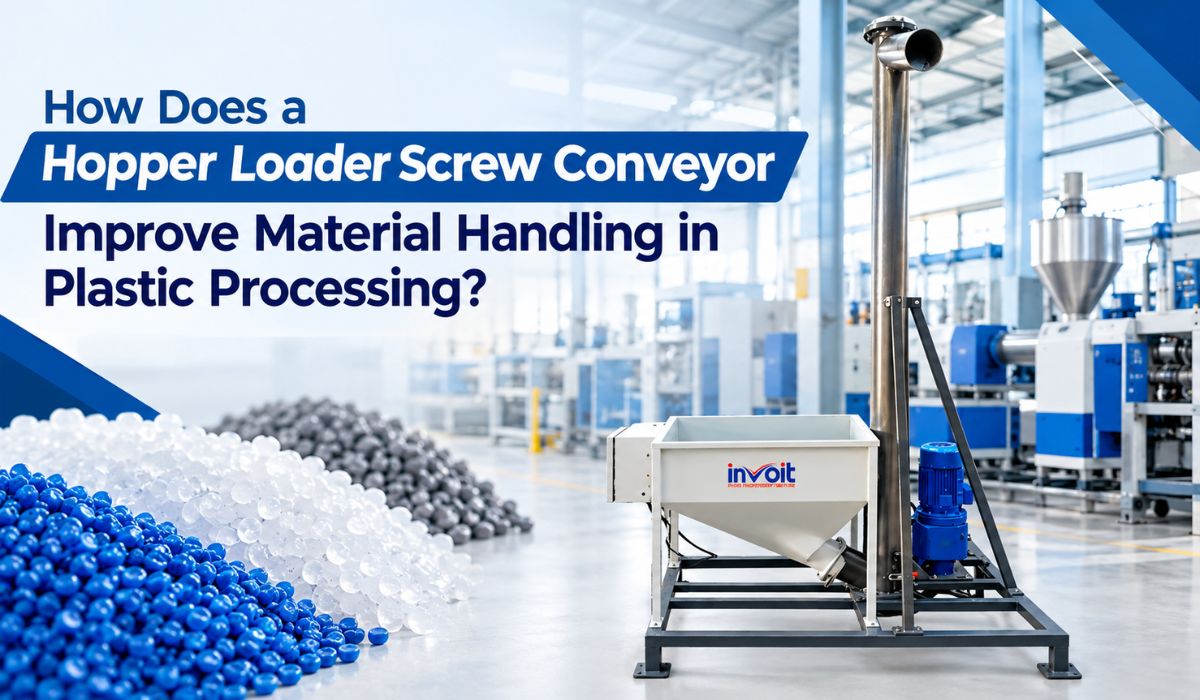
How Does a Hopper Loader Screw Conveyor Improve Material Handling in Plastic Processing?
In plastic manufacturing, whether injection molding, blow molding, or extrusion, production efficiency relies heavily on how raw materials reach the processing machine. While temperature settings, mold design, and cycle times receive significant attention, raw material transfer remains one of the most critical factors influencing consistent part quality and operational efficiency.
For decades, processing plants relied on manual labor, overhead bucket hoists, or simple gravity feeding. As factory floors modernized, the need for automated, continuous, and clean material movement became clear. This shift led to the adoption of mechanical conveying solutions designed specifically for polymer processing.
Among these solutions, the hopper loader screw conveyor has become an essential tool for processors aiming to stabilize production, reduce contamination, and minimize manual labor. In this detailed guide, we will explore how this material handling equipment operates, the daily operational problems it solves, and why integrating a robust screw conveyor system can transform your plant floor.
The Operational Bottlenecks in Plastic Material Handling
To understand the value of modern material handling equipment, it helps to examine the daily challenges processing units face when transferring raw polymers.
1. Labor Strain and Workplace Safety Risks
Manual dumping of resin bags into high-mounted machine hoppers is physically demanding and poses safety risks. Machine operators frequently climb platforms carrying heavy bags of virgin granules or regrind. This practice increases worker fatigue and elevates the risk of slips, falls, and musculoskeletal injuries.
2. Shop Floor Contaminants and Pellet Spills
When raw material is manually loaded or transferred using open containers, spilled pellets accumulate on the floor. Stray pellets create workplace slip hazards and lead to material waste. Additionally, exposed materials collect ambient factory dust, moisture, and debris, which then enter the machine barrel and lead to surface blemishes or dark spots in finished plastic products.
3. Material Separation and Feeding Fluctuations
When working with regrind, masterbatch, or dry colorants mixed with virgin pellets, particle size and density vary. Open handling or inconsistent feeding can cause heavier pellets to settle faster than lighter regrind or powder additives. This segregation leads to inconsistent melt homogeneity, color variations, and unpredictable part weights.
What Is a Hopper Loader Screw Conveyor?
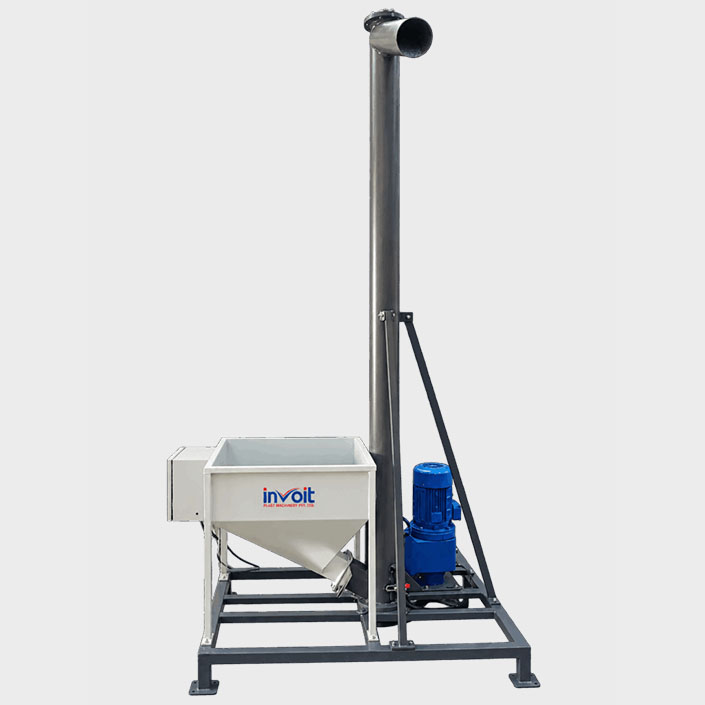
A hopper loader screw conveyor is an enclosed mechanical conveying system engineered to move plastic raw materials—such as virgin pellets, recycled flakes, regrind, and additives—from floor level up into processing machine hoppers.
Unlike vacuum systems that rely on high-velocity air streams, a mechanical loader uses a rotating helical flight inside a sealed tube to push material upward at a steady, controlled rate.
Key Functional Components (Simplified)
- Screw Feeder Hopper: A floor-level receptacle where bulk material is introduced. It often features steep sidewalls to prevent bridging and ensure smooth material flow to the screw inlet.
- Enclosed Conveying Tube: A sealed casing (often constructed from durable stainless steel or heavy-duty polymers) that safely encloses the material during movement, protecting it from contamination.
- Internal Helical Screw: The core moving component that rotates smoothly to draw material from the bottom screw conveyor hopper and transport it toward the discharge head.
- Drive Assembly: A top-mounted or bottom-mounted motor setup that provides continuous torque for smooth, non-pulsing material delivery.
Key Benefits of Using a Screw Loader Plastic Material Hopper Loader
Integrating a screw loader plastic material hopper loader into your molding or extrusion line provides several operational advantages that directly improve output consistency and plant hygiene.
1. Consistent, Uniform Feeding
An uninterrupted flow of raw material into the processing machine hopper keeps barrel pressure stable and prevents material starvation. Mechanical screw loaders push a controlled volume of material with every rotation. This steady supply prevents the starve-feeding conditions that cause short shots, sink marks, or dimensional variation in molded parts.
2. Sealed Environment for Contamination Control
Because the transfer path is fully enclosed from the floor-level bulk container to the top of the machine, raw materials remain protected from external contaminants. Dust, shop debris, airborne moisture, and static-attracted particles cannot enter the stream. This clean transfer is especially vital for medical, food-grade, or clear optical plastic components.
3. Superior Handling of Regrind and Non-Free-Flowing Materials
One of the primary advantages of a mechanical screw conveyor system over traditional vacuum loaders is its ability to handle irregular materials. Vacuum lines frequently clog when transferring lightweight regrind, fluffy flakes, or sticky additive powders.
A mechanical screw loader relies on positive displacement. The rotating flight continuously grabs material from the bottom screw feeder hopper and pushes it upward, regardless of minor variations in particle shape or weight.
4. Reduced Material Waste and Cleaner Shop Floors
Spilled virgin resin or masterbatch represents a direct operational cost. Floor-level loading with a properly fitted screw conveyor hopper makes loading cleaner and more manageable. Operators unload bags at waist height into a wide receiving hopper, preventing pellet scattering across the floor.
5. Improved Workplace Ergonomics and Safety
Eliminating the need for operators to carry heavy material bags up access ladders improves plant ergonomics. Floor-level receiving allows material preparation—such as mixing virgin resin with masterbatch—to occur safely at ground level.
How Mechanical Screw Conveyors Compare to Pneumatic Conveying
When upgrading material handling infrastructure, managers often evaluate both mechanical screw conveyors and pneumatic (vacuum or pressure) systems. Understanding where each technology excels helps ensure you select the right fit for your facility.
Pneumatic Conveying Systems
Pneumatic systems use air differential to draw pellets through flexible hoses. They are well-suited for long-distance transfer across large facilities, such as moving resin from external silos to central distribution manifolds. However, for short-to-medium distance machine-side loading, pneumatic systems present specific considerations:
- They require filters to trap fine dust, which must be cleaned or replaced regularly.
- High air velocity can cause internal abrasion when moving filled materials, leading to “angel hair” or ribboning with soft polymers.
- Handling moist or dusty ambient air can introduce unwanted humidity into hygroscopic polymers like PET or Nylon.
Mechanical Screw Conveyor Systems
A mechanical hopper loader screw conveyor moves material without requiring high volumes of air.
- Zero Air-Stream Friction: Materials are conveyed gently without creating angel hair or fine dust particles.
- Handles Challenging Mixtures: Excellent for feeding dense blends, regrind, and powders directly into processing equipment.
- Simplified Maintenance: Fewer wear parts and no vacuum filters to clean or replace between shifts.
- Quiet Operation: Mechanical screw conveying operates quietly on the plant floor compared to high-decibel vacuum pumps.
Practical Applications Across Plastic Manufacturing Processes
The versatile nature of the screw loader plastic material hopper loader makes it suitable for various stages of plastic conversion.
 PLASTIC MANUFACTURING LINES
                                   │
      ┌────────────────────────────┼────────────────────────────┐
      ▼                            ▼                            ▼
[ Injection Molding ]      [ Extrusion Lines ]        [ Blow Molding Units ]
• Stable shot weights      • Continuous melt pressure • Uniform wall thickness
• Consistent color blend   • Zero starve-feeding      • Regrind recycling
1. Injection Molding
In injection molding, consistency is critical. Fluctuations in material bulk density in the throat of the molding machine lead to inconsistent shot sizes, cushion variation, and cosmetic defects. A machine-side screw conveyor maintains a constant head of material above the throat, stabilizing the plasticizing screw’s intake.
2. Extrusion Lines (Pipe, Profile, Sheet, and Film)
Extrusion processes require uninterrupted, pulseless feeding for hours or days at a time. Any pause in material supply results in wall thickness variation, gauge defects, or line breakage. A screw conveyor system provides continuous material delivery, keeping extruders running smoothly at targeted head pressures.
3. Blow Molding
Blow molding relies heavily on in-house recycling, where bottle trimmings and flash are re-ground and blended back into virgin resin. Because regrind pieces vary in shape and size, mechanical screw loaders provide the positive displacement necessary to move these irregular mixtures without bridging in the hopper.
Best Practices for Integrating a Hopper Loader Screw Conveyor
To get the best performance from your material handling investment, consider these practical integration guidelines:
Select the Right Hopper Design
Ensure your floor-level screw feeder hopper matches your material characteristics. If you process sticky materials, fine powders, or light regrind, choose a hopper equipped with a mechanical agitator or bridge-breaker to keep material flowing smoothly into the intake screw.
Keep the Conveying Path Enclosed and Sealed
Inspect all quick-release clamps, dust covers, and discharge gaskets during routine maintenance. Maintaining a tight seal prevents ambient plant dust from entering and keeps ultra-fine masterbatch dust inside the system.
Establish Simple Preventive Maintenance Schedules
Mechanical screw conveyors are durable, but routine care extends their operational life:
- Inspect internal screw flights periodically for wear when running abrasive filled materials (such as glass-filled polymers).
- Check drive couplings, bearings, and gearboxes for smooth alignment and proper lubrication.
- Clean the interior conveying tube thoroughly during color or material changes to prevent cross-contamination.
Supporting Quality Standards and Operational Integrity
In modern plastic processing, delivering defect-free parts relies on total control over every step of the process—starting with how raw materials are moved across the plant floor.
At Invoitplast, the focus remains firmly on operational reliability, product consistency, and clean manufacturing environments. Implementing well-engineered material handling equipment such as a reliable hopper loader screw conveyor safeguards raw polymer integrity, supports worker safety, and maintains consistent processing conditions.
By replacing manual bag loading or unreliable transfer methods with dedicated mechanical screw conveyors, processing facilities create a clean, modern, and efficient foundation for high-precision manufacturing.
Summary Checklist for Processors
If your plant is experiencing any of the following conditions, evaluating a mechanical screw conveyor hopper solution is a logical next step:
- Frequent pellet spills or dust accumulation around processing machines.
- Worker fatigue or safety concerns from carrying material bags up elevated platforms.
- Clogging or filtering issues when transferring regrind, flakes, or powders with pneumatic lines.
- Inconsistent part weights or melt density caused by uneven hopper feeding.
- Unplanned downtime during color transitions due to tedious material cleanup.
Investing in a reliable, fully enclosed mechanical loading system eliminates these daily headaches—allowing your team to focus on what matters most: producing high-quality plastic parts efficiently and safely.
FAQs
A hopper loader screw conveyor is a mechanical material handling system that transfers plastic raw materials, such as virgin plastic pellets, recycled flakes, regrind, and additives, from a floor-level hopper to a processing machine. It uses a rotating screw inside an enclosed tube to provide controlled material movement.
A hopper loader screw conveyor improves material handling by reducing manual loading, supporting a steady supply of raw materials, and minimizing pellet spills. Its enclosed conveying path also helps protect plastic materials from dust and external contamination during transfer.
A screw loader plastic material hopper loader can handle various materials, including virgin plastic granules, recycled plastic flakes, regrind, masterbatch, and selected powder additives. The actual suitability depends on material characteristics and the conveyor's design.
The main benefits include more consistent material feeding, reduced manual handling, cleaner working areas, lower material spillage, and improved operator safety. A properly selected screw conveyor system can also help reduce interruptions caused by inconsistent material supply.
A hopper loader screw conveyor moves material using a rotating mechanical screw, while a vacuum loader uses airflow to transfer material through a conveying line. Screw conveyors can be suitable for certain regrind, flakes, and difficult-to-flow materials, whereas vacuum loaders may be better suited to other layouts and conveying requirements. The right choice depends on material type, transfer distance, and production needs.
Yes, a suitably designed screw conveyor hopper can handle many types of recycled plastic regrind and flakes. Since these materials can vary in size, shape, and flow characteristics, the hopper opening, screw design, and conveying capacity should match the material being processed.
A screw feeder hopper supplies material to the conveyor intake, while the rotating screw moves it toward the processing machine. When correctly sized and integrated, the system can support a more consistent material supply and help reduce feeding fluctuations that may affect product quality.
Yes, a hopper loader screw conveyor can be used with injection molding machines to transfer plastic granules or suitable regrind into the machine hopper. Consistent material availability can help reduce interruptions caused by material shortages, although final part quality also depends on machine settings, material preparation, and molding conditions.
Yes, a properly designed screw conveyor system can supply suitable raw materials to extrusion and blow molding lines. In extrusion, it supports continuous material supply, while in blow molding, it can transfer virgin resin and suitable recycled regrind used in production.
The enclosed conveying tube helps limit direct exposure of plastic raw materials to factory dust, debris, and other external contaminants during transfer. Regular inspection of seals and proper cleaning are still necessary to maintain material cleanliness and prevent cross-contamination during material or colour changes.
Routine maintenance includes inspecting the screw flights for wear, checking bearings and drive couplings, maintaining gearbox lubrication as recommended, and cleaning the conveying tube when changing materials or colours. Regularly checking seals and discharge connections also helps maintain reliable operation.
Choose a hopper loader screw conveyor based on the type of plastic material, required conveying capacity, transfer height and distance, hopper design, available floor space, and processing machine requirements. If you handle powders, lightweight flakes, or irregular regrind, discuss their flow characteristics with the manufacturer to determine the appropriate screw and hopper configuration.