
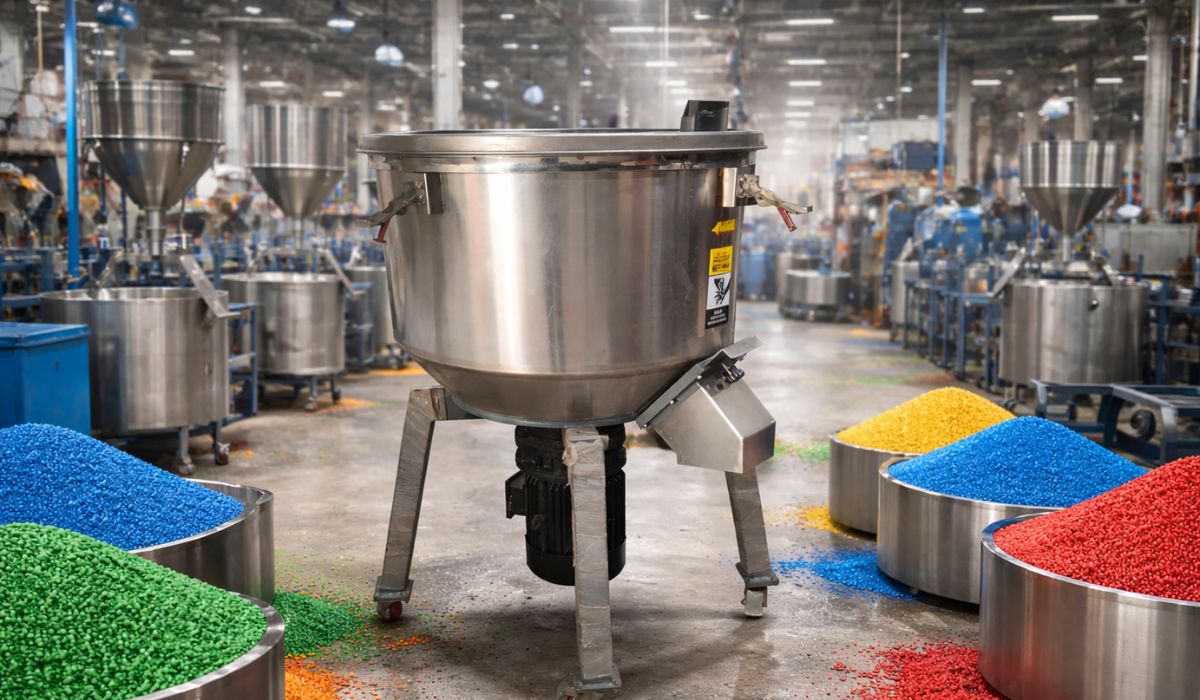
How to Choose the Right Plastic Color Mixer Machine for Your Production Line
In the world of plastic manufacturing, consistency is the foundation of success. Whether you are producing household items, industrial components, or packaging materials, the quality of your final product depends heavily on how well your raw materials are blended.
If your color is patchy or your additives are not distributed evenly, your rejection rate goes up, and your profits go down. This is where a high-quality Plastic Color Mixer Machine becomes the heartbeat of your production floor.
However, choosing the right machine isn’t just about buying the biggest or the most expensive model. It is about finding a balance between your production capacity, the type of material you use, and the long-term reliability of the equipment.
In this guide, we will walk you through everything you need to know to make an informed decision and explain why choosing a reputable Plastic Color Mixer Machine Manufacturer is a critical business move.
Why the Right Mixing Process Matters
Before we look at the machines, let’s understand the “why.” In a typical production line, you are dealing with polymer granules, masterbatches, and sometimes recycled regrind. These materials have different weights and sizes.
If your Plastic Mixer Machine is inefficient, the heavier particles settle at the bottom while the lighter pigments stay at the top. When this uneven mixture enters your injection molding or extrusion machine, the result is “streaking” or inconsistent coloring.
A proper mixing solution ensures a “homogenous” blend. This means every handful of material has the exact same ratio of plastic to color. This consistency saves you money by reducing wasted batches and keeping your customers happy with high-quality finished goods.
Understanding Different Types of Mixing Solutions
Depending on your factory layout and the volume of material you handle, you might encounter different configurations.
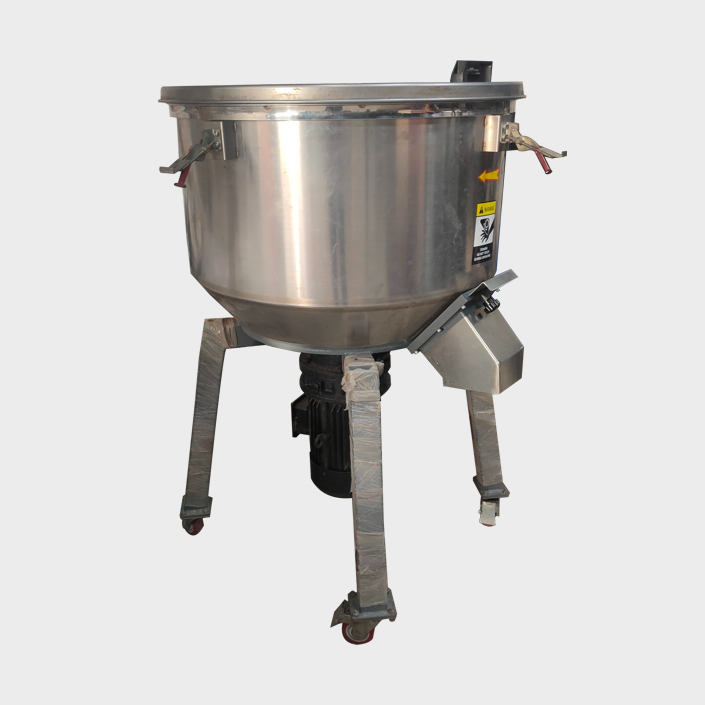
1. Vertical Color Mixers
These are the most common in the industry. They use a central screw to lift material from the bottom to the top, letting it fall back down in a circular motion. They are excellent for space-saving because they grow “up” rather than “out.”
2. Horizontal Mixers
These are often used for larger volumes or when materials need a more forceful blending action. While they take up more floor space, they are highly effective for heavy-duty applications.
3. Storage Mixer Machine
For large-scale plants, a Storage Mixer Machine is a game-changer. These machines do double duty. Not only do they mix the material, but they also act as a large holding silo. This is particularly useful for Indian and African manufacturers who want to prepare large batches in advance to ensure uninterrupted production during long shifts.
Key Factors to Consider When Choosing Your Machine
Choosing a machine based on a catalog photo is a mistake. Here are the real-world factors you need to evaluate:
Your Production Volume
How many kilograms of material do you need to mix per hour? Always choose a machine that can handle slightly more than your current requirement. If you run your machine at 100% capacity all day, it will wear out faster. A machine running at 70-80% capacity lasts longer and performs better.
Material Compatibility
Are you working with virgin granules, or do you use a high percentage of regrind (recycled plastic)? Recycled material is often dusty and uneven. You need a Plastic Mixer Machine that can handle dust without clogging and provide enough force to mix unevenly sized particles.
Ease of Cleaning
In a busy factory, time is money. If you change colors frequently—moving from red to white, for example—you cannot afford to spend three hours cleaning the mixer. Look for designs that offer easy access to the internal drum and the mixing blade. Stainless steel interiors are non-negotiable for easy cleaning and preventing rust.
Power Efficiency
Electricity costs are a major concern for manufacturers in India and across various African regions. A well-designed mixer should have an efficient motor that delivers high torque without consuming excessive power. Even a small saving in units per hour can add up to significant savings over a year.
The Importance of the "Manufacturer Factor"
One of the biggest mistakes a business owner can make is buying a “no-name” machine to save a little bit of money upfront. In the industrial world, the cheapest machine is often the most expensive in the long run due to downtime.
When you partner with a trusted Plastic Color Mixer Machine Manufacturer like Invoit Plast, you aren’t just buying metal and motors; you are buying peace of mind.
Why Choose an Indian Manufacturer?
India has become a global hub for plastic processing machinery. Manufacturers in India understand the challenges of operating in demanding environments, such as fluctuating power grids and high ambient temperatures.
Invoit Plast, based in India, has built a reputation for engineering machines that are “rugged.” These machines are designed to work 24/7. Furthermore, Indian manufacturers offer a perfect balance of advanced technology and “value for money” that is highly appreciated in export markets, especially in Africa and the Middle East.
Avoiding Common Pitfalls
Through years of working with factory owners, we have noticed a few common mistakes:
- Ignoring Noise Levels: A vibrating, noisy machine isn’t just an annoyance; it is a sign of poor balance or low-quality bearings. A high-quality mixer should run smoothly.
- Overlooking Safety: Ensure the machine has safety limit switches. The motor should stop immediately if the lid is opened. Protecting your workers is the best way to protect your business.
- Forgetting Spare Parts: Before you buy, ask: “Can I get a replacement motor or bearing in 48 hours?” Reputable manufacturers like Invoit Plast ensure that wear-and-tear parts are always available, minimizing your downtime.
Maintaining Your Plastic Color Mixer Machine
To get the most out of your investment, follow these simple steps:
- Daily Dusting: Plastic dust can get into the motor cooling fans. A quick blast of compressed air daily can extend motor life.
- Grease the Bearings: Follow the manufacturer’s schedule for lubrication. A dry bearing is the fastest way to a broken machine.
- Check the Belt Tension: Over time, drive belts can stretch. A loose belt leads to inefficient mixing and wasted power.
Establishing Trust in Your Production Line
Your production line is only as strong as its weakest link. If your mixing is poor, your injection molding machine will produce rejects. If your mixer breaks down, your entire plant stops.
Investing in a high-quality Plastic Color Mixer Machine is an investment in your brand’s reputation. When your customers receive products with perfect, vibrant, and consistent colors, they trust you more.
At Invoit Plast, we take pride in being more than just a supplier. We are partners in your growth. As a leading Plastic Color Mixer Machine Manufacturer in India, we understand the nuances of masterbatch mixing and the specific needs of small-to-large scale plastic industries.
Our machines are exported globally, proving that Indian engineering can stand toe-to-toe with the best in the world while remaining accessible and easy to maintain.
Final Thoughts
Choosing the right mixer is a step toward professionalizing your production. Focus on your capacity needs, prioritize ease of cleaning, and always choose a manufacturer that offers strong after-sales support.
By focusing on quality today, you prevent the headaches of tomorrow. Whether you are looking for a standard Plastic Mixer Machine or a high-capacity Storage Mixer Machine, always look for the mark of quality and experience.
Are you ready to upgrade your production quality and reduce your wastage?
Contact Invoit Plast today. Our experts are ready to help you select the perfect mixing solution tailored to your specific production goals. Let’s build a more efficient future for your factory together.
📩 Request Your Quotation Now
+91 63546 02502 , info@invoitplast.com
FAQs
A Plastic Color Mixer Machine is used to mix plastic granules, masterbatch, additives, and recycled materials evenly before the molding or extrusion process. It helps achieve consistent color, better product quality, and reduced material wastage.
You should consider your production capacity, material type, mixing time, power consumption, and cleaning requirements. Choosing a machine slightly larger than your current production need is recommended for future expansion and smoother operation.
A vertical mixer is ideal for factories with limited floor space and medium production requirements. A horizontal mixer is better for heavy-duty mixing and larger batch volumes. The right choice depends on your production line and material handling needs.
Uniform mixing prevents color variation, streaks, and uneven additive distribution in finished plastic products. Proper mixing improves product appearance, reduces rejection rates, and increases customer satisfaction.
Yes. A high-quality Plastic Mixer Machine can efficiently mix virgin plastic, recycled regrind, and masterbatch together. Machines designed for industrial use can also handle dusty and uneven recycled materials without clogging.
A Storage Mixer Machine combines mixing and storage functions in one system. It allows manufacturers to prepare large batches in advance and maintain continuous production with less downtime.
Power consumption depends on machine size, motor capacity, and production load. Modern energy-efficient mixers are designed to provide strong mixing performance while reducing electricity costs for long-term savings.
A reliable Invoit Plast Machinery Pvt. Ltd. provides better machine quality, after-sales support, spare part availability, and long-term durability. This helps reduce unexpected downtime and maintenance costs.
Regular cleaning should be done daily, especially when changing colors or materials. Bearings should be lubricated as per the manufacturer’s schedule, and belts should be checked periodically to maintain smooth machine performance.
A quality mixer should include safety limit switches, overload protection, secure lids, and stable machine construction. These features protect workers, reduce accidents, and improve overall production safety.