
Turning Sprues into Profits: How to Choose the Right Scrap Grinder Machine for Injection Molding
Every injection molding shop floor has a silent thief.
If you walk through your facility right now, you will see them lying in bins, piled up next to machines, or overflowing in corner boxes.
Sprues, runners, and rejected parts.
To the untrained eye, it is just unavoidable waste—the cost of doing business. But to a smart factory owner or production manager, that pile of scrap is pure, unrefined profit waiting to be reclaimed.
Every single gram of that plastic was bought at virgin material prices. Letting it sit idle, selling it for pennies to scrap dealers, or transport-hauling it away is simply throwing money out of the window.
The solution is simple, yet many get it wrong: investing in a high-quality scrap grinder machine.
But how do you choose the right one? How do you make sure your investment actually saves money instead of adding to your maintenance headaches?
In this comprehensive guide, we will break down exactly how to select the perfect plastic scrap grinder machine for injection molding to turn your waste stream into a steady profit stream.
The Hidden Cost of Plastic Waste in Injection Molding
Let’s talk numbers—without getting lost in complex math.
In a typical injection molding cycle, sprues and runners can account for anywhere from 10% to over 30% of the total shot weight. If you are processing tons of material every month, that is a massive amount of plastic that never makes it into a sellable product.
Historically, manufacturers handled this in three ways:
- The “Store and Ignore” Method: Storing scrap in bags until the warehouse runs out of space.
- The Outsourcing Method: Selling the scrap to third-party recyclers for a fraction of its original value.
- The Centralized Grind Method: Carrying bags of dusty scrap to a loud, dangerous room at the far end of the factory.
None of these methods are efficient. They require manual labor, create safety hazards, and risk contaminating your materials.
The modern, highly profitable way to handle this is closed-loop recycling—grinding your sprues right next to the injection molding machine and feeding the clean regrind back into the hopper immediately.
To do this successfully, you need the right tool for the job.
Beside-the-Press vs. Centralized Grinding: Which is Right for You?
Before looking at specific features of a plastic scrap grinder machine, you must decide on your operational layout. There are two primary schools of thought here.
1. Beside-the-Press Grinding (The Closed-Loop Approach)
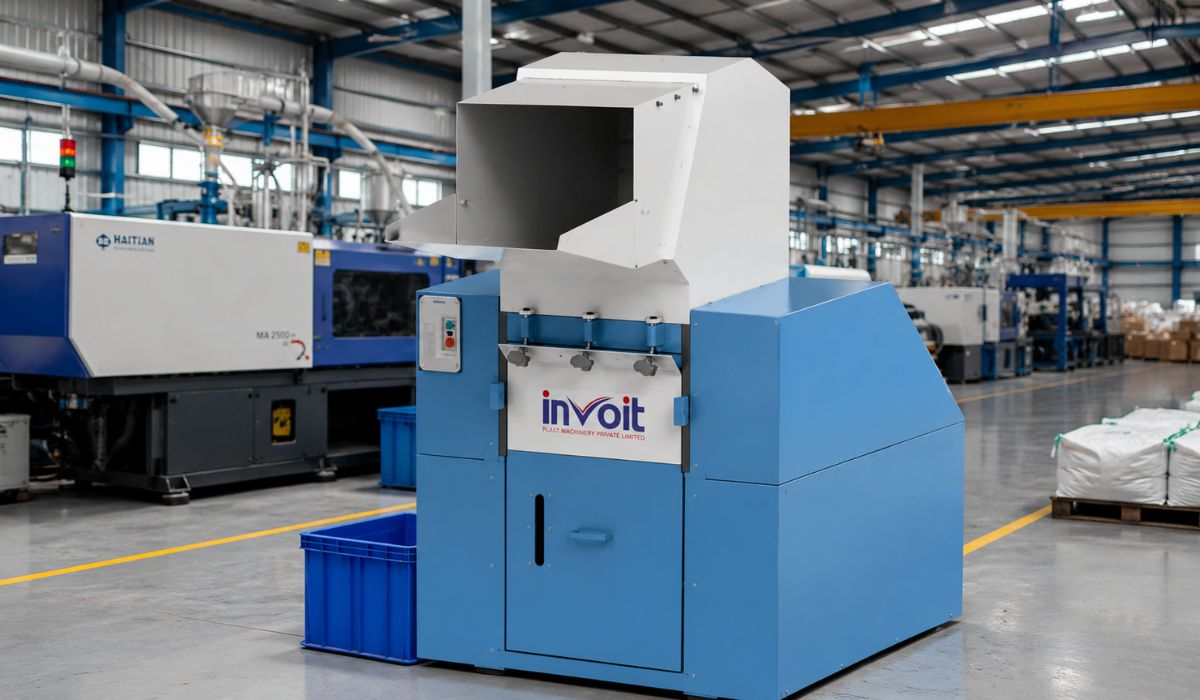
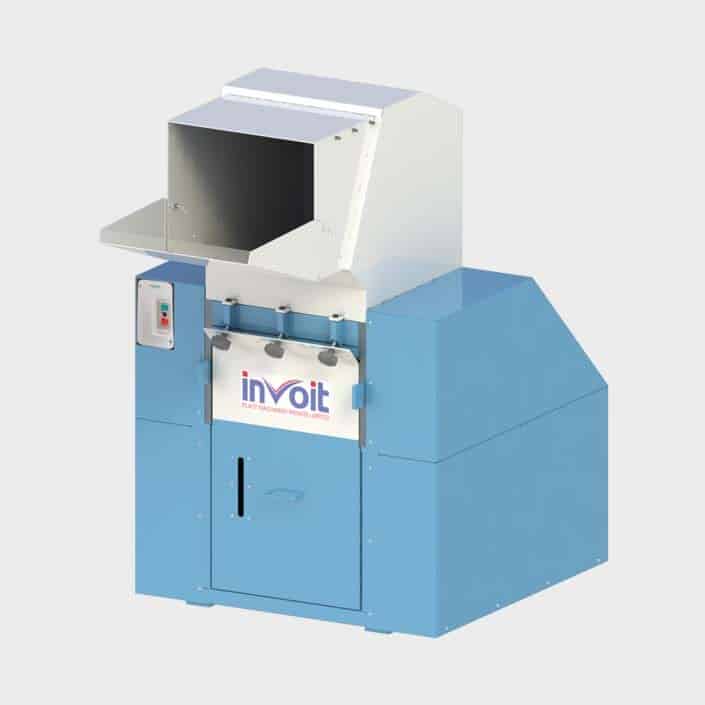
This is where a compact sprues scrap grinder machine sits directly next to your injection molding machine.
- How it works: As the mold opens, the robot or the operator drops the sprue directly into the grinder. The material is instantly ground and vacuumed back into the machine hopper to mix with virgin material.
- Why it’s great: Zero contamination risk. No transport labor. No storage space needed. It keeps your shop floor incredibly clean.
- Best for: Consistent runs, high-volume production, and medical or automotive parts where contamination is a zero-tolerance issue.
2. Centralized Grinding (The Batch Approach)
In this setup, you have one or two large, heavy-duty grinders located in a dedicated recycling area.
- How it works: Scrap from all machines is collected in bins, transported to the grinding room, and processed in large batches.
- Why it’s great: You only need one or two machines to handle the waste of an entire factory. It keeps the noise isolated in one room.
- Best for: Large, bulky scrap parts, thick-walled rejects, and factories processing many different materials and colors where beside-the-press setups would be too expensive to duplicate.
Real-world tip: Most scaling molding shops start with a centralized grinder but quickly transition to beside-the-press models for their high-running lines to eliminate material contamination and labor costs.
5 Practical Steps to Choose the Right Scrap Grinder Machine
Selecting a grinder isn’t about finding the biggest motor or the loudest machine. It is about matching the machine to your specific production reality.
Here is a practical checklist to guide your decision.
Step 1: Analyze Your Material Type (Rigid vs. Flexible)
Not all plastics grind the same way.
- Hard, Brittle Plastics (like Polystyrene or Acrylic): These materials shatter easily. They require a grinder that cuts cleanly without creating excessive powder or dust.
- Soft, Elastomeric Plastics (like TPU, TPE, or Soft PVC): These materials tend to stretch and tear rather than cut. If you feed them into a standard grinder, they might wrap around the rotor, overheat, and jam the machine. For these, you need a high-torque, slow-speed grinder with razor-sharp scissor-cut blades.
- Glass-Filled Plastics (like Nylon with glass fibers): These are incredibly abrasive. Standard steel blades will dull within days. You need specialized, hardened tool steel wear-resistant blades to handle them without frequent downtime.
Step 2: Look at the Size and Shape of Your Scrap
Are you grinding long, thin sprues, flat runners, or massive, thick-walled rejected parts?
- For Sprues and Runners: A compact, small-throat sprues scrap grinder machine is perfect. It has a narrow opening designed to safely accept thin strips of plastic without allowing “flyback” (where pieces of plastic shoot back out of the hopper).
- For Large Parts and Rejects: You need a wide-mouth grinder with a heavy-duty rotor that can grab hold of bulky parts and pull them down into the cutting chamber without jamming.
Step 3: Prioritize “Low-Speed” for High-Quality Regrind
One of the biggest mistakes factory managers make is buying high-speed grinders because they think “faster is better.” In reality, high-speed grinders (running at 400 to 600 RPM) create a massive amount of friction. This heat can degrade or even melt the plastic during the grinding process. High-speed grinding also produces a lot of dust and “fines” (microscopic plastic particles). If you feed dusty regrind back into your injection molding machine, the dust melts faster than the granules, leading to:
- Black spots on finished parts
- Structural weak points
- Clogged filters and feed throats
A low-speed scrap grinder machine (running at 25 to 150 RPM) uses a high-torque “scissor action” to cleanly cut the plastic. This produces uniform, dust-free granules that behave exactly like virgin raw materials.
Step 4: Assess Ease of Cleaning and Color Changes
In B2B manufacturing, downtime is the ultimate profit killer. If your operators have to spend two hours with wrenches and screwdrivers just to clean a grinder for a color change, you are losing money. Look for machines that offer:
- Tool-less Access: The hopper and screen should open easily with hand-clamps or levers.
- Highly Visible Chambers: You should be able to see every corner of the cutting chamber clearly to ensure no stray color granules are left behind.
- Easy-to-Remove Screens: The screen underneath the rotor should slide out easily for quick cleaning.
Step 5: Safety and Noise Levels
The modern factory floor is highly focused on worker safety and comfort. Old-school grinders are notoriously loud—sometimes sounding like a jet engine starting up. This leads to operator fatigue, communication errors, and safety compliance issues. Opt for grinders with integrated soundproofing. A quiet machine keeps your shop floor compliant with safety regulations and makes for a much healthier work environment. Additionally, look for dual safety interlocks that immediately stop the motor the second the hopper is opened.
Why Grinders Are Actually Incredibly Expensive
It is incredibly tempting to buy the cheapest copycat grinder you can find on the market. But in the industrial sector, “cheap” almost always comes with a massive hidden invoice.
Here is what happens when you buy a low-quality plastic scrap grinder machine:
- High Blade Wear: Cheap blades dull quickly. Dull blades tear the plastic instead of cutting it, generating massive amounts of heat, dust, and uneven regrind.
- Frequent Motor Burnouts: Low-quality motors and gearboxes lack the torque to handle sudden jams, leading to electrical failures and production stops.
- Material Contamination: Poorly sealed bearings can leak grease into your pristine regrind, ruining entire batches of medical or food-grade products.
- Lack of Spare Parts: If a blade or screen breaks on a cheap, unbranded import, you might have to wait weeks for a replacement, leaving your factory floor cluttered with mounting waste.
An investment in a high-quality machine from a reputable manufacturer pays for itself by running consistently shift after shift, year after year, with minimal maintenance.
How Regrind Quality Directly Impacts Your Final Molded Parts
In the injection molding business, your reputation hinges on the quality of your shipped products. Many molding shop managers view regrind as a “filler” material, assuming any ground plastic will do.
This is a dangerous assumption.
The physical quality of your regrind directly determines the strength, aesthetics, and structural integrity of your final parts. Here is how poor-quality grinding silently compromises your production:
1. The Danger of “Dust and Fines”
When a low-quality or high-speed grinder pulverizes plastic, it doesn’t just cut—it crushes. This creates a large volume of plastic dust and microscopic particles known as “fines.”
When this dusty mixture enters your injection molding machine, the dust melts much faster than the standard-sized virgin granules. This leads to material degradation, resulting in:
- Cosmetic Defects: Dark streaks, burn marks, and ugly “silver streaks” (splay) on the surface of your parts.
- Structural Weakness: Brittle spots and internal air pockets that cause parts to break easily under pressure.
- Clogged Filters: Dusty air clogs hopper loader filters, choking material flow and stopping production.
2. Non-Uniform Granule Size (The Melting Problem)
To get a perfect mold, your plastic must melt at a completely uniform rate. If your grinder produces a mix of massive chunks and tiny slivers, they will melt at different speeds inside the barrel.
Unmelted larger chunks can damage the injection screw or clog the gate of your mold. Conversely, overheated smaller pieces degrade and lose their physical strength, leaving your finished parts structurally compromised.
3. Preserving Molecular Integrity
Plastic is made of long polymer chains. Every time you grind and melt it, those chains get shorter, reducing the material’s strength.
A high-quality, slow-speed cutting mechanism slices clean through the plastic without generating heat. This preserves the maximum possible length of those polymer chains. High-speed grinding, on the other hand, generates intense heat during cutting, prematurely aging the material before it even returns to the molding barrel.
If your goal is to maintain a zero-defect production line while reusing your scrap, your choice of grinder isn’t just a waste-management decision—it is a critical part of your quality control process.
Partnering with the Right Manufacturer: Why India Trusts Invoit Plast
When you are looking to integrate high-efficiency recycling into your production lines, you don’t just need a machine supplier. You need a partner who understands the nuances of polymer behavior, machine duty cycles, and shop floor dynamics.
This is where Invoit Plast shines.
As a leading plastic scrap grinder machine for injection molding manufacturer in India, Invoit Plast has built a reputation on three core pillars:
- Precision Engineering: Our grinders are built specifically to address the real-world challenges of Indian injection molders—handling voltage fluctuations, high ambient temperatures, and continuous 24/7 runtimes.
- Dust-Free Cutting Technology: We design our rotors and blades to deliver clean, scissor-like cuts, ensuring your regrind is free from dust and fines, preserving the physical properties of your molded parts.
- Unmatched Local Support: Unlike imported machines that leave you stranded when you need service, Invoit Plast offers rapid on-site support, ready spare parts availability, and expert guidance to help you optimize your recycling loop.
Whether you run a small custom molding shop or manage a massive automotive molding facility, we build solutions that fit seamlessly into your existing workflow, turning your waste management headache into a streamlined, automated profit center.
Stop Throwing Away Your Profits
The equation is simple: Less waste equals higher margins.
By upgrading from manual waste handling to an automated, closed-loop scrap grinder machine setup, you instantly cut raw material costs, reduce labor overhead, and create a safer, cleaner factory floor.
Don’t let your profits slip away in trash bins. Take control of your material costs today.
Ready to Optimize Your Shop Floor?
Let’s analyze your current scrap output and help you choose the ideal grinding setup for your materials.
Email : info@invoitplast.com , service@invoitplast.com, sales@invoitplast.com
Phone Number : +91 63546 02502, +91 63546 02503, +91 63546 02504
FAQs
A plastic scrap grinder machine for injection molding is an industrial machine that converts sprues, runners, rejected molded parts, and plastic waste into reusable plastic granules. These granules can be mixed with virgin material and reused in the injection molding process, helping manufacturers reduce raw material costs and minimize production waste.
A scrap grinder machine helps injection molding manufacturers recover valuable plastic waste instead of discarding it. It reduces material costs, minimizes waste disposal expenses, improves production efficiency, supports closed-loop recycling, and increases overall profitability while promoting sustainable manufacturing.
A high-quality plastic scrap grinder machine can process a wide range of thermoplastics used in injection molding, including:
- PP (Polypropylene)
- HDPE
- LDPE
- LLDPE
- ABS
- PVC
- PET
- Nylon (PA)
- Acrylic (PMMA)
- Polystyrene (PS)
- Glass-filled engineering plastics
- TPU and TPE (with suitable machine configuration)
The ideal grinder depends on the material's hardness, thickness, and production volume.
Beside-the-press grinding places the grinder next to the injection molding machine, allowing sprues and runners to be recycled immediately. This reduces contamination and labor.
Centralized grinding collects plastic waste from multiple machines and processes it in one dedicated recycling area. It is suitable for larger factories handling multiple materials and bulky plastic scrap.
When selecting a plastic scrap grinder machine, consider:
- Type of plastic material
- Size and thickness of scrap
- Daily production volume
- Required output capacity
- Blade quality
- Rotor design
- Low-speed or high-speed operation
- Ease of cleaning
- Noise level
- Availability of spare parts and after-sales service
Choosing the right machine improves grinding quality and reduces maintenance costs.
A low-speed scrap grinder produces uniform plastic granules with minimal dust and heat generation. This helps preserve the material's physical properties, reduces contamination, prevents black spots on molded products, and improves the overall quality of recycled material used in production.
Yes. Properly ground plastic scrap can be mixed with virgin raw material and reused in many injection molding applications. Clean, uniformly sized regrind helps maintain product quality while reducing raw material consumption and manufacturing costs.
A low-quality grinder may cause:
- Excessive plastic dust
- Uneven granule size
- Frequent blade wear
- Motor failures
- Material contamination
- High maintenance costs
- Production downtime
- Poor-quality molded products
Investing in a reliable machine ensures consistent performance and long-term savings.
A plastic scrap grinder machine lowers production costs by:
- Reusing plastic waste
- Reducing virgin material consumption
- Minimizing scrap disposal expenses
- Lowering labor costs
- Decreasing material handling time
- Improving production efficiency
- Supporting continuous in-house recycling
These benefits provide a faster return on investment for injection molding businesses.
Invoit Plast manufactures high-performance plastic scrap grinder machines designed for continuous industrial use. Their machines feature precision engineering, durable cutting blades, dust-free grinding technology, easy maintenance, energy-efficient operation, and reliable after-sales support. These solutions help injection molding manufacturers maximize material recovery, reduce operational costs, and improve production efficiency.