
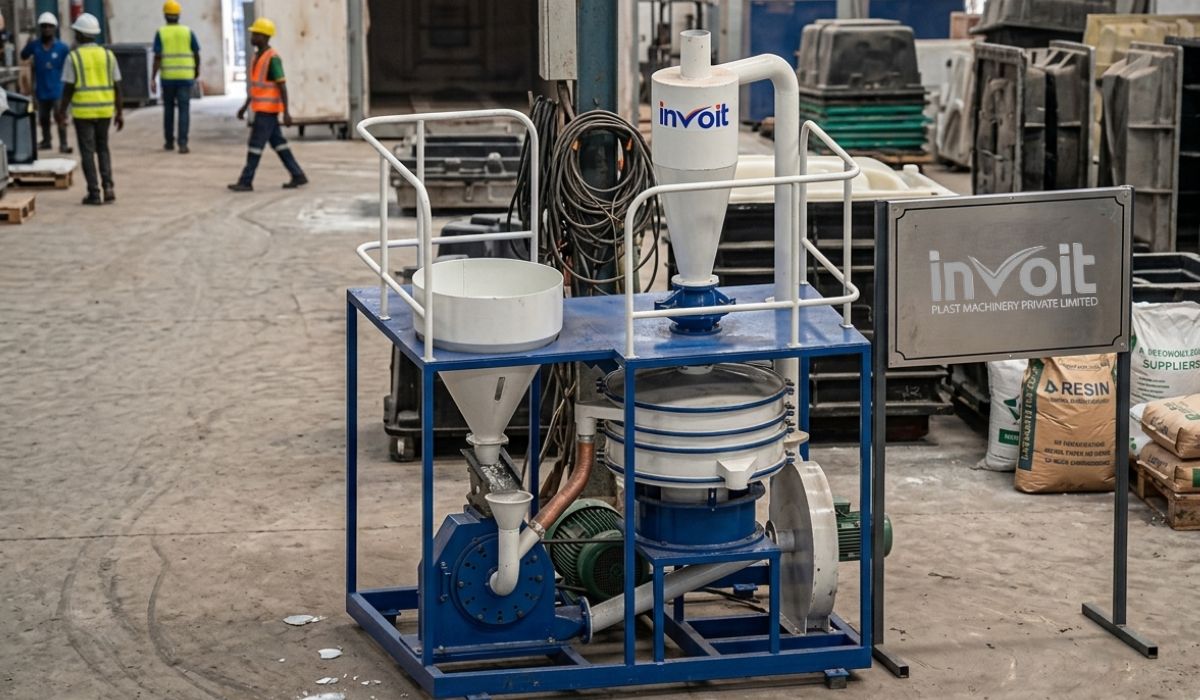
Plastic Pulverizer Machine for Nigeria Rotomoulding Industry — Full Breakdown
The Nigerian rotomoulding industry is currently witnessing a massive transformation. From the bustling industrial hubs of Lagos and Kano to the growing manufacturing zones in Aba and Port Harcourt, the demand for high-quality plastic products—especially water tanks, drums, and storage containers—is at an all-time high.
However, any experienced rotomoulder knows that the secret to a perfect, seamless water tank isn’t just the moulding machine itself; it starts with the quality of the raw material. This is where the Plastic Pulverizer Machine for Nigeria becomes the most critical asset in your factory.
In this guide, we will break down why pulverizing is the “engine room” of the rotomoulding process and how local manufacturers are using this technology to beat high import costs and improve product quality.
Why Pulverizing is the Backbone of Nigerian Rotomoulding
Rotational moulding (rotomoulding) is unique because it relies on gravity and heat rather than high pressure. Because of this, the raw material must be in a fine, flowable powder form—typically LLDPE (Linear Low-Density Polyethylene).
In Nigeria, many manufacturers face a common dilemma:
- Importing expensive pre-pulverized powder, which is subject to fluctuating foreign exchange rates.
- Sourcing local granules/pellets, which are cheaper but cannot be used in a rotomoulding machine until they are converted into powder.
A plastic powder making machine in Nigeria bridges this gap. It allows you to buy raw granules (or even recycled flakes) and grind them into the precise mesh size required for your moulds. This shift from buying powder to making powder is often the difference between a struggling factory and a highly profitable one.
Key Benefits of Owning a Plastic Pulverizer Machine
1. Massive Cost Savings on Raw Materials
Buying LLDPE granules and pulverizing them in-house is significantly cheaper than importing finished powder. With the current economic landscape in Nigeria, reducing your reliance on “ready-made” imports helps stabilize your production costs against the volatility of the Naira.
2. Total Quality Control
When you own a rotomoulding pulverizer machine, you control the particle size. If the powder is too coarse, your water tanks will have “pinholes” or bubbles. If it is too fine, it might burn. By adjusting your machine, you ensure a smooth internal finish for every tank produced in your Port Harcourt or Lagos facility.
3. Waste Reduction and Recycling
Nigerian manufacturers are increasingly looking at sustainability. A pulverizer allows you to take “scrap” or rejected products, granulate them, and then grind them back into powder. This plastic recycling machine Nigeria setup ensures that almost 0% of your raw material goes to waste.
4. Color Customization
Instead of ordering large batches of colored powder, you can grind natural granules and mix them with high-quality pigments or masterbatches during the pulverizing process. This gives you the flexibility to produce black, blue, or green tanks on demand.
How the Pulverizer Works: The Industrial Process
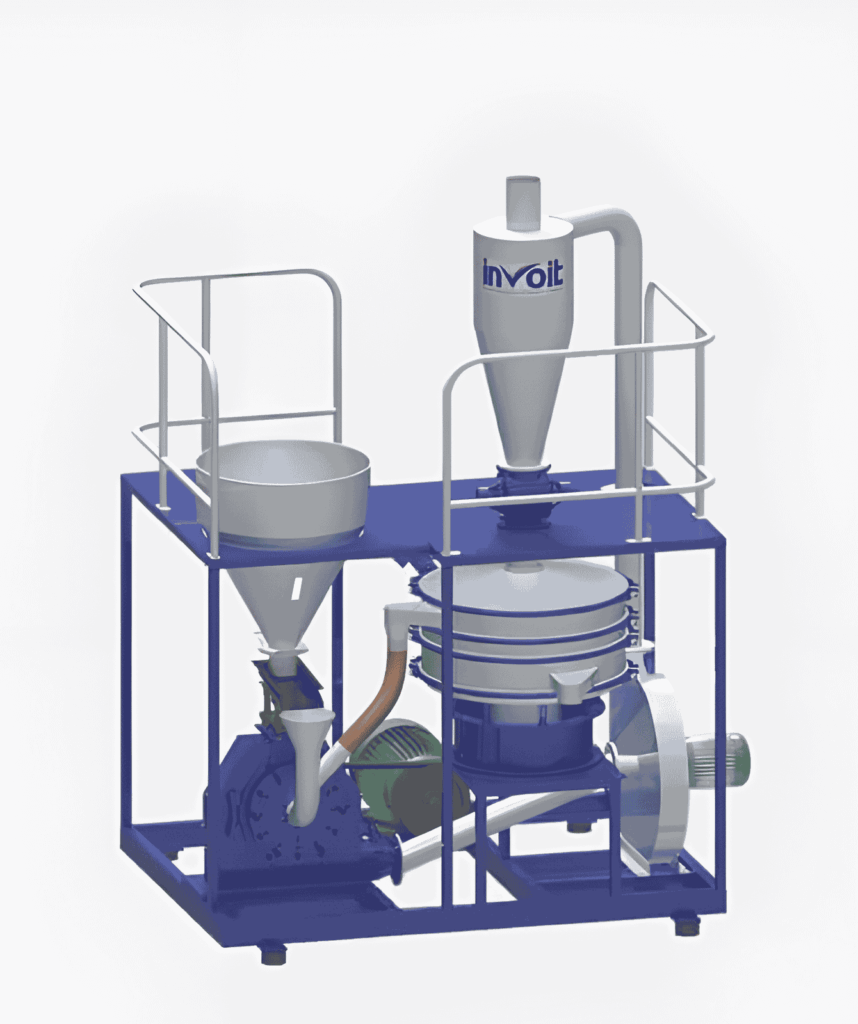
The process of a rotational moulding powder machine is a balance of speed, friction, and temperature management. Here is how a standard high-speed unit operates in a Nigerian factory setting:
- Feeding: LLDPE granules are fed into the hopper.
- Grinding: The material passes between a high-speed rotary disc and a stationary stator disc. These discs have specialized teeth designed to shear the plastic into tiny particles.
- Cooling: Because friction generates heat (which could melt the plastic inside the machine), advanced water-cooling systems are used to keep the temperature stable.
- Sieving: A vibratory screen (vibro-shifter) ensures that only the powder meeting your “mesh” requirement passes through. Anything too large is automatically sent back for re-grinding
Essential Features for the Nigerian Market
When looking for a pulverizer machine manufacturer in India or local distributors, keep these “non-negotiable” features in mind to ensure the machine survives the Nigerian industrial environment:
Heavy-Duty Cooling Systems
Nigeria’s ambient temperature is high. Your pulverizer must have a robust water-jacketed cooling system for both the grinding chamber and the bearing housing. Without proper cooling, the LLDPE will “clog” or “lump” inside the machine, leading to hours of downtime.
High-Grade Alloy Steel Blades
The “teeth” of your pulverizer do the hard work. Look for blades made from hardened alloy steel that can withstand long production shifts without frequent sharpening. This is especially important if you are located in industrial hubs like Kano or Aba, where technical maintenance needs to be kept to a minimum.
Dust-Free Operation
A good LLDPE pulverizer machine should come with a cyclone separator and a pulse-jet dust collector. This keeps your factory floor clean and ensures that workers aren’t inhaling fine plastic particles—a major health and safety win.
The India-Nigeria Connection: Why Sourcing Matters
Most of the high-performing rotomoulding machinery in Nigeria today comes from India. As a pulverizer machine manufacturer in India can attest, the synergy between the two markets is based on “Appropriate Technology.”
Indian machines are designed to be:
- Easy to maintain: You don’t need a PhD to service them; a good local mechanic can handle the basics.
- Power Efficient: Designed to work well with industrial generators, which is vital given the power challenges in many Nigerian states.
- Durable: Built for the “long haul” in tropical climates.
Insights for Entrepreneurs in Lagos, Kano, and Beyond
If you are setting up a new plant in Lagos or expanding in Onitsha, consider the “Pulverizing Unit” as a separate profit center.
Even if you aren’t ready to start your own rotomoulding line, some entrepreneurs in Nigeria operate purely as “Service Pulverizers.” They take granules from other manufacturers and grind them for a fee. Because the demand for plastic powder making machine Nigeria services is so high, this has become a lucrative niche in the recycling and polymer value chain.
Choosing the Right Capacity
Don’t over-buy or under-buy. Assess your daily production of water tanks:
- Small Scale: If you produce 5–10 tanks a day, a compact pulverizer with a 100–150 kg/hr output is sufficient.
- Medium to Large Scale: For factories in Port Harcourt or Kano producing hundreds of containers, you will need high-output machines (300 kg/hr+) to keep your rotomoulding ovens running 24/7.
Final Thoughts: Investing in the Future of Nigeria's Infrastructure
The Nigerian construction and agricultural sectors are booming, and every new building or farm needs a water storage solution. By investing in a high-quality Plastic Pulverizer Machine for Nigeria, you aren’t just buying a piece of equipment—you are securing your supply chain, reducing your costs, and ensuring that your “Made in Nigeria” products meet international standards.
Whether you are looking for an LLDPE pulverizer machine or a full plastic recycling machine Nigeria setup, the goal remains the same: efficiency, quality, and profitability.
📞 Start Your Project with the Right Pulverizer Solution : +91 63546 02502 , info@invoitplast.com
FAQs
A plastic pulverizer is used to grind LLDPE granules or recycled plastic flakes into a fine, consistent powder. In Nigeria, this is a critical step for rotomoulding manufacturers producing water tanks and drums, as the moulding process requires powder rather than pellets to ensure smooth, pinhole-free product walls.
Pulverizing in-house significantly reduces production costs by allowing manufacturers to buy cheaper raw granules instead of expensive pre-ground powder. This strategy also provides better control over powder quality and mesh size, which is essential for managing the high-demand water tank market in hubs like Lagos and Kano.
LLDPE (Linear Low-Density Polyethylene) is the primary material pulverized for the Nigerian rotomoulding industry. Its excellent environmental stress-crack resistance and high impact strength make it the ideal choice for durable outdoor water storage tanks, chemical drums, and large industrial containers used throughout Nigeria.
High-quality pulverizers utilize a dual-cooling system featuring water-cooled jackets for the grinding chamber and high-velocity air-conveying systems. This prevents the LLDPE from reaching its softening point (60-70°C), ensuring the plastic doesn't melt or "smear" inside the machine during long production shifts in hot climates.
For standard rotomoulding in Nigeria, a 30-mesh to 35-mesh size is generally preferred. This specific fineness ensures that the powder flows easily into every corner of the mould and melts uniformly, resulting in a consistent wall thickness and a smooth interior finish for the final product.
Yes, a pulverizer is an essential plastic recycling machine. It can process clean industrial scrap or rejected products that have been granulated. By turning this scrap back into fine powder, manufacturers in cities like Aba and Port Harcourt can achieve zero-waste production and lower their overall material costs.
Routine maintenance focuses on blade sharpening, bearing lubrication, and cooling system checks. Because the discs rotate at high speeds, the alloy steel blades must be kept sharp to ensure a "clean shear." Regularly cleaning the vibro-shifter and dust collection bags also prevents blockages and maintains high output rates.
Pulverizer machines from India are favored in Nigeria because they offer a balance of robust durability and simple maintenance. These machines are specifically engineered to handle power fluctuations and tropical temperatures, making them a reliable choice for the industrial environments of Ogun, Anambra, and Kaduna states.
The vibro-shifter acts as a precision filter that separates ground powder based on size. It ensures that only the particles meeting your specific mesh requirement proceed to the collection bin. Any oversized particles are automatically recycled back into the grinding chamber, ensuring 100% uniformity in your raw material.
A professional-grade pulverizer should include emergency stop buttons, magnetic feeders to catch metal debris, and pulse-jet dust collectors. These features protect the motor from damage and ensure a dust-free environment, which is vital for the health and safety of factory workers in busy Nigerian industrial zones.