
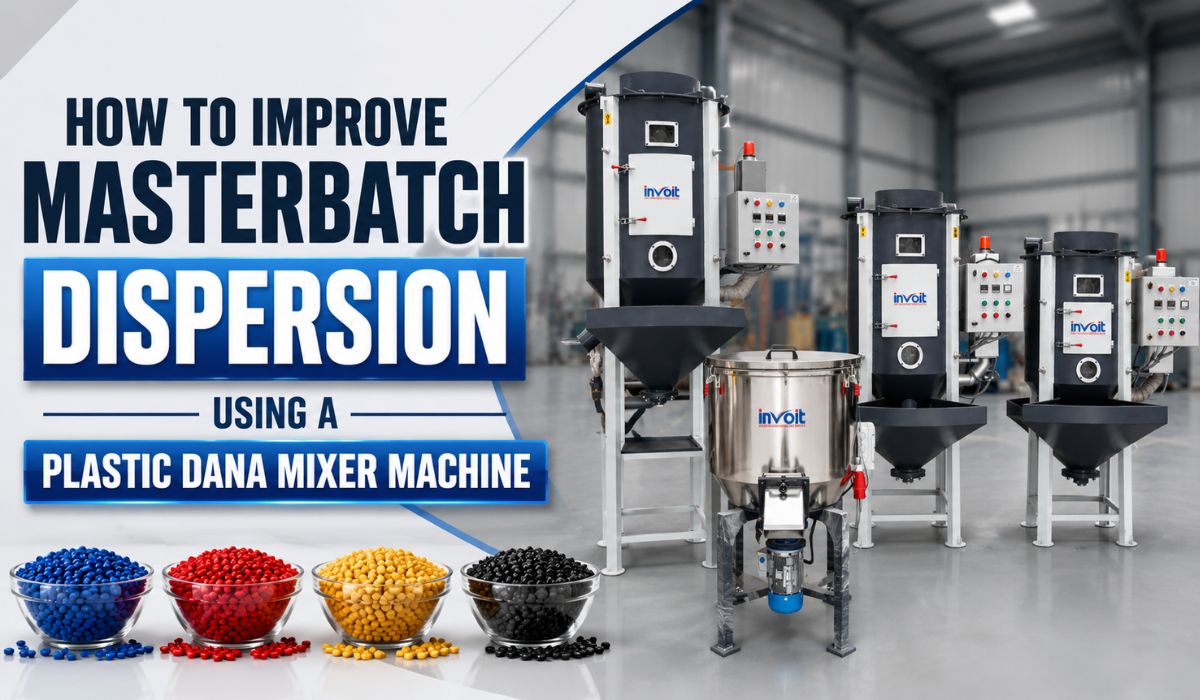
How to Improve Masterbatch Dispersion Using a Plastic Dana Mixer Machine
In the plastic manufacturing industry, achieving consistent product quality, vibrant colors, and uniform material strength is a daily challenge. Whether you produce injection-molded components, blown films, woven sacks, or extruded pipes, your final product is only as good as the raw material blend you put into your machine.
One of the most common issues faced on the factory floor is poor masterbatch dispersion. When masterbatch granules (color or additive concentrates) do not mix evenly with virgin or recycled polymer granules (dana), the results can be frustrating:
- Unattractive color streaks or dark specks on the finished product.
- Inconsistent wall thickness or physical weak spots.
- Increased rejection rates and costly material wastage.
- Higher consumption of expensive masterbatch just to achieve an acceptable shade.
The good news is that achieving smooth, uniform dispersion does not require overly complicated chemical processes or expensive trial-and-error setups. The key lies in mastering your pre-mixing process with an efficient Plastic Dana Mixer Machine.
In this detailed guide, we will explore practical, shop-floor-tested methods to dramatically improve masterbatch dispersion using a Plastic Mixer Machine, avoiding common operational mistakes, and building better processing habits.
Understanding Masterbatch Dispersion: Why Does It Matter?
Before diving into operational solutions, let us look at what actually happens inside a plastic blender.
Masterbatch contains high concentrations of pigments, dyes, or functional additives locked inside a carrier resin. To get a perfectly uniform plastic part, those carrier resin pellets and pigment particles must break down and spread evenly throughout your primary plastic granules (dana) during processing.
If your raw materials enter the processing machine (extruder or injection molding machine) unevenly distributed, the screw and barrel will struggle to homogenize the melt. This leads to two main types of dispersion failure:
- Macro-Mixing Failure: The masterbatch granules are physically concentrated in certain areas of the hopper and sparse in others. This causes color variations from one part to the next.
- Micro-Mixing Failure: Pigment agglomerates within the masterbatch fail to break apart cleanly during melting, creating tiny specks or spots on the product surface.
While micro-mixing depends partly on masterbatch quality and screw design, macro-mixing relies entirely on your pre-blending process. A well-built Plastic Dana Mixer Machine ensures that every single batch loaded into your hopper has an identical ratio of polymer granules to masterbatch.
Step-by-Step Guide to Improve Dispersion Using a Plastic Dana Mixer Machine
Improving dispersion is all about consistency, discipline, and understanding how materials behave inside a mixer. Here are practical steps you can implement on your production line immediately.
1. Optimize Your Batch Sizing (Avoid Overfilling and Underfilling)
One of the most common mistakes operators make is filling the mixing drum to the very top to “save time.”
When a Plastic Mixer Machine is overfilled:
- Materials cannot cascade or tumble freely.
- The masterbatch pellets settle into pocket pockets or stick near the central shaft.
- The blades exert unnecessary drag without creating proper circulation.
Conversely, underfilling the mixer significantly reduces friction and contact between granules, leading to incomplete blending.
Best Practice: Fill your mixer to between 70% and 80% of its maximum volumetric capacity. This leaves sufficient air space for the granules to lift, turn, and fold naturally over the blades during operation.
2. Follow a Correct Material Loading Sequence
The order in which you load materials into your Plastic Dana Mixer Machine directly impacts how evenly additives cling to the base polymer.
If you dump masterbatch at the very bottom of an empty mixing drum, a significant portion can get trapped beneath the mixing blades or stick to the bottom surface before the main polymer granules enter.
Recommended Loading Order:
- Load 50% of your primary plastic granules (dana) first.
- Add the required quantity of masterbatch concentrate evenly across the bed of granules.
- Add any necessary binding oil or liquid coupling agent (if applicable).
- Top off with the remaining 50% of plastic granules.
This “sandwich method” ensures that as soon as the blades start rotating, masterbatch pellets are immediately surrounded by base resin, leading to faster and more uniform dispersion.
3. Use Binding Oils or Wetting Agents Wisely
Masterbatch pellets and raw plastic granules often differ in size, shape, and bulk density. Because of gravity and static charges, smaller masterbatch granules can sink to the bottom of the mixer or separate during transportation from the mixer to the processing hopper.
To prevent this separation (known as segregation), many experienced plastic processors use a small amount of liquid binding agent, such as mineral oil or liquid paraffin.
How to apply binding agents correctly:
- Add a tiny quantity of mineral oil to the base granules and mix for 30 to 45 seconds to lightly coat the granule surfaces.
- Add the masterbatch and resume mixing. The light oil film allows masterbatch particles to stick uniformly to the surface of the base granules.
- Avoid over-oiling, as excess oil can cause slipping inside the extruder feed throat or create smoke during melting.
4. Determine the Optimal Mixing Cycle Time
There is a common misconception that mixing for longer always produces better results. In reality, over-mixing can actually cause material separation.
When granules are agitated for too long:
- Friction creates static electricity, causing fine particles and color dust to cling to the walls of the mixing vessel rather than blending with the polymer.
- Differences in particle weight cause lighter materials to float to the top and heavier materials to sink to the bottom.
Operational Tip: Most standard batches require a controlled mixing time of between 3 to 7 minutes depending on the mixer design and material density. Conduct simple visual checks at 3, 5, and 7-minute intervals to find the sweet spot for your specific material combination, then standardise that cycle time for your operators.
5. Prevent Static Electricity Build-Up
Static charge is an invisible enemy in plastic processing. Dry granules rubbing against each other and against metal blades generate static charges. This causes masterbatch powder or fine granules to cling to the mixer wall, lids, and discharge chute instead of mixing into the batch.
Simple ways to manage static:
- Ensure your Plastic Dana Mixer Machine is properly grounded electrically. Good earthing reduces static cling on internal metal walls.
- Keep the mixing environment at a stable, moderate humidity level when working with static-sensitive materials.
- Use anti-static processing aids if recommended for your specific resin formulation.
6. Maintain Strict Hygiene and Cleaning Protocols
Cross-contamination between batches is a major cause of visual defects often mistaken for poor dispersion. A small amount of dark masterbatch residue from a previous run can ruin a light-colored or transparent batch.
Cleaning Best Practices:
- Clean the interior drum, mixing blades, lid seal, and discharge gate thoroughly between color changes.
- Use soft scrapers and compressed air to clean hard-to-reach corners near the blade hub.
- For quick cleaning without water, run a small “purge batch” using raw natural granules or regrind material to scrub away residual masterbatch dust before starting a new color.
Common Floor Mistakes to Avoid
Even with quality machinery, operational habits make or break your final product quality. Here are practical insights gathered from plastic processing plants:
Issue A: Mixing Hot Regrind directly with Masterbatch
When hot regrind material straight from a granulator or dryer is loaded into a mixer with masterbatch, the heat can cause the carrier resin in the masterbatch to soften prematurely. This causes sticky lumps to form inside the mixer, leading to heavy color streaks in the finished product. Always allow regrind to cool down or adjust your cycle time accordingly.
Issue B: Hopper Separation After Mixing
You may achieve a perfectly blended batch inside your mixer, but if workers dump the material into a tall hopper from a height or transport it over long distances on bumpy factory floors, vibration can cause the masterbatch to separate from the base resin before entering the machine. Minimize transfer distances and use gentle conveying systems wherever possible.
Issue C: Neglecting Blade Wear and Tear
Over months of processing abrasive materials (like glass-filled polymers or heavy calcium carbonate filled masterbatches), mixer blade edges can become dull or rounded. Worn blades push material around instead of lifting and folding it. Regularly inspect blade geometry to maintain optimal blending action.
By choosing a trusted High Speed Mixer Machine Manufacturer like Invoit Plast, you invest in a machine designed to prevent overheating before it ever starts. Our advanced thermal management systems ensure that your PVC dry blend is mixed faster, consuming less energy while maintaining perfect compound integrity.
Why Machine Construction Matters: The Invoit Plast Advantage
While operating procedures are vital, the physical design and build quality of your equipment form the foundation of consistent dispersion. Using generic or poorly designed mixing equipment often leads to dead zones where masterbatch simply sits unblended.
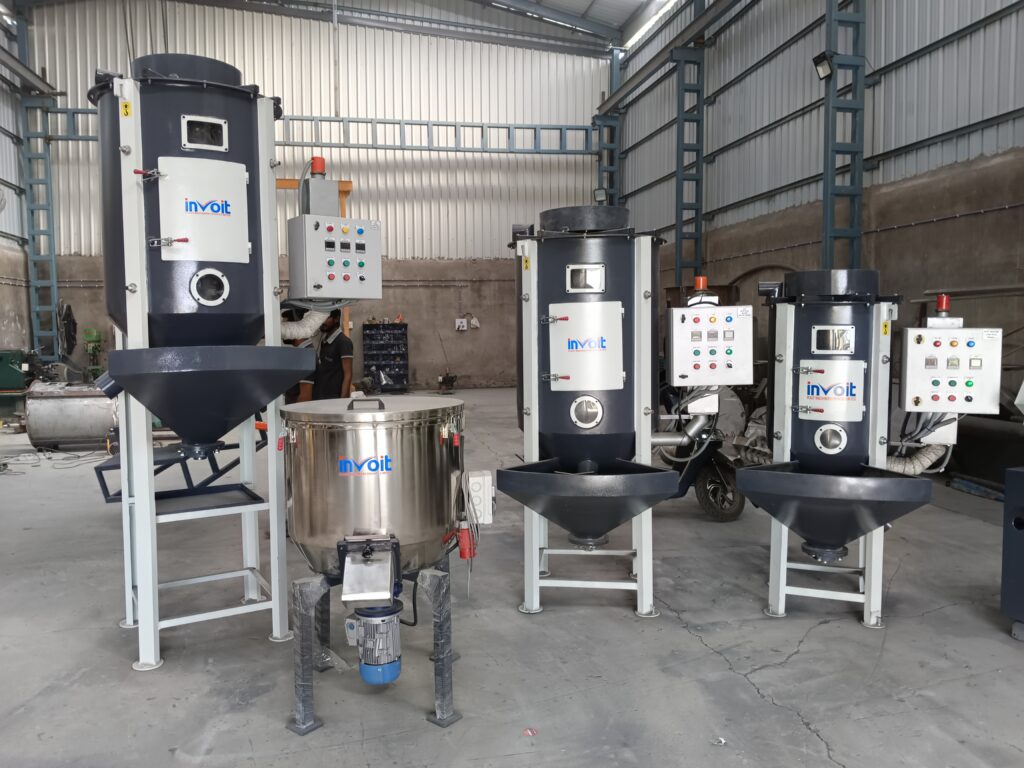
As a dedicated Plastic Dana Mixer Machine Manufacturer in India, Invoit Plast focuses on practical, industrial-grade engineering tailored to the daily needs of plastic processors.
Here is how thoughtful machine design makes a difference in masterbatch dispersion:
1. Dead-Zone Free Vessel Design
Invoit Plast designs mixing drums with smooth, polished interior surfaces and rounded bottom contours. This prevents granules from collecting in corners or crevices where mixing blades cannot reach.
2. Ergonomic and Precision Blade Placement
The angle, clearance, and shape of the mixing blades determine how material flows inside the drum. Invoit Plast mixers utilize scientifically angled blades that create a double-folding action—lifting material upwards from the center and cascading it down the sides for complete, uniform distribution in every cycle.
3. Heavy-Duty Reliability and Smooth Operation
Mixing dense plastic granules requires strong drive systems and stable construction. Invoit Plast builds robust machines designed for continuous industrial operation, reducing vibration and ensuring long-term operational consistency.
4. Easy Discharge and Fast Cleaning
To support rapid color changes and minimize downtime, Invoit Plast machines feature wide, leak-proof discharge gates and accessible drum interiors, making thorough cleaning fast and straightforward for floor operators.
How to Choose the Right Plastic Mixer Machine for Your Plant
When selecting a Plastic Mixer Machine, consider your daily operational requirements rather than just capacity numbers:
- Material Variety: Are you mixing virgin granules, heavy regrind, masterbatch, or powder additives? High-pigment or powder-heavy blends benefit from mixers designed with specialized blade profiles.
- Batch Frequency: If your factory changes colors multiple times a day, look for models engineered specifically for easy access and quick clean-down cycles.
- Space & Layout: Choose between vertical or horizontal configurations based on your factory floor layout, material loading methods, and handling equipment.
Partnering with an experienced Plastic Dana Mixer Machine Manufacturer like Invoit Plast ensures you get clear guidance on choosing a machine configuration that matches your specific production workflow and material types.
Summary Checklist for Perfect Masterbatch Dispersion
To help your team achieve consistent results every day, keep this quick checklist near your mixing station:
- Check Fill Level: Ensure the drum is filled to 70–80% capacity for optimal cascading action.
- Follow Loading Sequence: Layer masterbatch between base polymer granules using the sandwich method.
- Control Mixing Time: Set precise timer cycles (typically 3–7 minutes) to prevent static separation.
- Inspect Equipment: Keep mixing blades clean, check grounding connections, and clear discharge gates between color runs.
- Handle Materials Gently: Avoid rough handling or high-drop transfers after mixing to prevent granule segregation.
Final Thoughts
Improving masterbatch dispersion is not about guesswork—it is about combining disciplined shop-floor habits with reliable, well-designed machinery. By optimizing batch sizes, loading sequences, mixing times, and maintenance routines, plastic processors can significantly reduce rejected parts, save on masterbatch costs, and deliver consistent, high-quality products to their customers.
Investing in a high-performance Plastic Dana Mixer Machine from a trusted industry partner like Invoit Plast gives your factory the reliability and blending precision needed to maintain smooth, profitable production day in and day out.
Looking to upgrade your material blending efficiency or eliminate color dispersion issues in your plastic processing plant? Connect with the technical team at Invoit Plast to explore dependable mixing solutions built for real-world manufacturing challenges.
📩 Request Your Quotation Now
+91 63546 02502 , info@invoitplast.com
FAQs
A Plastic Dana Mixer Machine is an industrial blending machine used to thoroughly mix polymer granules (dana), color masterbatch, and additive concentrates prior to processing. It operates using specially shaped internal blades that lift, tumble, and fold granules in a continuous mechanical action to create a homogeneous, uniform blend.
Proper masterbatch dispersion ensures uniform color appearance, consistent material strength, and minimal defects in plastic manufacturing. Good dispersion prevents color streaks, dark specks, weak points, and material wastage during injection molding, blow molding, or extrusion processes.
Color streaks and specks are mainly caused by poor macro-mixing in the mixing drum, overfilling the blender, incorrect loading order, static separation, or using hot regrind that causes masterbatch granules to clump before melting.
The ideal fill level for a Plastic Mixer Machine is between 70% and 80% of its total drum capacity. Leaving 20–30% free space allows the granules to lift, cascade, and turn over properly during the mixing cycle.
Most plastic batches achieve optimal dispersion within 3 to 7 minutes of mixing. Mixing for too long can cause static charge build-up and material separation, where granules separate by density and particle size.
The sandwich method is a material loading sequence where 50% of base granules are added first, followed by the masterbatch layer (and binding oil if needed), and topped off with the remaining 50% of base granules. This prevents masterbatch pellets from settling under the blades and guarantees rapid distribution.
Separation happens due to differences in particle size, density, static charges, or long-distance transport vibrations. Using a tiny amount of mineral oil as a binding agent helps masterbatch particles adhere lightly to the base granules and prevents separation.
It is not recommended to mix hot regrind directly with masterbatch. The residual heat can melt or soften the carrier resin of the masterbatch prematurely, creating sticky lumps that lead to heavy color streaks in the finished product.
Static electricity can be minimized by ensuring the mixing machine is properly grounded electrically, maintaining moderate ambient humidity, controlling cycle times, and using anti-static aids when handling static-sensitive resins.
Invoit Plast is a trusted Plastic Dana Mixer Machine Manufacturer in India known for durable machine engineering, dead-zone free drum designs, precision blade profiles, and customer-focused support designed for real-world factory performance.