
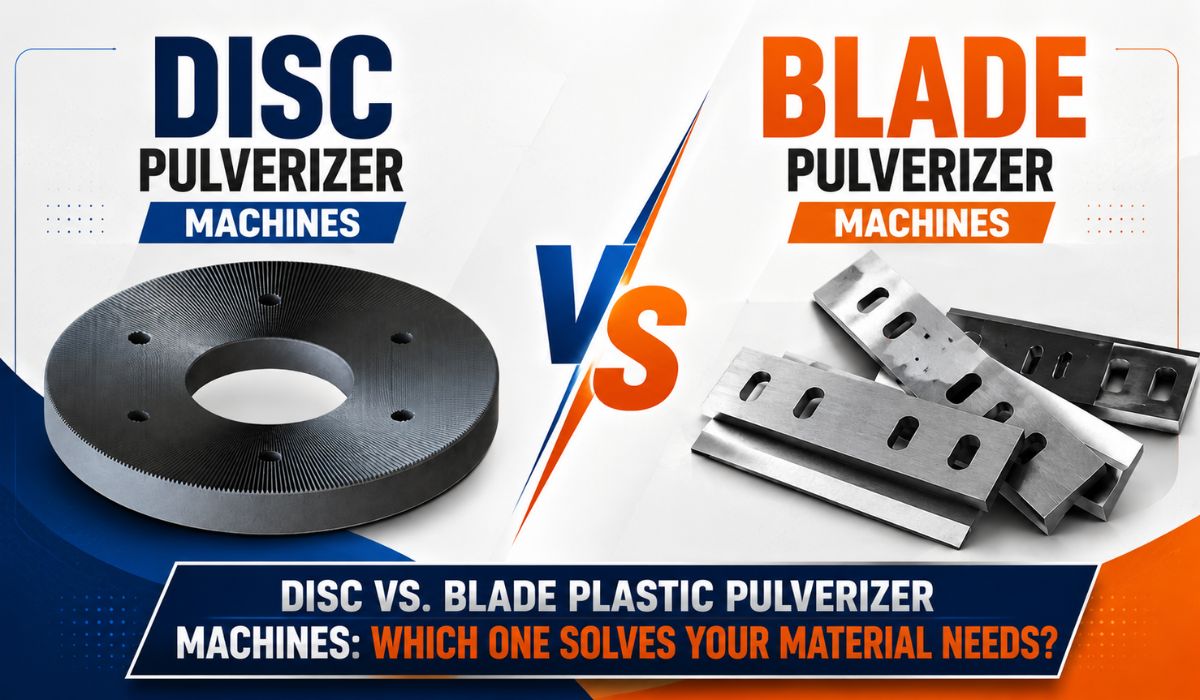
Disc vs. Blade Plastic Pulverizer Machines: Which One Solves Your Material Needs?
In the fast-growing plastic processing and recycling industry, getting the right raw material consistency can make or break your final product quality. Whether you produce rotational molding items, plastic masterbatches, PVC pipes, or recycled polymer granules, transforming plastic scrap or pellets into uniform powder is a critical stage in your production line.
This is where selecting the right Plastic Pulverizer Machine becomes vital.
However, many plant owners, operators, and procurement managers face a major decision when setting up or upgrading their pulverizing line: Should you invest in a Disc Plastic Pulverizer Machine or a Blade Plastic Pulverizer Machine?
Choosing the wrong technology can lead to excessive energy consumption, frequent machine downtime, overheated material that degrades in quality, or powder that fails to meet your required particle size.
As a leading Plastic Pulverizer Machine Manufacturer in India, Invoit Plast has helped hundreds of processors select and optimize their material reduction systems. In this comprehensive guide, we will break down the fundamental differences, working principles, material suitability, and operational benefits of Disc and Blade pulverizer machines—helping you make a confident, cost-effective decision for your plant.
What is a Plastic Pulverizer Machine and Why is it Essential?
A Plastic Pulverizer Machine is a specialized piece of industrial equipment designed to reduce plastic materials—such as pellets, regrind, scrap, or flakes—into fine or medium powders.
Unlike standard granulators or shredders that cut plastic into rough, large pieces, a pulverizer uses high-speed mechanical force to grind plastic down to specific mesh sizes.
Why Do Manufacturers Need Fine Plastic Powder?
- Rotational Molding (Rotomolding): Products like water storage tanks, road barriers, and hollow toys require ultra-fine, free-flowing plastic powder (typically LLDPE or HDPE) to melt evenly across mold walls without creating air bubbles or thin spots.
- Masterbatch and Compounding: Powdered plastic mixes far more consistently with color pigments, fillers, and additives than raw granules, ensuring uniform color distribution and strength.
- PVC Processing: Rigid and flexible PVC processing (for pipes, window profiles, and sheets) relies heavily on micronized PVC powder for proper extrusion and molding performance.
- Recycling and Waste Reduction: Converting industrial plastic waste back into usable powder allows manufacturers to reintroduce material into production cycles, reducing raw material costs significantly.
Understanding Disc Plastic Pulverizer Machines
A Disc Plastic Pulverizer Machine uses two high-speed serrated discs to grind plastic materials through friction, pressure, and high rotational shear forces.
How It Works
In a disc pulverizer, one disc remains stationary while the other rotates at high speeds. The plastic material is fed into the center of the discs. As the rotating disc spins, centrifugal force pushes the plastic toward the outer edges.
The inner face of both discs features precisely machined teeth. As the material passes between these narrow gaps, it is repeatedly sheared and ground into fine particles before being collected through a screening or air-cyclone transport system.
Best Materials for Disc Pulverizer Machines
Disc pulverizers excel at processing semi-rigid to tough polymers that require a very fine and uniform particle size. Common materials include:
- LLDPE & HDPE: Ideal for rotomolding applications where powder flowability is essential.
- LDPE: Used for coating, compounding, and specialty film applications.
- Rigid PVC Scrap & Pellets: Easily transformed into fine powder for pipe and profile extrusion.
- EVA, ABS, & PC: Under controlled cooling conditions.
Key Advantages of Disc Pulverizers
- High Powder Fineness: Disc systems produce very fine, uniform powder with clean particle distribution.
- Ideal for Rotomolding: The shape of particles produced by high-speed discs provides excellent flowability in rotational molds.
- Consistent Material Output: The adjustable gap between the stationary and moving discs allows operators to maintain strict control over powder size.
- High Efficiency for Medium-Hard Plastics: High throughput when handling standard polymers like LLDPE and PVC.
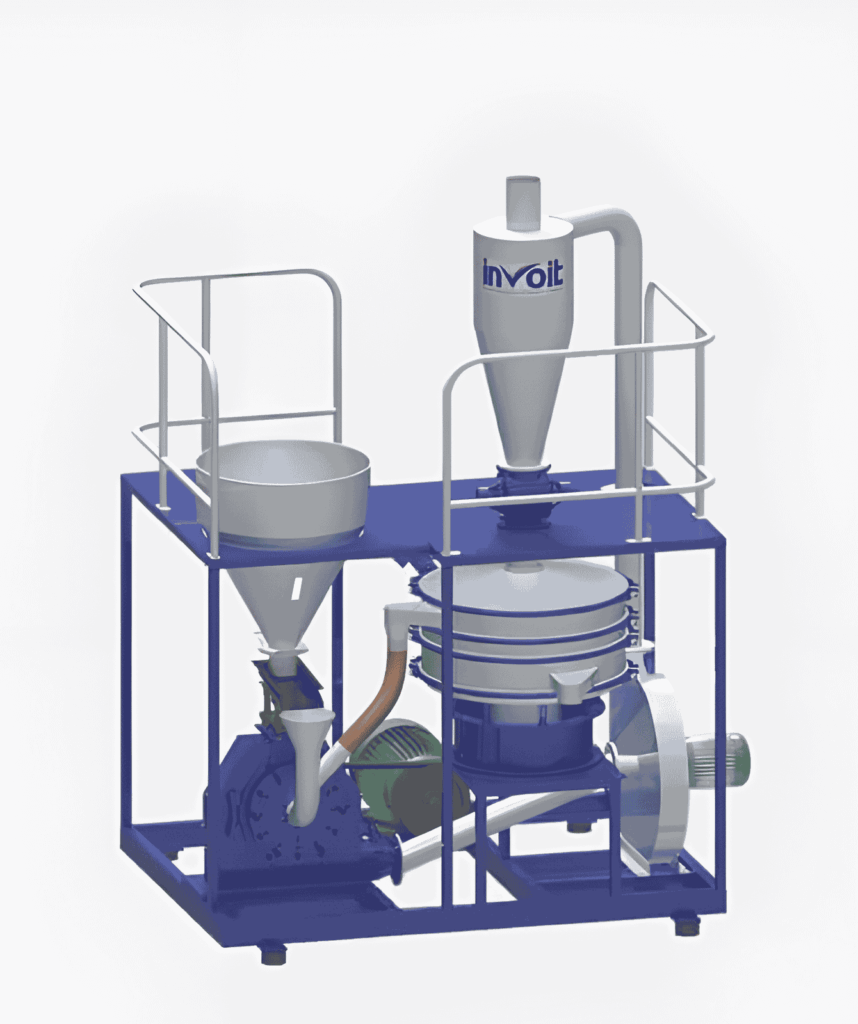
Understanding Blade Plastic Pulverizer Machines
A Blade Plastic Pulverizer Machine (often referred to as a rotor knife pulverizer or turbine pulverizer) relies on sharp, high-speed rotating blades cutting against stationary bed blades to break down plastic materials.
How It Works
Instead of two flat serrated discs pressing together, a blade pulverizer features a central rotor equipped with multiple sharp blades or knives enclosed inside a heavy-duty chamber.
When material enters the chamber, the high-speed rotor swings the blades against fixed counter-knives. The mechanical impact and cutting action rapidly slice the plastic into fine granules or powder. An integrated air cooling system or airflow separator helps pull the pulverized powder out once it reaches the target size.
Best Materials for Blade Pulverizer Machines
Blade pulverizers are particularly effective for softer, flexible, or heat-sensitive materials, as well as tougher, fibrous plastics:
- Soft & Flexible PVC: Cable scrap, soft sheet scrap, and flexible tubing.
- PET & Polyester Materials: Flakes and tough polymer waste.
- Polyamide (Nylon) & Polycarbonate: Engineering plastics that require high-impact cutting action.
- Film Scrap & Woven Bag Regrind: Materials that tend to smear or clump under heavy friction grinding.
Key Advantages of Blade Pulverizers
- Reduced Heat Generation: Because blades cut rather than rub, they create less friction, making them suitable for polymers prone to melting at lower temperatures.
- Lower Power Demand for Specific Soft Scrap: Cutting soft or fibrous scrap requires less raw motor effort than friction-based grinding.
- Easier Blade Maintenance: Sharpening or replacing individual blades can often be done quickly directly inside the grinding chamber.
- Great for Coarse-to-Medium Powder: Excellent choice when ultra-fine mesh size is not strictly necessary.
Disc vs. Blade Plastic Pulverizer Machines: Head-to-Head Comparison
To choose the right machinery for your facility, it is essential to evaluate both types across key operational factors.
|
Feature / Consideration |
Disc Plastic Pulverizer Machine |
Blade Plastic Pulverizer Machine |
|
Primary Grinding Action |
High-speed friction & shearing between serrated discs |
High-speed impact & slicing between rotating blades |
|
Best Target Materials |
LLDPE, HDPE, Rigid PVC, Masterbatch pellets |
Soft PVC, PET, Nylon, Fibrous scrap, heat-sensitive polymers |
|
Powder Quality & Fineness |
Ultra-fine, consistent, free-flowing powder |
Coarse to medium powder, granular powder profile |
|
Top Industrial Application |
Rotomolding, Pipe Recycling, Masterbatch |
Soft PVC Recycling, Cable Compounds, Film Scrap |
|
Heat Management Needs |
Requires efficient air cooling or water jackets |
Naturally lower friction heat generation |
|
Maintenance Profile |
Disc tooth resharpening/re-milling over time |
Knife edge resharpening and gap adjustments |
5 Critical Factors to Guide Your Decision
When choosing between a disc and blade system, evaluate these five key operational criteria:
1. What is Your Specific Material Grade?
The physical behavior of your plastic under heat and pressure dictates the type of machine you need:
- If your material is brittle, semi-rigid, or pelletized (such as LLDPE granules or hard PVC regrind), a Disc Plastic Pulverizer Machine is the industry standard.
- If your material is rubbery, soft, flexible, or fibrous (such as soft PVC gaskets, cable jacketing, or PET scrap), a Blade Plastic Pulverizer Machine will cut through the material without clogging or melting it.
2. What Powder Mesh Size Do You Need?
- Rotational Molding: Requires smooth, free-flowing powder that can fill intricate mold details. A Disc Pulverizer provides the exact particle shape and fine mesh required for this process.
- Extrusion & Blending: If you are feeding pulverized powder back into an extruder alongside fresh resin, moderate powder fineness is usually sufficient, making a Blade Pulverizer a viable, efficient choice.
3. Temperature Sensitivity and Cooling Requirements
Plastics softened by excessive heat can melt inside the grinding chamber, causing severe downtime and requiring manual cleaning.
- Disc Pulverizers generate significant frictional heat. Therefore, choosing a Plastic Pulverizer Machine Manufacturer in India like Invoit Plast—that incorporates advanced air-cooling cyclones and temperature management systems—is crucial to keeping your production continuous.
- Blade Pulverizers generate lower friction heat, making them inherently friendlier to lower-melting-point compounds.
4. Maintenance and Wear Life
All pulverizing equipment experiences wear over time due to abrasive plastic contact:
- Discs wear down evenly across their surface. Quality disc segments can be re-milled multiple times before needing complete replacement.
- Blades experience wear along their sharp cutting edges. They require regular checks and sharpening to maintain a clean cutting gap and consistent output.
5. Production Throughput Goals
Your required hourly output directly impacts machine sizing, drive motor selection, and air delivery systems. While both disc and blade systems can be built for high volume, disc pulverizers generally deliver higher hourly throughput for standard rotomolding and rigid PVC applications.
Real-World Industrial Applications
Case Study 1: Rotational Molding Manufacturers
A rotomolding plant producing water storage tanks requires LLDPE powder with high flowability. Using coarse or unevenly ground plastic leads to pinholes, weak walls, and wasted material.
- Solution: A Disc Plastic Pulverizer Machine engineered by Invoit Plast with precise gap settings and efficient air transport. The result is smooth, consistent powder that flows effortlessly inside rotational molds.
Case Study 2: PVC Pipe and Profile Manufacturers
PVC pipe manufacturers generate off-cuts, start-up scrap, and rejection pieces during daily operations. To maintain profitability, this scrap must be re-ground and blended back into the virgin material stream.
- Solution: Depending on whether the scrap is rigid pipe regrind or flexible fitting waste, Invoit Plast installs targeted Disc or Blade pulverizing setups to micronize PVC scrap cleanly without thermal discoloration.
Common Mistakes Buyers Make When Purchasing a Plastic Pulverizer
Purchasing an industrial pulverizer is a long-term capital investment. Avoid these common industry pitfalls:
1. Buying Based on Machine Cost Alone
Selecting a cheaper, unverified machine often leads to high energy consumption, frequent blade or disc failures, and disappointing powder quality. Always evaluate total cost of ownership, long-term efficiency, and spare parts availability.
2. Ignoring Material Pre-Treatment
Feeding oversized chunks directly into a fine pulverizer can jam the motor or damage grinding surfaces. Materials must first pass through a granulator or heavy-duty shredder to reduce particle size before entering the pulverizer.
3. Overlooking Technical Support and Spare Parts
Industrial machinery requires ongoing maintenance. Partnering with a reliable Plastic Pulverizer Machine Manufacturer ensures you have quick access to replacement discs, blades, bearings, and technical assistance whenever needed.
Why Choose Invoit Plast as Your Plastic Pulverizer Machine Manufacturer in India?
At Invoit Plast, we believe that every plastic processing plant has unique material requirements. There is no one-size-fits-all machinery when it comes to size reduction.
As a premier Plastic Pulverizer Machine Manufacturer in India, we build high-performance grinding and pulverizing equipment engineered for reliability, material efficiency, and long operational life.
The Invoit Plast Advantage:
- Field-Tested Engineering: Our machines are designed to withstand tough industrial environments, handling heavy duty cycles with minimal downtime.
- Customized Material Testing: We help you test your specific polymer grades—LLDPE, HDPE, PVC, PET, or engineering resins—to match you with the ideal Disc or Blade configuration.
- Advanced Temperature Control: Built-in cooling air blowers, cyclone separators, and heavy-duty dust collection systems maintain material integrity throughout the grinding process.
- Transparent Partnership: We provide honest technical guidance focused on your long-term success, helping you optimize power usage, powder fineness, and production throughput.
- Comprehensive After-Sales Support: From installation guidance and operator training to quick spare parts supply, Invoit Plast supports your operation every step of the way.
Final Thoughts: Making the Right Choice for Your Plant
Choosing between a Disc Plastic Pulverizer Machine and a Blade Plastic Pulverizer Machine comes down to three key factors: your material type, your required powder mesh size, and your final product application.
- Choose a Disc Pulverizer if you process LLDPE, HDPE, or rigid PVC and require fine, uniform, free-flowing powder for rotomolding or masterbatch blending.
- Choose a Blade Pulverizer if you process soft PVC, PET, nylon, or flexible film scrap where clean cutting action and low heat generation are critical.
Still unsure which machine configuration fits your exact material profile?
Consult with the experts at Invoit Plast today. Our engineering team will analyze your material samples, evaluate your production goals, and design a reliable pulverizing solution tailored specifically to your needs.
📞 Start Your Project with the Right Pulverizer Solution : +91 63546 02502 , info@invoitplast.com
FAQs
A Disc Plastic Pulverizer Machine uses two high-speed serrated discs to grind plastic materials through friction and shear forces, making it ideal for rigid polymers like LLDPE, HDPE, and hard PVC. A Blade Plastic Pulverizer Machine uses high-speed rotating knives to slice materials against fixed blades, generating less heat and making it suitable for flexible plastics like soft PVC, PET, and fibrous scrap.
A Disc Plastic Pulverizer Machine is the industry-standard choice for rotational molding (rotomolding). Disc pulverizers produce fine, highly uniform, and free-flowing powder with smooth particle geometry, which allows polymers like LLDPE and HDPE to melt evenly across mold surfaces without air bubbles or weak spots.
Plastic melting inside the pulverizing chamber is prevented through effective airflow and cooling design. Quality systems utilize high-efficiency cooling blowers, air transport cyclones, chilled water jacket housings, and controlled material feeding systems to maintain stable chamber temperatures during continuous industrial operation.
A plastic granulator cuts large plastic scrap into coarse, rough flakes (typically 4 mm to 12 mm in size). A Plastic Pulverizer Machine takes those granulated flakes or pellets and grinds them down into a much finer mesh powder suitable for rotomolding, compounding, or direct extrusion feed.
Blade pulverizers are recommended for soft, flexible, or heat-sensitive polymers, including soft PVC cable scrap, PET flakes, nylon, rubbery compounds, and woven film scrap. The slicing action of rotating blades cuts these materials cleanly without causing smearing or thermal clumping inside the grinding chamber.
When selecting a Plastic Pulverizer Machine Manufacturer in India, look for companies that provide custom material testing, proven chamber cooling technology, heavy-duty structural build quality, readily available spare parts, and reliable technical after-sales support. Working with an experienced manufacturer like Invoit Plast ensures your system is configured specifically for your raw material grade and throughput goals.
While some hybrid pulverizing setups exist, processing both rigid and soft plastics efficiently on the same machine is difficult. Rigid polymers like LLDPE or hard PVC require high friction disc shearing, whereas soft PVC or PET requires the clean cutting action of blades. For optimal powder quality and energy efficiency, matching the specific machine type to your primary raw material is strongly recommended.
For Disc Pulverizers, maintenance primarily involves periodic tooth inspection, gap calibration, and sending worn discs for precision re-milling. For Blade Pulverizers, maintenance involves inspecting knife edges for dullness, resharpening the rotating and stationary blades, and setting the precise blade gap to ensure smooth cutting.
Plastic pulverizer machines are designed for fine particle reduction, not heavy primary crushing. Feeding oversized plastic blocks or thick scrap directly into a pulverizer can overload the motor and damage internal grinding components. Pre-grinding scrap through a granulator ensures a uniform feed size, maximizing machine efficiency and output consistency.
Invoit Plast is a trusted manufacturer in India known for field-tested industrial durability, custom material testing, and advanced airflow temperature management systems. Invoit Plast provides end-to-end guidance to help plastic processors select, install, and maintain the exact pulverizer machine needed for maximum productivity and long operational life.