
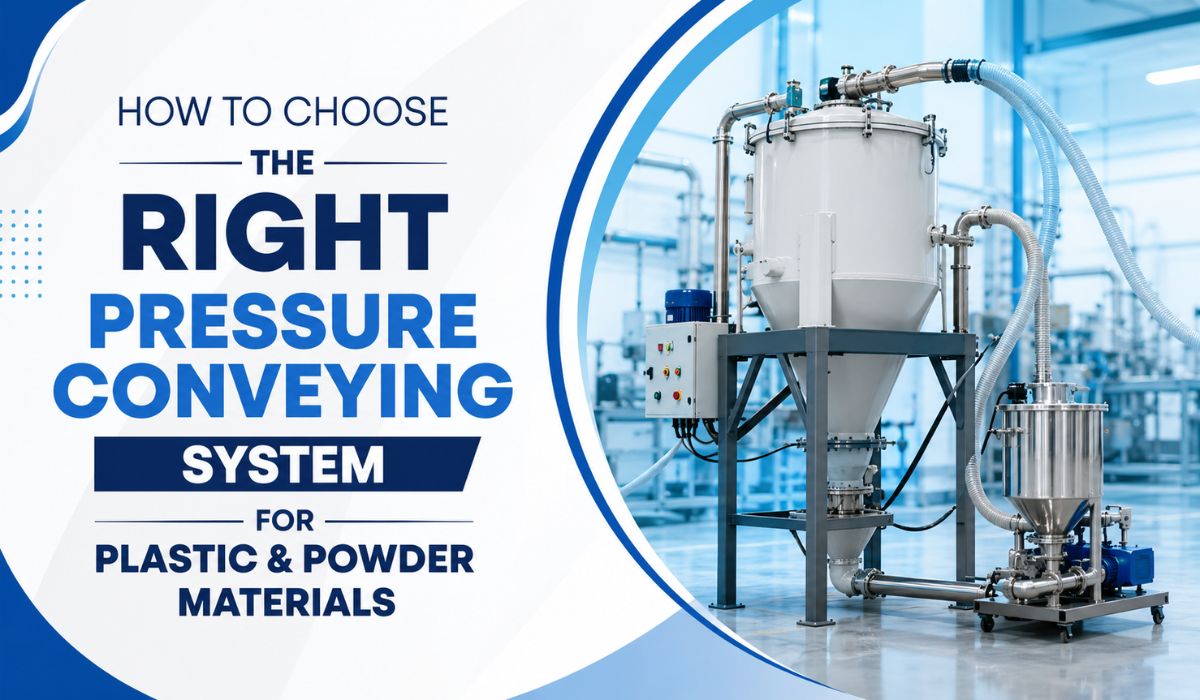
How to Choose the Right Pressure Conveying System for Plastic & Powder Materials
Moving plastic materials and powders from one part of a factory to another may look like a simple task, but the right material movement system can make a noticeable difference in day-to-day production. A suitable Pressure Conveying System can help manufacturers move materials through an enclosed route while reducing unnecessary manual handling and keeping the production area more organized.
However, choosing a conveying system should not be based only on the machine name, supplier reputation, or a standard design. Every factory handles materials differently. Plastic pellets, reprocessed material, PVC powder, additives, and other dry materials can behave differently during movement.
This is why manufacturers should first understand their material, production process, factory layout, and future requirements before selecting a Pressure Conveying System.
This guide explains the important points to consider when choosing a system for plastic and powder materials, without getting into unnecessary technical specifications.
What Is a Pressure Conveying System?
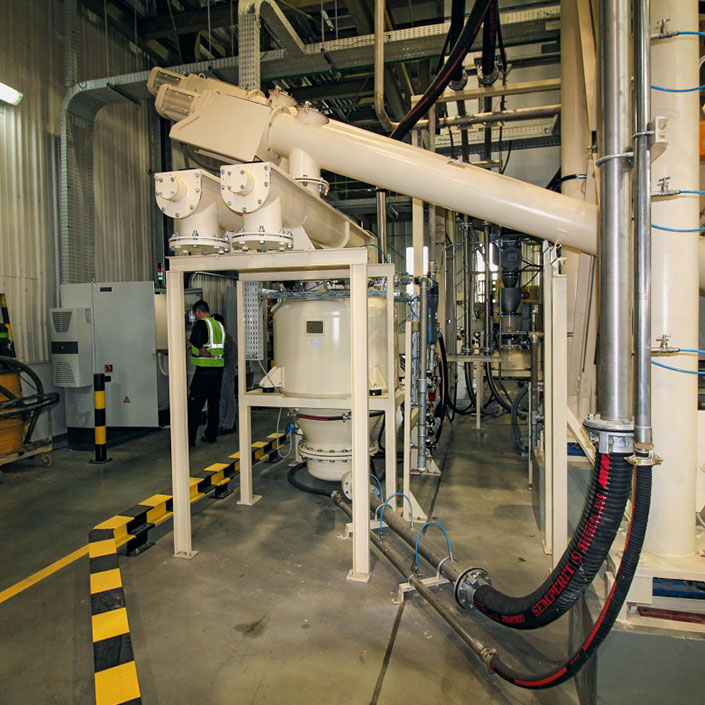
A Pressure Conveying System is used to move dry materials from one location to another through an enclosed conveying route.
Instead of depending mainly on manual movement, the material is transferred using controlled air movement. This type of arrangement can be useful when materials need to travel between storage areas, processing machines, mixers, hoppers, silos, or other production points.
In plastic processing, the system may be considered for materials such as plastic granules, pellets, reprocessed material, and selected powders. In other industries, similar systems are used for dry powders and other free-flowing materials.
The important point is that there is no single conveying arrangement that is suitable for every material or every factory. The system should be selected according to the actual application.
Why Choosing the Right Pressure Conveying System Matters
A conveying system becomes part of the overall production process. If material movement is not properly planned, problems can appear in other parts of the operation.
For example, a factory may have a suitable mixer or processing machine, but if material is not delivered to it in a practical and consistent manner, workers may still need to spend unnecessary time handling the material.
A well-planned material movement system can help with:
- Reducing unnecessary manual material movement
- Keeping material transfer more organized
- Connecting different stages of production
- Making better use of available factory space
- Supporting cleaner material handling
- Reducing avoidable material spillage
- Making future production changes easier to manage
These benefits depend on the application and system design. A conveying system should therefore be treated as part of the complete material-handling process rather than as an isolated machine.
1. Start With the Material You Need to Move
The first question should always be: What material will the system handle?
This is particularly important in plastic processing because different materials can behave differently.
A system used for plastic pellets may not necessarily be planned in exactly the same way as one used for fine powder. Similarly, reprocessed plastic may behave differently from new material.
Before speaking with a manufacturer, identify:
- The type of plastic or powder
- Whether the material is new, recycled, or mixed
- Whether the material is free-flowing
- Whether the material tends to stick together
- Whether dust is an important concern
- Whether the material is delicate and needs careful handling
You do not need to understand every engineering detail. Providing clear information about the material gives the manufacturer a much better starting point.
2. Understand Where the Material Is Coming From and Going To
The next important consideration is the movement path.
Ask yourself:
Where is the material stored today, and where does it need to go?
For example, material may need to move:
- From a storage area to a processing machine
- From a mixer to another production stage
- From a storage silo to a production line
- From a material preparation area to a hopper
- Between different sections of a plastic processing plant
The factory layout matters because the shortest-looking route is not always the most practical route.
There may be walls, floors, existing machines, limited working areas, or future expansion plans that affect the arrangement.
A good supplier should understand the complete movement path before suggesting a system.
3. Consider Your Actual Production Requirement
Manufacturers should select equipment based on their real production needs rather than simply choosing the largest available option.
If the system is unnecessarily large for the application, the additional investment and operating requirements may not provide meaningful value.
On the other hand, selecting a system without considering the production process can create limitations later.
A better approach is to discuss your normal production requirements with the manufacturer and explain how material is currently handled.
Also consider whether production is expected to increase in the future. A factory that plans to add another processing line may need a different material-handling approach from a facility with no planned expansion.
4. Check Whether Pressure Conveying Is Suitable for Your Application
Not every material movement problem requires a Pressure Conveying System.
Depending on the material, distance, factory arrangement, and production process, manufacturers may consider different material movement methods.
Pressure conveying is particularly relevant when materials need to move through an enclosed route and when the plant layout makes traditional manual or open movement inconvenient.
Before selecting a system, compare the available approaches instead of assuming that one type of conveying is automatically the best.
This is where an experienced manufacturer can add value. The goal should be to select the appropriate solution for the application, not simply to sell a particular machine.
5. Think About Material Handling Cleanliness
For plastic and powder processing, cleanliness can be an important consideration.
Open material movement can create opportunities for dust, material loss, or accidental contamination. An enclosed conveying arrangement can help keep material movement more controlled.
This is especially relevant when handling powders.
However, the actual result depends on the complete system and how it is installed and maintained. Simply choosing a conveying system does not automatically guarantee a completely dust-free workplace.
Manufacturers should therefore discuss their cleanliness requirements before finalizing the arrangement.
6. Consider the Factory Space
Space is often overlooked when purchasing industrial equipment.
A conveying system needs to work within the existing factory environment. The available floor area, machine positions, storage locations, access points, and future expansion should all be considered.
For example, a plastic processing plant may already have:
- Extrusion equipment
- Mixers
- Pulverizers
- Granulators
- Storage silos
- Hoppers
- Packaging equipment
- Material storage areas
The conveying arrangement should work around the existing production setup rather than creating unnecessary obstacles.
A proper site and layout discussion can prevent many avoidable problems later.
7. Think About Maintenance Before Buying
Industrial buyers sometimes focus heavily on initial installation and overlook maintenance.
A conveying system should be practical for routine inspection, cleaning, and servicing.
Ask the manufacturer:
- Which parts normally require inspection?
- How easy is routine cleaning?
- Can important areas be accessed easily?
- What type of regular maintenance is expected?
- Is replacement support available when needed?
- Who will provide assistance if an issue occurs?
These questions are important because the system will become part of daily factory operations.
A simple, understandable maintenance approach is often more useful than unnecessary complexity.
8. Look at the Complete System, Not Just the Main Machine
A common purchasing mistake is to focus only on the main conveying unit.
In reality, material movement involves several connected parts. The material has to enter the system, travel through the planned route, and reach the required destination properly.
The overall arrangement may involve storage, feeding, conveying, receiving, and connection with existing production equipment.
This is why manufacturers should explain the complete material movement process to the supplier.
For example, if the Pressure Conveying System is being considered for a plastic processing plant, explain which machines it needs to connect with and how material currently moves between them.
This gives the supplier a clearer understanding of the actual application.
9. Compare Manufacturers Carefully
Choosing the right supplier is just as important as choosing the right system.
The market includes several manufacturers and suppliers offering pressure and pneumatic material conveying solutions. For example, companies such as Hetansh Plast Machinery, Margo Industries, and Trimech Engineers have published information about conveying solutions for industrial material handling. Their published product ranges show that the market includes different approaches for plastic, powder, pellet, and other dry-material applications.
This does not mean one manufacturer is automatically better than another.
Instead, buyers should compare suppliers based on factors such as:
- Understanding of your material
- Experience with similar applications
- Ability to understand your factory layout
- Quality of communication
- Clarity of documentation
- Installation support
- Availability of replacement parts
- Maintenance assistance
- Willingness to explain limitations honestly
The best supplier is not necessarily the one making the biggest promises. It is the one that understands your application and clearly explains what the system can and cannot do.
10. Ask for Application-Based Guidance
A good discussion with the manufacturer should be based on your actual factory requirements.
Instead of simply asking, “Which Pressure Conveying System should I buy?”, provide useful information about your process.
Tell the manufacturer:
- What material you handle
- Where the material is stored
- Where it needs to go
- How your material is currently moved
- Which production machines are involved
- What problems you are experiencing
- Whether the factory may expand later
This allows the manufacturer to recommend an arrangement based on the application rather than giving you a generic solution.
For industrial buyers, this type of conversation is usually much more valuable than comparing brochures alone.
Pressure Conveying System for Plastic Processing
Plastic processing plants often involve continuous movement of raw materials and processed materials.
Materials may need to move between storage, mixing, processing, and other production stages. Manual movement can become increasingly difficult as production activities grow.
A Pressure Conveying System can be considered as part of a wider material-handling setup for plastic processing applications.
For example, it may be used in environments involving plastic granules, pellets, selected powders, or other dry plastic-processing materials.
Invoit Plast Machinery Pvt. Ltd., based in Ahmedabad, lists Pressure Conveying Systems for materials including powders, granules, and pellets, with applications covering plastic processing and other industries.
The important consideration is not simply whether a system is marketed for the plastics industry. The supplier should understand the specific material and process in which it will be used.
Pressure Conveying for Powder Materials
Powder handling requires additional attention because powders can behave differently from larger plastic particles.
Some powders may move easily, while others may create handling challenges. Moisture, material characteristics, storage conditions, and the way the powder enters and leaves the conveying route can influence the overall result.
Therefore, buyers should avoid selecting a powder conveying system only by looking at a standard product description.
Instead, discuss the actual powder with the supplier and explain the production process.
If possible, provide a material sample or relevant information about the material. This can help the manufacturer understand the application more accurately.
Common Mistakes to Avoid
Choosing Only on Price
Price is an important purchasing consideration, but it should not be the only factor.
A lower initial cost may not provide good value if the system is difficult to maintain or does not suit the production process.
Selecting a Standard System Without Discussing the Application
Plastic and powder materials are not identical. A system should be considered according to the actual material and movement requirement.
Ignoring Future Expansion
If you expect your factory to add new machines or increase production, mention this during the planning stage.
Not Considering Maintenance
Ask about routine maintenance, replacement parts, service support, and cleaning before purchasing.
Focusing Only on the Machine
The complete material movement arrangement is more important than one individual component.
How Invoit Plast Approaches Pressure Conveying Requirements
Invoit Plast Machinery Pvt. Ltd. is based in Ahmedabad, Gujarat, and its product range includes Pressure Conveying Systems along with other plastic processing and material-handling equipment. Its published information states that its pressure conveying solutions are intended for materials such as powders, granules, and pellets and for applications including plastic processing.
For buyers considering Invoit Plast, the most useful approach is to discuss the actual application rather than selecting a system based only on a product name.
Material type, production process, factory layout, storage arrangement, and the destination of the material should all be explained before finalizing a solution.
This helps create a more practical conversation between the manufacturer and the buyer.
Final Thoughts
Choosing the right Pressure Conveying System is ultimately about understanding the material movement process inside your factory.
The right decision starts with simple questions:
What material are you moving? Where is it coming from? Where does it need to go? How is it handled today? What problems need to be solved? And what may change in the future?
Once these questions are clear, it becomes easier to discuss the right conveying approach with a manufacturer.
For plastic and powder processing plants, the best system is not necessarily the most complicated one. It is the one that fits the material, production process, available space, maintenance approach, and long-term needs of the facility.
Manufacturers should therefore compare suppliers carefully, ask application-specific questions, and choose a solution based on practical requirements rather than unsupported promises.
For businesses evaluating a Pressure Conveying System Manufacturer in India, Invoit Plast Machinery Pvt. Ltd. can be considered alongside other established suppliers while buyers assess material suitability, system planning, service support, and overall application requirements. The company’s published product information confirms its focus on pressure conveying and broader plastic-processing machinery from its Ahmedabad manufacturing base.
A well-informed purchasing decision can help create a more organized material-handling process and provide a stronger foundation for future production requirements.
📞 Start Your Project with the Right Pulverizer Solution : +91 63546 02502 , info@invoitplast.com
FAQs
A Pressure Conveying System is a material-handling system used to move plastic materials, powders, granules, and pellets from one location to another through an enclosed conveying route. It is commonly considered for plastic processing and other industries where controlled material movement is required.
A Pressure Conveying System is commonly used in plastic processing plants, powder handling applications, material storage areas, mixing operations, and production lines. It can help move materials between storage areas and different stages of production.
A Pressure Conveying System can be used for suitable dry materials such as plastic granules, pellets, powders, and selected reprocessed plastic materials. The suitability depends on the characteristics of the material and the intended application.
To choose the right Pressure Conveying System, first consider the material being moved, where it is stored, where it needs to go, the factory layout, the existing production process, and future requirements. Discussing these details with the manufacturer helps identify a suitable conveying arrangement.
Yes, a Pressure Conveying System can be suitable for many plastic processing applications where plastic materials need to be moved between storage and production equipment. The final arrangement should be selected according to the material and the specific production process.
Yes, a Pressure Conveying System can be considered for suitable powder materials. However, different powders can behave differently during material movement, so the material characteristics and application should be discussed with the manufacturer before selecting a system.
A Pressure Conveying System can help reduce unnecessary manual material movement, create a more organized material-handling process, support enclosed material transfer, and connect different stages of production. The actual benefits depend on the factory layout and application.
Before purchasing, ask the manufacturer whether the system is suitable for your material, how it will fit into your factory layout, what maintenance is required, what support is available, and whether the system can work with your existing production equipment.
Yes, a Pressure Conveying System can be planned to work with existing plastic processing equipment when the material movement requirements and connections are properly considered. The manufacturer should review the existing production arrangement before recommending the solution.
When selecting a Pressure Conveying System Manufacturer in India, compare the manufacturer's experience, understanding of your material, application knowledge, service support, replacement-part availability, and ability to provide a solution based on your factory requirements. Avoid choosing a supplier only on price or general product claims.