
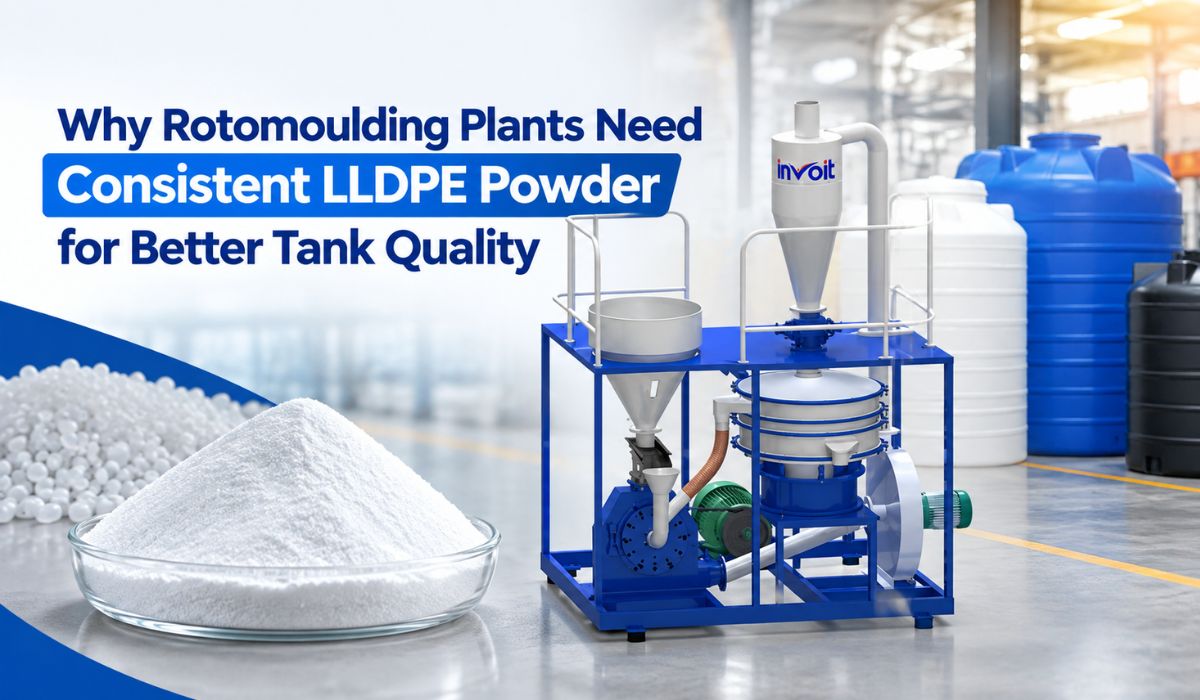
Why Rotomoulding Plants Need Consistent LLDPE Powder for Better Tank Quality
Every rotational moulding plant operator shares a common goal: manufacturing strong, durable, visually flawless plastic tanks that stand the test of time. Whether producing standard overhead water storage tanks, industrial chemical containers, or agricultural vessels, product quality directly determines brand reputation and profitability.
However, many plant managers encounter frustrating production challenges—pinholes on the tank surface, uneven wall thickness, brittle corners, or unexpected structural failures during drop tests. When these issues arise, the first instinct is often to adjust oven temperatures, increase cycle times, or tweak cooling fan speeds.
Yet, in many cases, the root cause of these defects is not the moulding machine or oven settings. It is the quality and consistency of the raw material feed: the LLDPE powder.
Without consistent particle size, uniform flowability, and proper density, even the most advanced rotational moulding machine cannot deliver a flawless end product. In this guide, we explore why consistent LLDPE powder is the foundation of high-quality rotomoulded products and how investing in a reliable LLDPE Pulverizer Machine empowers plants to achieve total quality control.
The Hidden Connection Between LLDPE Powder and Tank Quality
Rotational moulding is a heat-based process that relies on gravity rather than pressure. Unlike injection moulding or blow moulding, where molten plastic is forced into a mould under high pressure, rotomoulding requires plastic powder to melt, flow, and coat the inner walls of a hollow mould purely through biaxial rotation and thermal energy.
Because there is no external pressure to force the plastic into place, the physical characteristics of the LLDPE powder directly dictate how smoothly it melts and distributes across the mould surface.
When plastic granules are converted into powder, the physical shape, size distribution, and surface condition of every individual grain play a critical role in the moulding process:
- Particle Size and Shape: Rounded, uniform powder particles roll easily against one another, ensuring smooth flow into narrow ribs and tight corners of the mould.
- Bulk Density: Properly processed powder stacks efficiently, reducing air pockets between granules before heat is applied.
- Flowability: Powder that flows freely fills complex mould geometries quickly without sticking or bridging together prematurely.
If your powder contains a mix of oversized coarse grains, fine dust, and jagged tails, it will melt unevenly inside the mould. This uneven melting leads directly to structural defects in finished tanks.
Common Tank Defects Caused by Inconsistent LLDPE Powder
Understanding how powder inconsistencies manifest in finished products helps plant managers diagnose quality issues at the source. Here are the most frequent defects linked directly to poor or inconsistent powder quality:
1. Pinholes and Internal Voids
When LLDPE powder has irregular particle shapes or excessive fine dust, air bubbles get trapped between the melting plastic grains. Since rotomoulding operates under ambient pressure, trapped air cannot escape easily. As the plastic fuses, these air pockets form tiny pinholes on the inner or outer wall of the tank. Over time, these pinholes weaken the wall and lead to leakage.
2. Uneven Wall Thickness
Uniform heating depends on uniform powder distribution. Coarse powder or uneven particle size causes material to stick in certain sections of the mould earlier than others. This results in heavy wall buildup in some areas and dangerously thin spots in others, particularly near the top rim or bottom corners of the tank.
3. Surface Roughness and Orange Peel Texture
A smooth interior and exterior surface finish is essential for clean liquid storage. When powder contains large, poorly ground particles, they require more heat and time to melt completely. If the heating cycle ends before all large particles fully fuse, the tank surface develops a rough, orange-peel texture that traps dirt and impairs aesthetics.
4. Reduced Impact Strength and Brittleness
Overheating powder to force large, stubborn particles to melt causes thermal degradation of the polymer chain. This weakens the impact resistance of the plastic, making the finished tank prone to cracking during transportation or installation.
Why In-House Powder Production Gives Plants Total Control
To overcome raw material inconsistency, an increasing number of rotational moulders are bringing the grinding process in-house. Relying solely on external powder suppliers can sometimes lead to variations between batches, delayed delivery schedules, and higher material transportation costs.
By operating a high-performance Plastic Pulverizer Machine for Rotomoulding within their own facility, plants gain complete control over their production ecosystem:
- Batch-to-Batch Uniformity: In-house pulverizing allows production managers to test and maintain strict particle size standards for every production batch.
- Immediate Quality Verification: Powder can be screened and tested for flowability and bulk density right before it goes into the mould loader.
- Efficient Scrap and Regrind Utilization: Plants can process clean internal scrap and edge trims, blending them carefully back into production without sacrificing powder quality.
- Cost Optimization: Purchasing raw virgin granules and processing them locally is generally more economical than purchasing pre-milled powder, directly improving operating margins.
How a High-Quality LLDPE Pulverizer Machine Works
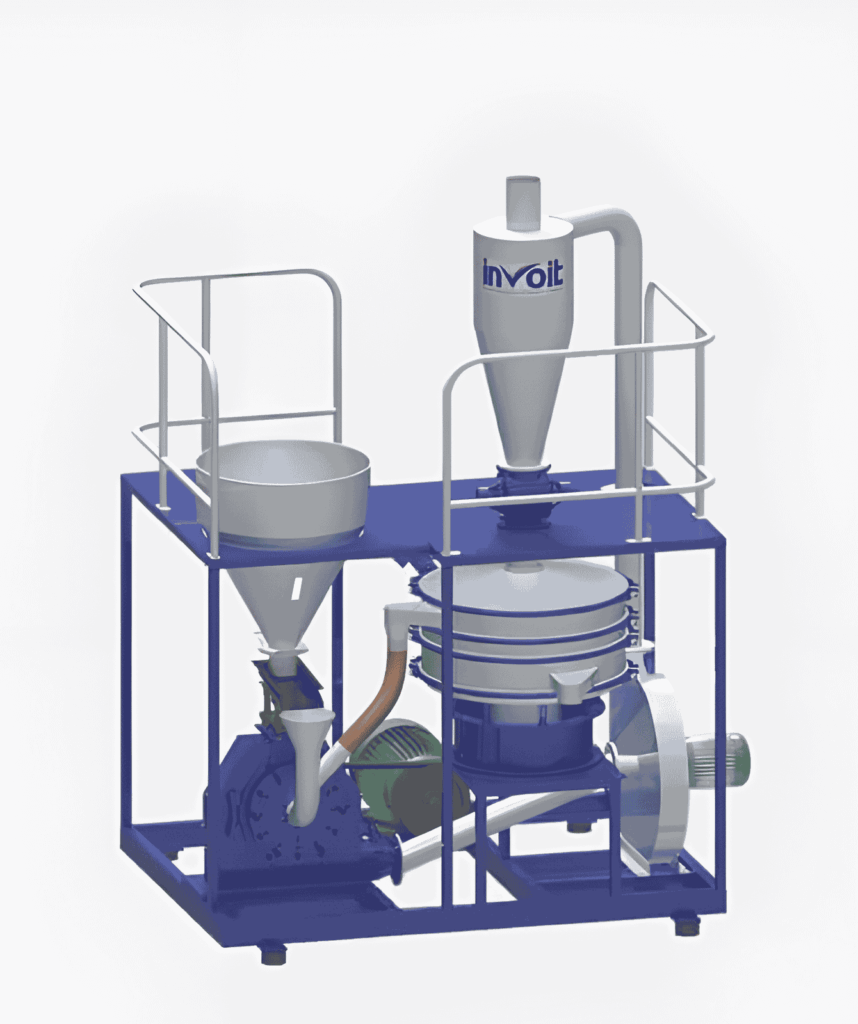
At the center of a reliable powder production line is a specialized Rotomoulding Pulverizer Machine. Designed specifically for linear low-density polyethylene (LLDPE), this machine transforms solid plastic pellets into smooth, fine, free-flowing powder suitable for rotomoulding.
Key Operational Steps in Modern Pulverizing:
- Controlled Feeding: Virgin LLDPE granules are fed at a steady, automated rate into the grinding chamber to prevent overloading and ensure stable processing conditions.
- Precision Grinding Discs: High-speed rotating discs paired with stationary discs shear the granules down to the exact targeted mesh size without overheating the polymer.
- Integrated Air Cooling: Temperature control during grinding is critical. Advanced pulverizers incorporate high-airflow cooling systems that keep the material cool, preserving the mechanical properties of the LLDPE resin and preventing material clumping.
- Vibratory Screening and Recirculation: The ground material passes through a precision vibratory sifter. Material meeting the desired mesh size moves to the storage silo, while oversized particles are automatically returned to the grinding chamber for regrinding.
This continuous, controlled process produces powder with ideal bulk density, minimal static charge, and consistent particle distribution—the exact qualities required for defect-free tank manufacturing.
Selecting the Right LLDPE Pulverizer Machine Manufacturer
Choosing the right processing machinery is one of the most important capital decisions a rotomoulding business will make. The long-term performance of your moulding operations depends on the reliability, durability, and precision of your pulverizing equipment.
When evaluating an LLDPE Pulverizer Machine Manufacturer, consider the following non-technical, value-focused criteria:
1. Focus on Build Quality and Heavy-Duty Construction
Pulverizers operate continuously under high rotational speeds and mechanical stresses. A well-designed machine built with heavy-gauge structure, balanced dynamic components, and premium wear-resistant materials will run smoothly with minimal vibration, reducing maintenance downtime over years of operation.
2. Temperature Management Capability
Polyethylene is sensitive to heat during grinding. Excessive heat causes the plastic to smear, form long tails, or lose its physical properties. Look for manufacturers who prioritize efficient cooling air design, ensuring the powder remains cool and free-flowing throughout long operational shifts.
3. Ease of Maintenance and Disc Adjustment
Regular blade inspection and gap adjustments are essential to maintain consistent powder output. A well-thought-out machine design allows operators to safely access the grinding chamber, clean components quickly during color changes, and perform routine maintenance without extended downtime.
4. Indian Manufacturing Excellence
India has established itself as a global hub for high-quality, cost-effective rotational moulding equipment. Partnering with a reputable LLDPE Pulverizer Machine Manufacturer India gives plant operators access to robustly engineered machinery, prompt technical support, readily available spare parts, and deep practical industry experience tailored to local operating conditions.
Brands like Invoitplast focus on delivering dependable industrial pulverizing solutions that prioritize operational reliability, energy efficiency, and consistent material quality—helping rotomoulding plants maintain high standards without operational disruption.
Best Practices for Maintaining LLDPE Powder Quality in Your Plant
Investing in a high-grade LLDPE Pulverizer Machine is the first step. To consistently produce top-quality tanks, plant managers should also implement simple operational best practices:
Store Granules and Powder in Clean, Dry Conditions
Moisture on LLDPE granules can cause steam bubbles during both the grinding process and the final moulding cycle. Store resin bags off the floor in temperature-controlled, dry areas.
Monitor Disc Wear Routinely
Dull or worn grinding discs create irregular, shredded particles with long tails instead of smooth, rounded grains. Establish a routine schedule for checking blade sharpness and maintaining optimal disc gaps.
Keep Sifting Screens Clean
Blockages in the vibratory screen restrict powder flow and force fine dust back into the grinding chamber. Regular screen cleaning ensures smooth material separation and prevents static build-up.
Perform Routine Bulk Density and Flow Tests
Incorporate a quick, simple daily test for powder flowability and density before loading material into the moulding machine. Catching powder variations before moulding saves time, energy, and raw material costs.
Better Powder Means Better Tanks
In the competitive rotational moulding industry, product quality is the ultimate differentiator. While it is tempting to focus primarily on moulding machinery and mold design, true quality control begins at the material preparation stage.
Consistent, high-density LLDPE powder with uniform particle distribution ensures smooth melting, shortens cycle times, eliminates internal voids, and creates tanks with smooth surfaces and exceptional structural strength.
By bringing powder preparation in-house with a dependable LLDPE Pulverizer Machine engineered by a trusted standard manufacturer, rotomoulding plants can significantly lower rejection rates, reduce material waste, and build a solid reputation for long-lasting product quality.
📞 Start Your Project with the Right Pulverizer Solution : +91 63546 02502 , info@invoitplast.com
FAQs
Consistent LLDPE powder helps ensure uniform melting, smooth material flow and even wall thickness during rotational moulding. Inconsistent particle size can contribute to pinholes, voids, rough surfaces and weak areas in finished tanks.
Inconsistent LLDPE powder can contribute to pinholes, internal voids, uneven wall thickness, orange-peel surface texture and reduced impact strength. These problems are commonly associated with irregular particle size, excessive fine dust or poorly ground material.
An LLDPE Pulverizer Machine is used to convert LLDPE plastic granules into fine, smooth and free-flowing powder suitable for rotational moulding applications.
A Plastic Pulverizer Machine for Rotomoulding controls feeding, grinding, cooling and screening to produce more consistent powder. Oversized material can be separated and returned for regrinding, helping maintain the required particle distribution.
Yes. Rotomoulding plants can bring powder production in-house using an LLDPE Pulverizer Machine. This allows production teams to control particle size, flowability and bulk density while reducing dependence on externally supplied powder.
LLDPE powder with uneven particle sizes can distribute and melt inconsistently inside the mould. This may create areas with excessive material buildup and other areas with thinner walls, particularly around corners and rims.
Cooling is important because excessive heat during grinding can cause LLDPE to smear, form long tails or lose desirable physical properties. Efficient air cooling helps keep the powder free-flowing and suitable for rotomoulding.
Consider machine build quality, temperature management, ease of maintenance, grinding-disc adjustment, reliability and technical support. These factors can directly affect powder consistency, machine uptime and long-term operating performance.
Plants should store LLDPE in clean and dry conditions, monitor grinding-disc wear, keep sifting screens clean and regularly check powder flowability and bulk density. These practices help identify material variations before moulding.
An LLDPE Pulverizer Machine can help rotomoulding plants maintain more consistent powder quality, improve material preparation, utilize suitable internal scrap and regrind, and reduce variations between production batches. Better powder consistency supports smoother melting and more uniform finished products.