
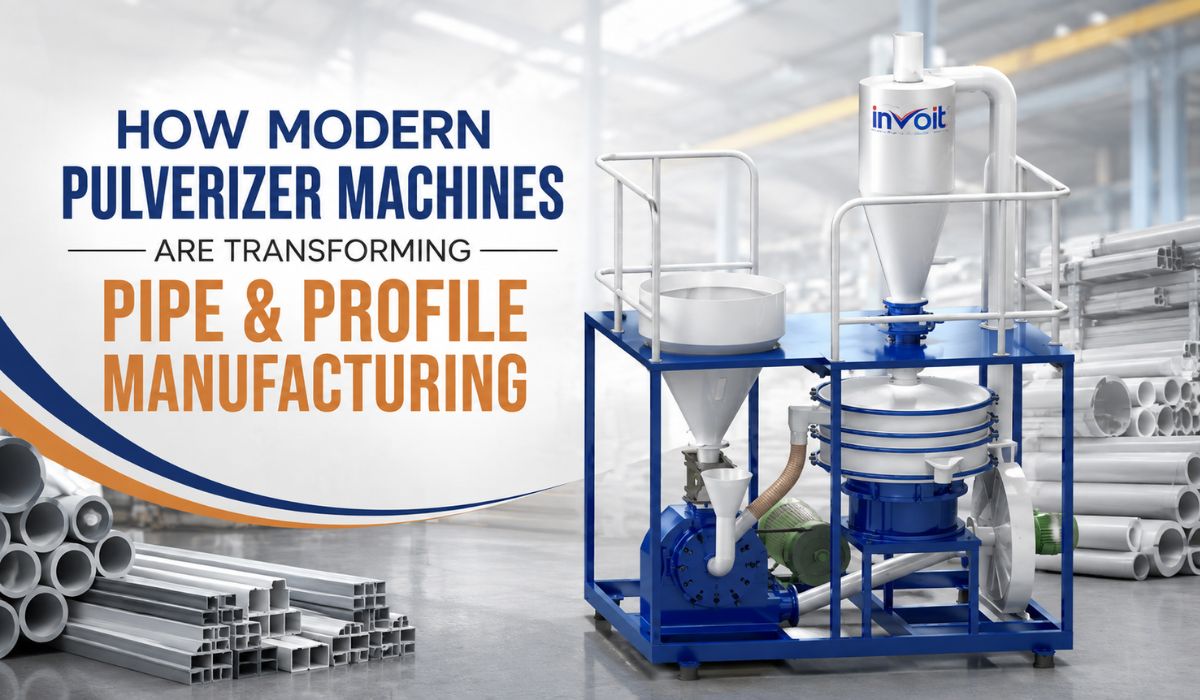
How Modern Pulverizer Machines Are Transforming Pipe & Profile Manufacturing
The plastic pipe and profile manufacturing industry is undergoing a significant transformation. Across modern extrusion plants, manufacturers are facing dual pressure: meeting increasingly strict standards for product quality while maintaining lean, cost-efficient, and sustainable operations.
In pipe and profile extrusion—whether manufacturing rigid PVC conduits, plumbing pipes, wall panels, or custom window profiles—material efficiency is a direct driver of profitability. Every startup batch, edge trim, off-spec length, or scrap pipe represents valuable resin that should not go to waste.
Historically, reintroducing scrap material back into the production line was a challenging task. Standard crushing methods often yielded uneven, coarse granules that caused feeding issues, surface blemishes, and structural weaknesses in finished products.
This is where the modern PVC Pulverizer Machine has emerged as a crucial asset. By processing scrap into uniform, fine powder rather than rough granules, modern pulverization technology bridges the gap between waste management and high-quality production.
The Shift from Traditional Regrind to Micronized Powder
To understand why a modern Plastic Pulverizer Machine is vital today, it helps to look at how scrap handling has evolved over the past few decades.
In early extrusion setups, manufacturers relied almost entirely on simple heavy-duty granulators or crushers. While these machines succeeded in breaking down large rigid pipes into smaller chips, the resulting regrind material presented serious operational challenges:
- Inconsistent Particle Size: Coarse, irregular flakes do not blend evenly with virgin resin powder or compound formulations.
- Extruding Blemishes: Large particles take longer to melt evenly inside the extruder barrel, leading to un-melted specks, rough outer walls, and weak structural spots in pipes.
- Feeder Blockages: Non-uniform flakes frequently cause bridge formation and irregular feeding in high-speed extrusion hoppers.
Today’s high-speed extrusion lines require consistent, flowable raw materials. Converting scrap into fine, high-quality powder resolves these issues at the source. When scrap is pulverized into a precise mesh size, it mirrors the physical characteristics of virgin compounding powder. This allows smooth blending, uniform melting, and zero compromise on the final pipe or profile finish.
How Modern Pulverizers Work: A Simple, Clear Overview
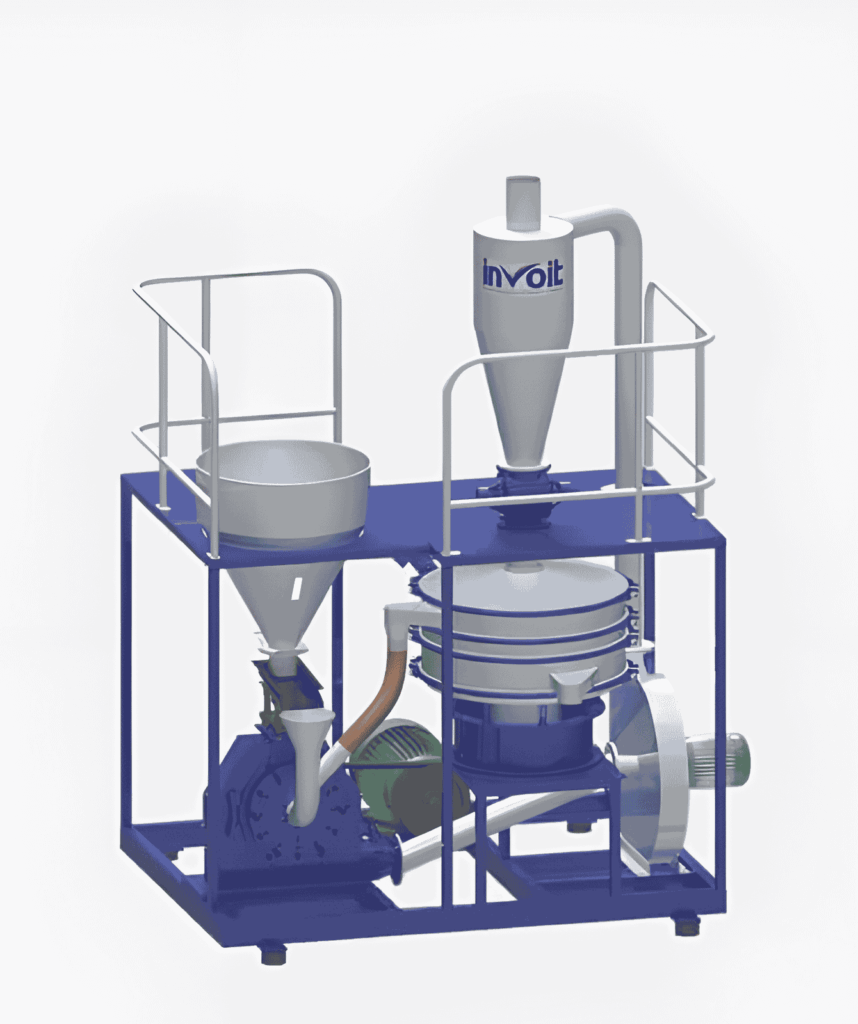
While industrial machinery can seem complex, the underlying principle of a modern PVC Pulverizer Machine is straight-forward: it reduces rigid plastic scrap into smooth, fine powder through controlled mechanical impact and friction.
Here is how the modern process unfolds seamlessly inside an optimized manufacturing layout:
1. Controlled Material Feeding
Scrap material—previously sized down into manageable pieces by a primary crusher—is fed continuously into the pulverizer’s grinding chamber. Modern systems use regulated feeding mechanisms to ensure a steady material flow, preventing overloading and keeping thermal levels stable.
2. High-Efficiency Pulverization
Inside the grinding chamber, specialized precision disc blades rotate at high velocity against stationary discs. As the plastic material passes between these finely aligned cutting surfaces, it is sheared and ground down into microscopic particles without subjecting the material to excessive thermal stress.
3. Integrated Temperature Management
Polyvinyl chloride (PVC) is sensitive to heat. Excessive temperature during grinding can cause thermal degradation, discoloration, or material sticking. Modern pulverizing systems feature integrated air-cooling or water-jacketed cooling circuits that maintain safe operational temperatures, preserving the chemical integrity and original color of the plastic.
4. Precision Screening and Air Classification
Once pulverized, the powder passes through a grading system. Fine particles that meet the required mesh size are transported cleanly to storage or bagging stations via pneumatic conveying. Any oversized particles are automatically routed back to the grinding chamber for re-processing, ensuring consistent powder quality every time.
Key Operational Advantages for Pipe & Profile Manufacturers
Integrating a reliable Plastic Pulverizer Machine into an extrusion plant delivers multi-layered benefits across quality control, cost management, and plant hygiene.
1. Superior Surface Finish and Structural Integrity
When manufacturing pressure pipes, wall cladding, or window profiles, surface aesthetics and mechanical strength are paramount. Fine pulverized powder melts homogeneously during extrusion. This ensures smooth inner and outer surfaces, uniform wall thickness, and higher resistance to impact and pressure testing.
2. Perfect Homogenization with Virgin Resin
Because the pulverized scrap has a particle size distribution similar to virgin resin compound, it blends effortlessly in high-speed mixers. Manufacturers can safely incorporate calculated percentages of in-house regrind without worrying about layer separation, color streaking, or uneven flow inside the extruder mold.
3. Maximum Material Cost Recovery
Raw material accounts for the largest portion of overall manufacturing expenses in plastic pipe production. Throwing away scrap or selling it to third parties at scrap rates results in significant financial loss. By pulverizing scrap internally, factories convert waste back into prime production material, dramatically lowering overall raw material purchasing costs over time.
4. Dust-Free, Environmentally Clean Operation
Older grinding units were notoriously noisy and dusty, creating unpleasant working environments and safety hazards. Modern pulverizer engineering focuses heavily on sealed, dust-controlled airflow systems. Integrated cyclone collectors and dust filtration keep plant air clean and minimize material loss.
5. Reduced Thermal Degradation
Advanced pulverizers are designed with optimized airflow and cooling geometries. By minimizing dwell time inside the cutting chamber and maintaining low temperatures, the physical properties of heat-sensitive polymers like PVC remain intact, allowing for multiple recycling loops without quality loss.
Solving In-House Scrap Challenges in Pipe Production
Pipe and profile manufacturing plants generate various forms of scrap during daily operations. Understanding how a modern pulverizing unit handles each scrap type helps optimize plant workflow:
Startup and Changeover Waste
During line startup, color changes, or specification adjustments, extruders produce heavy-wall thick scrap sections. When pre-crushed and pulverized, this material becomes fully reusable powder, eliminating expensive startup losses.
Off-Spec Pipe & Wall Trim
Extruded profiles often require inline edge trimming, or pipe lengths may fall outside dimensional tolerances during quality checks. Pulverizers easily handle these trimmed pieces and off-spec products, transforming them into valuable production inputs.
Shredded Fitting and Scrap Remnants
Leftover material from pipe fittings, socketing operations, and quality testing pieces can all be systematically collected, shredded, and fed directly into the pulverizer for total resource recovery.
Choosing the Right Plastic Pulverizer Machine Manufacturer in India
Selecting the right equipment partner is essential for long-term operational success. India has established itself as a global hub for high-quality industrial machinery, with reliable manufacturers engineering systems designed for continuous, round-the-clock industrial use.
When evaluating a Plastic Pulverizer Machine Manufacturer, consider these core factors:
Engineering and Build Robustness
Pulverizing rigid plastics requires heavy-duty construction. Look for machines built with heavy steel fabrication, precision-balanced rotors, and high-wear-resistant alloy steel blades. Robust engineering minimizes operational vibration and extends the service life of internal components.
Thermal Control Design
Effective thermal management is critical for PVC processing. Ensure the machine features effective cooling jackets and high-volume airflow designs that keep processing temperatures low, preserving powder quality and preventing disc clogging.
Easy Maintenance and Blade Adjustment
Routine maintenance is a reality in any grinding operation. Modern machines prioritize easy accessibility to the grinding chamber, allowing quick blade inspection, simple gap adjustment, and straightforward cleaning during material or color transitions.
Safety and Compliance
Operator safety should never be compromised. Trustworthy manufacturers equip their machines with robust safety interlocks, emergency stop systems, overload protection, and noise-damping enclosures.
Brand Trust and Support: The Invoitplast Approach
In the competitive industrial market, partnering with an experienced manufacturer like Invoitplast ensures access to well-engineered machinery, dependable technical guidance, and reliable after-sales support. Working with a dedicated PVC Pulverizer Machine India provider ensures that equipment is built to withstand local operating conditions while delivering international standards of reliability and performance.
Aligning with the Circular Economy and Modern Sustainability
Sustainability is no longer just a marketing buzzword—it is a core business strategy for modern plastic manufacturers. Buyers, regulatory bodies, and global supply chains increasingly prefer suppliers who demonstrate responsible resource management and minimal environmental footprint.
A high-performance Plastic Pulverizer Machine sits right at the heart of the circular manufacturing model:
- Zero-Waste Manufacturing: Enables closed-loop recycling where practically all internal scrap is converted back into saleable product.
- Lower Carbon Footprint: Reusing internal scrap reduces the energy consumption and transportation emissions associated with purchasing and processing new virgin material.
- Resource Conservation: Helps conserve petroleum-based polymer reserves by maximizing the lifetime output of every batch of raw resin.
By adopting efficient pulverizing technology, pipe and profile manufacturers demonstrate environmental stewardship while simultaneously strengthening their bottom line.
Practical Best Practices for Operating Pulverizing Equipment
To maximize output quality and equipment longevity, consider these operational best practices:
- Implement Proper Scrap Pre-sorting: Keep different polymer grades (such as UPVC, CPVC, and HDPE) separate before crushing and pulverizing to maintain raw material purity.
- Maintain Consistent Primary Shredding: Ensure scrap fed into the pulverizer is pre-shredded to a uniform small size. This stabilizes the feed rate and prevents sudden motor load spikes.
- Regular Disc Blade Maintenance: Periodically check cutting disc sharpness and maintain precise disc gaps. Sharp blades lower energy consumption, minimize heat generation, and yield consistent particle size.
- Monitor Cooling Systems: Regularly check water cooling lines and air filtration bags to maintain optimal thermal management and dust-free operations.
Driving Efficiency and Quality in Pipe Manufacturing
In today’s competitive industrial landscape, success in pipe and profile manufacturing requires continuous innovation, smart waste management, and unwavering focus on product quality.
Transitioning from rough regrind to high-precision micronized powder using a modern PVC Pulverizer Machine is one of the most impactful operational upgrades a plant can make. By turning production scrap into consistent, high-value raw material, manufacturers achieve seamless extrusion performance, lower production costs, and build a cleaner, more sustainable operation.
Partnering with a reliable Plastic Pulverizer Machine Manufacturer like Invoitplast empowers businesses with durable, efficient engineering designed for real-world production demands. As the industry continues to evolve toward higher quality standards and zero-waste models, modern pulverization technology remains an indispensable tool for forward-thinking manufacturers.
📞 Start Your Project with the Right Pulverizer Solution : +91 63546 02502 , info@invoitplast.com
FAQs
A PVC Pulverizer Machine is used to convert PVC pipe, profile, trimming, startup waste, and other rigid plastic scrap into fine, uniform powder. This powder can be blended with virgin resin and reused in production, helping manufacturers reduce material waste and raw material costs.
A Plastic Pulverizer Machine improves efficiency by converting production scrap into consistent fine powder that can blend more uniformly with virgin resin. This supports smoother feeding, more consistent melting, better surface finish, and improved material recovery.
Yes. A PVC Pulverizer Machine can process different types of in-house scrap, including startup waste, off-spec pipes, wall trims, profile trimmings, fitting remnants, and quality-testing pieces after suitable pre-sizing.
Fine powder provides more consistent particle size and can blend more effectively with virgin resin or compound formulations. Coarse and irregular regrind can create feeding problems, uneven melting, surface blemishes, and structural weaknesses during extrusion.
Modern pulverizers use air-cooling or water-jacketed cooling systems to control processing temperature. Effective thermal management helps reduce PVC degradation, discoloration, sticking, and excessive heat generation during pulverization.
Yes. Properly pulverized PVC scrap can have a particle-size distribution suitable for blending with virgin resin or compound formulations. This can help manufacturers reuse calculated amounts of internal scrap while maintaining consistent material flow and processing.
A Plastic Pulverizer Machine can be used for pre-sized rigid plastic scrap such as PVC pipes, profiles, startup waste, edge trims, off-spec products, fitting remnants, and other production scrap. The material should be appropriately sorted and pre-sized before pulverization.
It allows manufacturers to recover usable material from internal production scrap instead of discarding it or selling it as low-value scrap. Reusing the pulverized material can reduce dependence on newly purchased raw material and improve overall material cost recovery.
Consider the manufacturer's machine construction, rotor and blade design, thermal-control system, maintenance accessibility, safety features, technical support, and after-sales service. For PVC processing, effective cooling and reliable temperature management are particularly important.
PVC scrap should be properly sorted and separated from other polymer grades before processing. It should also be pre-shredded or crushed into a consistent manageable size so the pulverizer receives a stable feed and avoids sudden motor-load variations.
Blade sharpness, disc gaps, cooling lines, and air-filtration components should be checked regularly as part of routine machine maintenance. Proper blade adjustment and cooling-system maintenance help maintain consistent powder quality, control heat, and support efficient operation.
A Plastic Pulverizer Machine supports circular manufacturing by converting internal plastic scrap into reusable material. This reduces waste, improves resource utilization, and can lower the need for virgin raw material, helping pipe and profile manufacturers move toward more efficient and sustainable production.