
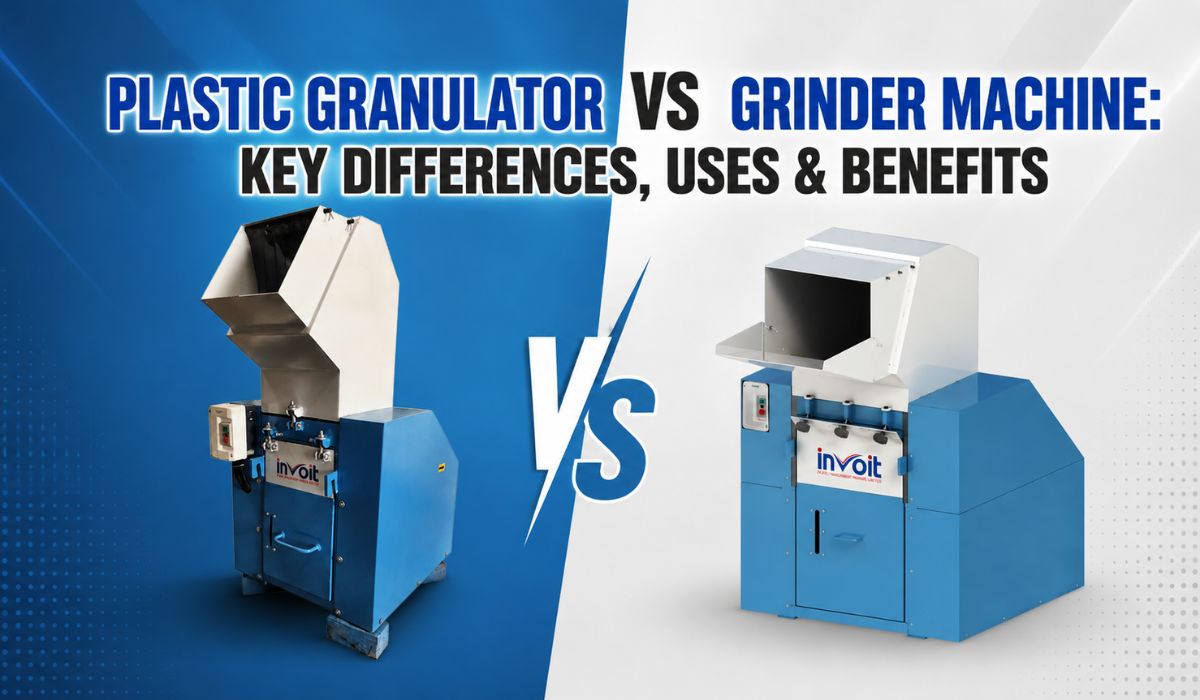
Plastic Granulator vs Grinder Machine: Key Differences, Uses & Benefits
In the modern plastic manufacturing and recycling industry, managing scrap efficiently is no longer just an option—it is a business necessity. Every production line, whether focused on injection molding, blow molding, or extrusion, generates some form of scrap. From rejected parts and runners to purgings and trimmed edges, disposing of this waste without processing means losing valuable raw materials and profit margins.
To convert this scrap back into usable raw material, manufacturers rely on size-reduction equipment. However, a common point of confusion among factory managers and business owners is choosing between a Plastic Granulator Machine and a Plastic Scrap Grinder Machine.
While both machines are designed to reduce plastic scrap into smaller pieces, they operate differently, handle different types of materials, and deliver different end results. Choosing the wrong equipment can lead to frequent blade wear, high energy waste, uneven output, and unnecessary downtime.
This guide breaks down the clear differences, working principles, applications, and benefits of both machines so you can make an informed choice for your facility.
Understanding the Basics: What is a Plastic Scrap Grinder Machine?
A Plastic Scrap Grinder Machine is engineered for heavy-duty, robust size reduction. It is designed to tackle thick, dense, and bulky plastic scrap that requires significant breaking force rather than delicate shearing.
How it Works
A grinder uses heavy-duty rotor knives and bed knives mounted inside a rugged cutting chamber. When thick plastic waste enters the machine, the rotor impacts and cuts the material against fixed blades, breaking it down through a combination of crushing force and high-torque shearing.
Typical Applications
Plastic scrap grinders are commonly used for:
- Heavy, thick-walled parts (such as automotive bumpers or thick crates)
- Large purgings and start-up lumps straight from extruders
- Thick pipes, profiles, and heavy blow-molded drums
- Tough engineering plastics that resist light cutting
Key Operational Strengths
- High Torque Capacity: Handles tough, solid plastic blocks without stalling.
- Rugged Construction: Built to withstand intense mechanical stress and heavy impact.
- Coarse Breaking: Quickly reduces large, unmanageable waste into smaller pieces suitable for further handling or granulating.
Understanding the Basics: What is a Plastic Granulator Machine?
A Plastic Granulator Machine is designed for precision cutting and uniform size reduction. Unlike heavy breakdown grinders, granulators focus on turning light to medium plastic waste into clean, consistently sized granules (often referred to as regrind).
How it Works
Granulators operate at higher rotor speeds using sharp, close-tolerance knives. As the plastic material is fed into the chamber, the fast-rotating blades shear the material cleanly against fixed bed blades, similar to a high-speed scissor action. A screen mesh placed below the cutting chamber ensures that only particles of a specific, uniform size pass through, while larger pieces continue circulating until properly sized.
Typical Applications
Plastic granulators are ideal for:
- Sprues, runners, and flash from injection molding
- Thin-walled containers, PET bottles, and caps
- Plastic film trims, sheets, and thermoforming scrap
- Pre-shredded material that needs fine, uniform sizing
Key Operational Strengths
- Uniform Particle Size: Produces consistent regrind that can be fed directly back into production machines alongside virgin resin.
- Clean Cutting Action: Generates minimal dust and fine particles, preserving plastic quality.
- Energy Efficiency for Light Waste: Uses optimal motor power tailored for fast, continuous shearing.
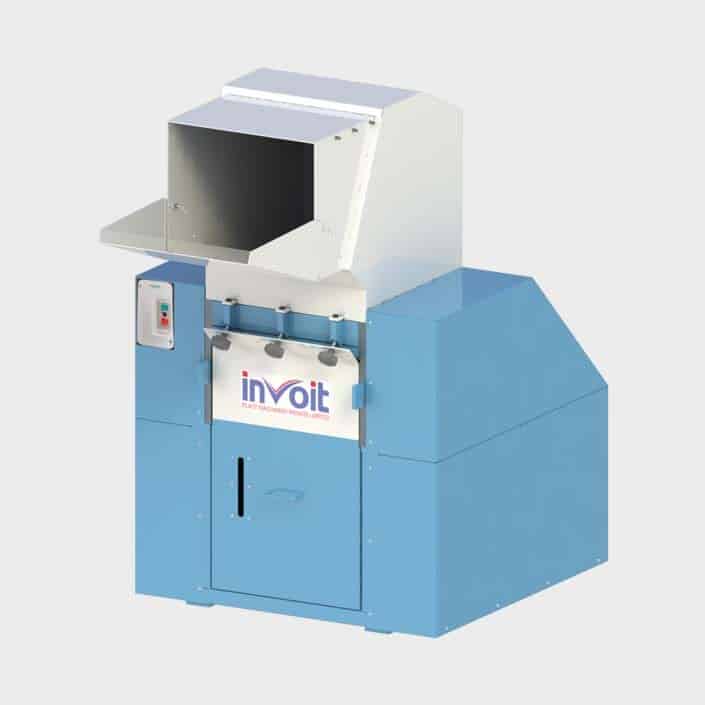
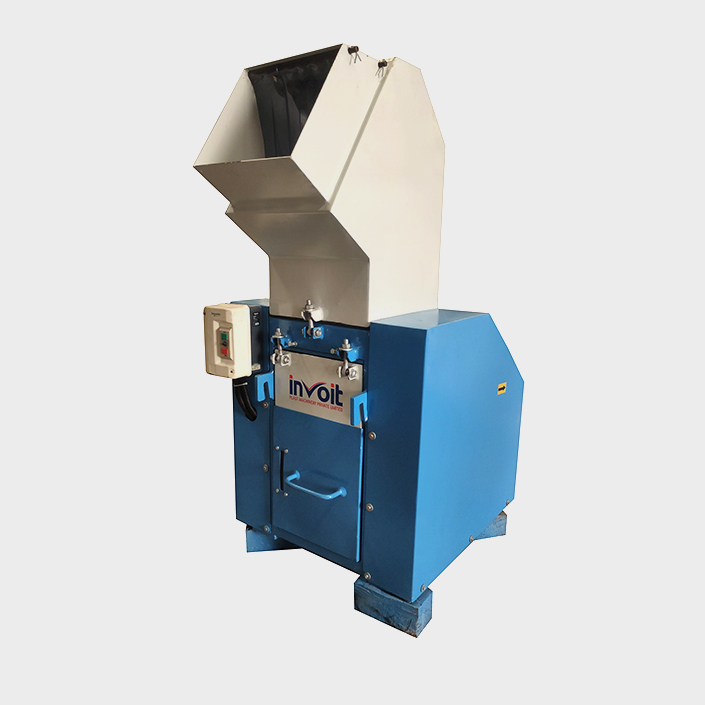
Plastic Granulator vs Grinder Machine: Key Differences
Understanding how these two machines contrast helps in identifying where each belongs in a recycling or manufacturing line.
1. Cutting Action and Blade Design
- Grinder Machine: Uses heavy, thick blades and high torque to crush and shear dense material. The cutting gap is slightly wider to accommodate heavy stress without jamming.
- Granulator Machine: Uses sharp, precision-angled blades with tight tolerances. The cutting action is continuous, fast, and scissor-like, designed to shear thin or medium materials cleanly.
2. Output Quality and Dust Generation
- Grinder Machine: Produces a more varied, coarse output with irregular shapes. Because of the impact force involved, it can generate higher amounts of dust when processing brittle materials.
- Granulator Machine: Produces highly uniform regrind with consistent particle dimensions. The clean scissor-cut minimizes dust and fines, ensuring high-quality material for immediate re-use.
3. Material Thickness and Density
- Grinder Machine: Best suited for thick, dense scrap, large purge blocks, and heavy molded parts that standard fast-cutting blades cannot digest.
- Granulator Machine: Best suited for light to medium thickness materials such as runners, film trims, bottles, and thin-wall moldings.
4. Machine Speed and Torque Profile
- Grinder Machine: Operates with lower to moderate rotor speeds combined with high rotational torque to push through heavy loads.
- Granulator Machine: Operates at higher rotor speeds to maintain continuous feed throughput and clean shearing momentum on lighter items.
5. Role in the Production Process
- Grinder Machine: Often serves as a primary breakdown machine for bulky scrap before secondary processing or disposal.
- Granulator Machine: Functions as a direct in-line or central recycling system, preparing material for immediate re-introduction into the manufacturing cycle.
Essential Industrial Benefits of Size Reduction Machines
Investing in the correct size-reduction machinery transforms waste handling from an added cost into a revenue-generating, sustainable process.
1. Significant Raw Material Cost Savings
Plastic resin costs represent a major portion of manufacturing expenses. By processing scrap internally using an efficient Plastic Granulator Machine or Plastic Scrap Grinder Machine, factories can blend clean regrind back with virgin polymer. This significantly reduces overall resin purchases.
2. Clean and Safe Shop Floor
Accumulating bulky plastic scrap creates safety hazards and takes up valuable space on the factory floor. Immediate granulation keeps workstation areas clear, improves workflow safety, and promotes organized, efficient operations.
3. Reduced Carbon Footprint and Sustainability
Modern manufacturing standards increasingly emphasize eco-friendly practices. Reusing production scrap internally eliminates transportation emissions associated with off-site disposal and supports a circular manufacturing model.
4. Preservation of Polymer Integrity
When scrap is processed with the right knife design and screen setup, the thermal and mechanical degradation of the polymer is minimized. This ensures that recycled regrind maintains its physical strength and melting characteristics.
How to Choose the Right Equipment for Your Operations
Selecting the right machine requires evaluating your specific operational inputs and desired outputs. Here are key factors to guide your decision:
Assess Your Scrap Type
Look closely at your daily waste stream. Are you primarily dealing with thick purge lumps, heavy automotive parts, or rigid thick pipe scrap? A grinder machine is built for these heavy-duty needs. If your scrap consists mainly of runners, thin bottles, film rolls, or light plastic sheets, a granulator machine will perform far better.
Define Your Re-Use Goal
Do you plan to mix your scrap directly back into your injection molding machine or extruder hopper? If yes, uniform particle size is critical to prevent melting issues or feed throat blockages, making a granulator the clear choice. If your goal is simply reducing volume for bulk storage or transport, a grinder provides quick, high-volume breakdown.
Evaluate Floor Space and Workflow Integration
Decide whether you need an in-line granulator sitting directly beside an injection molding machine for immediate runner recycling, or a central processing unit placed in a dedicated recycling room to handle scrap collected from multiple lines.
Partner with a Reliable Manufacturer
Equipment performance and durability depend heavily on engineering standards, knife steel quality, rotor balancing, and chamber design. Working with an experienced Plastic Granulator Machine Manufacturer or Plastic Scrap Grinder Machine Manufacturer guarantees that you receive machinery customized to your material behavior and production goals.
Established leaders in the market, such as Invoitplast, focus on delivering robust, practical engineering that minimizes maintenance while maximizing throughput. A trusted manufacturer will analyze your material samples, recommend optimal rotor configurations, and guide you on long-term blade care.
Maintaining Your Machinery for Long-Term Reliability
To ensure consistent performance and protect your machinery investment, follow these essential maintenance principles:
- Keep Blades Sharp: Dull blades force the motor to work harder, produce excessive dust, and lower overall output quality. Inspect and sharpen blades regularly.
- Maintain Proper Blade Clearances: Regularly check the gap between rotary and stationary blades using feeler gauges to prevent material jamming and blade chipping.
- Inspect Screens Periodically: Check screen hole wear and ensure screens are clean and securely clamped to avoid unwanted particle sizes in your output.
- Monitor Mechanical Drive Systems: Keep belts properly tensioned and ensure all main bearings are greased according to manufacturer guidelines.
- Enforce Clean Scrap Feeding: Ensure foreign objects like metal bolts, tools, or wire ties never enter the cutting chamber. Using magnetic separators before the feed hopper adds an extra layer of protection.
Final Thoughts
Both granulators and grinders play crucial roles in modern plastic processing, but their functions are distinct.
A Plastic Scrap Grinder Machine excels at breaking down heavy, thick, and bulky waste into manageable pieces using high strength and torque. On the other hand, a Plastic Granulator Machine delivers fast, clean, and uniform regrind ideal for direct re-use in high-quality manufacturing.
By identifying your scrap characteristics, output needs, and workflow goals, you can select the exact equipment needed to turn plastic waste into profitable raw material. Partnering with a reliable Plastic Granulator Machine Manufacturer and Plastic Scrap Grinder Machine Manufacturer like Invoitplast ensures you get long-lasting equipment backed by expert technical support.
Email : info@invoitplast.com , service@invoitplast.com, sales@invoitplast.com
Phone Number : +91 63546 02502, +91 63546 02503, +91 63546 02504
FAQs
A Plastic Granulator Machine is designed for fast, precise cutting and produces relatively uniform plastic regrind, while a Plastic Scrap Grinder Machine is built for breaking down thick, dense, and bulky plastic scrap using higher torque and heavy-duty cutting action. A granulator is generally better for light to medium scrap, while a grinder is more suitable for heavy and oversized plastic waste.
Neither machine is universally better; the right choice depends on the type of plastic scrap and the required output. A plastic grinder is better for thick pipes, large purge lumps, heavy molded parts, and dense plastic waste. A plastic granulator is better for injection molding runners, sprues, film trims, bottles, sheets, and other light to medium plastic scrap requiring uniform regrind.
Yes. A Plastic Granulator Machine is well suited for processing injection molding sprues, runners, flash, and rejected plastic components. Its precision cutting action and screen system help produce more consistent regrind that can be reused in suitable manufacturing applications.
A Plastic Scrap Grinder Machine is suitable for thick, dense, bulky, and difficult-to-cut plastic waste. Common examples include large purge lumps, thick-walled molded parts, heavy pipes, profiles, crates, drums, and certain tough engineering plastics.
Yes. A plastic granulator uses cutting knives and a screen to control the size of the discharged material. Larger pieces remain inside the cutting chamber until they are reduced enough to pass through the screen, helping produce more consistent plastic regrind.
A grinder can generate more dust and fines when processing brittle plastic because it relies on high-force breaking and shearing. A granulator generally produces cleaner cuts with less dust when processing suitable light or medium plastic scrap.
Yes, processed plastic scrap can often be reused as regrind when the material is suitable and properly processed. Granulated material with consistent particle size can be particularly useful for controlled reintroduction into production, while grinder output may require further size reduction before certain applications.
Start by evaluating your scrap type, material thickness, required output size, and intended reuse. Choose a grinder when you mainly process thick, bulky, or dense scrap. Choose a granulator when you need uniform regrind from lighter materials such as runners, sprues, bottles, films, sheets, or thin-wall components.
The screen controls the size of the material leaving the granulator. Plastic pieces that are larger than the screen openings remain in the cutting chamber for further cutting. This helps the machine produce a more consistent output size.
Yes. A Plastic Granulator Machine can be installed close to an injection molding or other production machine for in-line recycling of suitable production scrap. This setup can allow runners, sprues, and other clean scrap to be processed and returned to the manufacturing cycle.
Regular maintenance includes keeping blades sharp, checking rotary and stationary blade clearances, inspecting screens, maintaining belts and bearings, and preventing metal or other foreign objects from entering the cutting chamber. Proper maintenance helps maintain cutting performance, output quality, and machine reliability.
Look for a manufacturer with experience in plastic size-reduction equipment and the ability to recommend the machine according to your actual scrap type and production requirements. Important considerations include knife quality, rotor design and balancing, chamber construction, machine durability, maintenance support, and technical assistance. A manufacturer such as Invoitplast can help evaluate the material and recommend a suitable configuration.